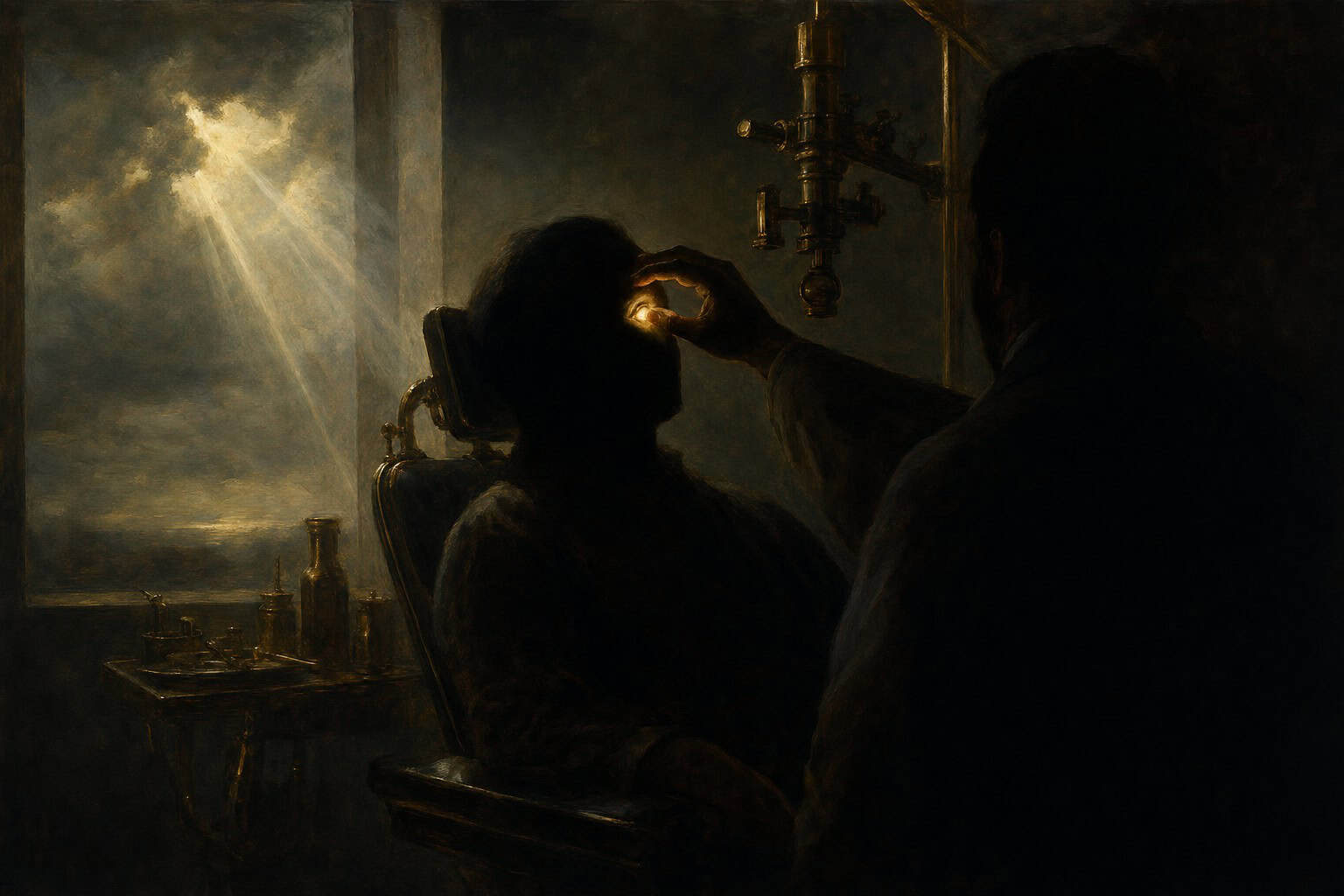
A small body in a high chair reaches for a spoon before it knows the word hunger, and the sweetness comes with a clap and a smile — the first lesson seen through a lens already warped, one no man can ever operate on with his own eyes.
The First Taste of Sugar on the Tongue
A small body in a high chair reaches for a spoon without knowing the word hunger. Sweetness hits the tongue, and with it comes a smile, a clap, the warmth of being praised for doing it “right.” Long before any clear thought forms, the nervous system is keeping score: this tone of voice brings comfort, that frown brings ice. You learn the rules through your skin and stomach, through which cries get answered and which get ignored. The words please and thank you arrive as sounds attached to rewards, not as virtues chosen in freedom. By the time language blossoms, the roots of obedience and fear are already sunk deep, wrapping around your ribs. You have been breathing in the family air so long that its scent feels like nature itself. The lens through which you will later judge good and bad, holy and shameful, has already been pressed against your face like a hand you never invited but cannot remove.
The Scalpel Guided by Its Own Blurred Vision
Years later, the same body now grown sits at a table with a journal, or kneels in a pew, trying to figure out why its own reactions feel foreign. You turn your gaze inward, determined to sort yourself out, but the eyes doing the looking are the very ones that were trained by those early sugars and stings. You try to cut away your patterns with a mental scalpel that shakes, guided by instincts it is supposed to be questioning. The anger that flares when you feel dismissed is the same anger trying to analyze itself; the shame that curls you in is also the narrator claiming to be objective. Each attempt to correct yourself risks becoming another performance for the old audience still living in your head. You wipe at the lens, certain you’re cleaning it, while the smudge follows every motion because it is on the inside of the glass. The harder you work alone, the more the blur hardens into fate.
The Shock of Your Own Face in an Unforgiving Mirror
Then comes the moment when another person refuses to see you the way you’ve always demanded to be seen. It might be a quiet comment at a kitchen table, the way a friend holds your gaze when you dismiss your own pain, or a lover naming the pattern in your sudden withdrawals. Their eyes do not cooperate with your script. They notice the hitch in your breath when a certain topic comes up, the brittle laughter that covers a tremor in your hands. In that instant, you are confronted with a mirror you did not design and cannot control. Their perception slices through the layers you have rehearsed for decades, down to the flinch you thought you had hidden even from yourself. It feels like an affront, almost a betrayal, that someone else can read what you have never been able to pronounce. The revelation is not gentle; it burns like antiseptic on a wound you’d rather pretend is scar tissue.
You inherit a warped lens before you can even speak, and there is no surgery you can perform on your own eyes; the only cure is the grace of being seen.
The Prescription Your Children Will Wear on Their Faces
What you do with that burning moment does not stay locked inside your skull. The way you protect your old story or let it crack will shape how the next small hand reaches for its first spoonful of sweetness. If you cling to the familiar fog, your children learn to squint at the world through the same warped glass, thinking the distortion is simply how things are. They will copy your shrug when joy feels dangerous, your practiced indifference when tenderness presses too close. Even your holy words, if spoken from behind a defended lens, will carry that warp forward, teaching them to fear the very God you claim is love. Ordinary days—breakfast dishes, car rides, bedtime prayers—become the quiet workshop where their own prescription is ground. They will either inherit your refusal to be seen or your costly decision to let another’s gaze correct you. Long after you are gone, they will still be living inside the vision you either guarded or surrendered.
The Cold Metal of the Chair Beneath You
At some point you find yourself seated—on a folding chair in a parish hall, a couch in a stranger’s office, a bench outside a nightclub—aware of the solid surface under your thighs and the weight of your own body. Across from you, another person waits, not as your judge but as someone who will not join your rehearsed excuses. Your pulse climbs as you sense the old defenses waking up: the joke to deflect, the story that makes your choices look reasonable, the practiced tilt of your head that usually wins sympathy. To stay in that chair, to let their words land on the places you have kept off-limits even in prayer, is its own kind of martyrdom. You are not shedding blood, but something in you is being asked to die so that something truer can breathe for the first time. Whether you rise from that seat unchanged or with a new, stinging clarity will determine whose fingerprints remain on the glass you use to see the next face you dare to love.