You want to stop letting emotions control you. But you can’t fix the lens you’re looking through. Here’s the harder, truer way out.
The Wet Ring a Glass Leaves on the Table
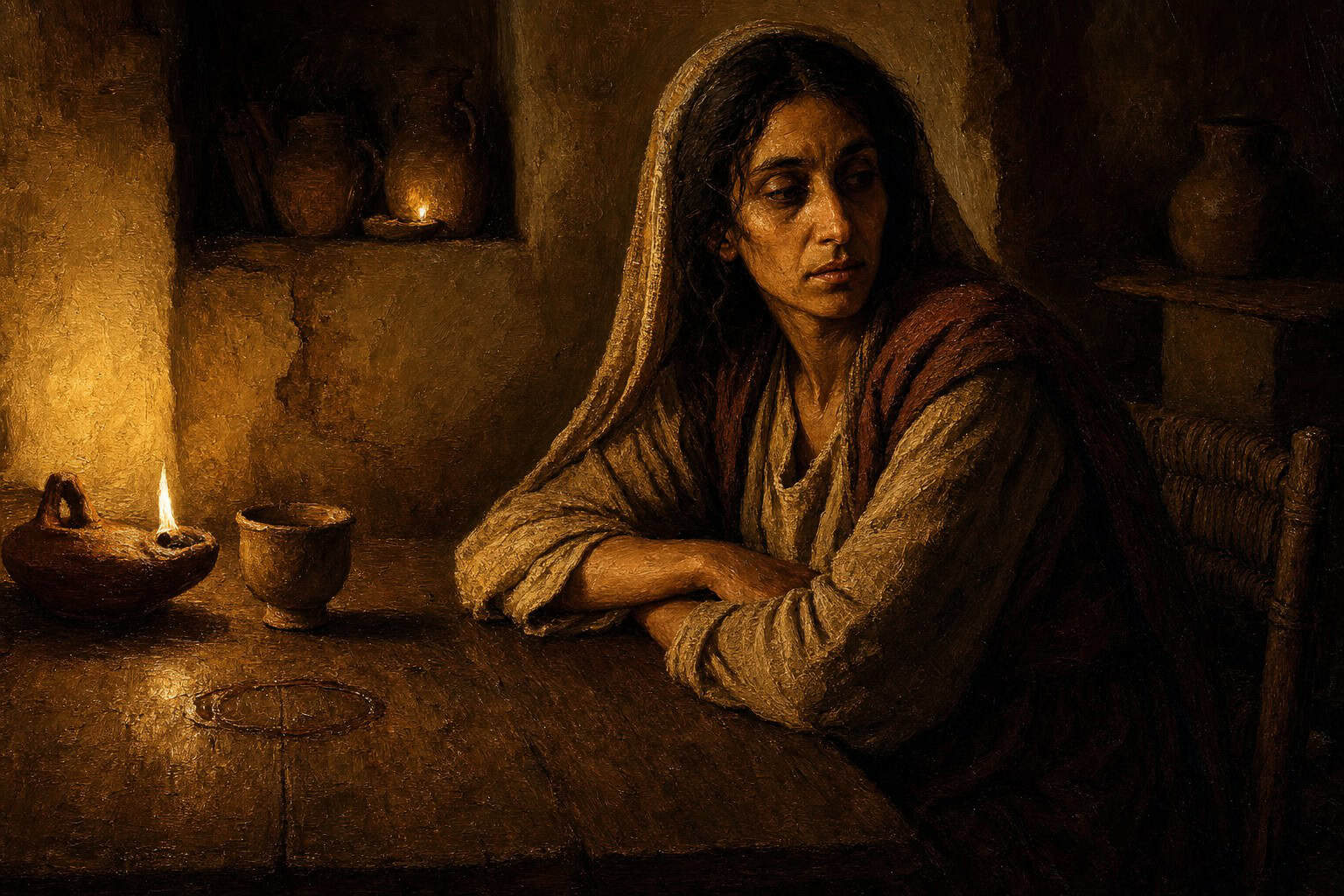
You want a switch you can throw when the feeling rises. That is the honest shape of the search. Some panic climbs your ribs, some anger arrives before you have agreed to it, and you go hunting for the lever that shuts the machine down. In the opening pages of Fractions of the Soul the narrator hands you no such lever. He pulls out a chair and sits you at a small table and points across it at two people, a man and a woman, and he says only this: watch them. There is a glass sweating on the dark wood between them. There is the low pull of nearness, the heat of a body across an arm’s length of stale air, the way one leans while the other holds still. Neither of them is calm. Neither of them chose the thing moving them toward each other. The whole small weather of that table is built from decisions they never made. Then he tells you something plain and hard. You did not build the way you see. You were carried into a web you never picked, fed reward and punishment before you had a single word for either, and the lens through which you now judge the world was ground for you by hands you cannot even remember. So when you ask how to stop your emotions from steering you, he answers with a question you did not want. Whose emotions are these, and who first taught them to steer? He is not being cruel. He is being exact. The dread in your chest is not a stray dog that wandered in off the street. It came down a long corridor of rooms and raised voices and closed doors, and now it wears your face and sits in your bones as if it were always yours. The two people at the table are the living proof of it. Everything they feel toward each other tonight was rehearsed somewhere else, years back, with people whose names they may have already forgotten. The man’s lean was learned. The woman’s stillness was learned. You came to these pages expecting a method for control, a clean sequence of steps, and instead the narrator sets a mirror in front of you. The mirror is already fogged. It is clouded with the breath of everyone who lived inside you before you ever drew a breath of your own. That is where he begins, and it is the last place you wanted to start, because it means the problem is older and deeper and more inherited than a bad habit you could break by Friday.
Surgery on Your Own Open Eyes
So you try harder. This is what the search truly wants underneath the words: to sit alone in a quiet room and think your way clear of the feeling. Watch it. Name it. Talk it down in the dark until it lies still at your feet. The narrator has done exactly this, night after night, and he names the trap without flinching from his own part in it. You cannot use the fruit of a bent perspective to straighten the thing that bent it. You cannot cut into your own eyes while using those same eyes to find the knife. Every loop of self-analysis feels like ground gained and is often the opposite. It is the wounded lens polishing itself with its own scratched cloth, then calling the fresh smear a new clarity. He says it plainly. Solo effort to change yourself, with no other person’s honest weight in the room, only tightens the grip of what you already believe. You circle the same table alone and mistake the circling for a way out. Notice where this leaves the body. The man at the table is not thinking his way out of his desire. He is undergoing it. The pull toward the woman is not a thought he can revise or delete. It rises in the flesh, in the heat behind the sternum, and it rearranges the entire room around him. Distance itself bends under it, so that the far edge of the table becomes an unbearable nearness and the small gap between two hands feels like a country he cannot cross fast enough. This is the part the search keeps underestimating. The emotion you want to master is not filed away in the head where careful reasoning can reach it and edit it. It lives in the skin, in the lean of the spine, in the way a body arranges itself toward another body without asking permission first. You can lecture yourself until the lamp burns low and still discover your hand has already moved across the wood. Here the older narrator turns the lens back on himself, and it is not comfortable to watch. How many nights did he sit inside this exact loop, certain that one more hour of hard thinking would finally deliver him. He interrogates his own motive without mercy. Was the endless self-examination a genuine reaching for the truth, or was it a way to stay alone and safe from the risk of being truly seen? He does not let himself off the hook. The introspection he trusted for so long, he now suspects, was only a warm room he hid inside, and he had mistaken the warmth of it for a cure. The dread beneath all of it is simple and cold. If thinking alone cannot free him, then freedom will cost something he never wanted to pay, and the bill has another person’s name written on it.
The Wound of Being Seen
Here is the turn, and it is not the one you searched for. You cannot free yourself. Someone else has to see the thing you cannot. The narrator says it without softening a single edge. Opening himself to another gives that other person the chance to name the blind spot he will never reach on his own, and only then can the smear on his lens be found and wiped clean. Growth of the mind and the heart and the spirit does not come from deeper solitude. It comes from a relationship where one person points at the flaw the other has lived beside so long it has become invisible, ordinary as the color of the walls, never once questioned. This is why the small table matters so much. The man and the woman are not two sealed rooms sliding past each other in the dark. Each one drags a whole crowd of former loves and old injuries into the encounter, and each reads the other through that pressing crowd. That crowding is the danger and it is also the only door out of the trap. Because the other person, if you let them come close enough, can see the ghost standing at your shoulder in the moment you react, the one you can never turn fast enough to catch yourself. The catch is what it costs. To be corrected you have to be witnessed, and to be witnessed you have to let the other look while you have no power over what they find in you. That is the terrifying grace of it. Not a technique you can practice in private. A wound. The wound of letting someone hold a steady light over the parts of you that you shoved into shadow precisely because they hurt too much to look at directly.
The way out of your emotions is not upward into thought but sideways, into another person who can see the part of you gone blind.
The narrator knows the full size of what this asks. It asks the one thing the frightened self refuses at all costs. He confesses his own refusal right here, how he preferred the loneliness that felt like control over the exposure that might actually have healed him. He sits inside the question that has no clean answer and does not scramble out of it. Who was he protecting when he chose to stay unseen behind his own careful eyes? What did that long choice cost the people who tried, again and again, to reach him across the short distance of a table like this one? He does not resolve it. He lets it stand there, unanswered, aching in the low light.
The way out of your emotions is not upward into thought but sideways, into another person who can see the part of you gone blind.
What the Ghosts at the Table Were Really Doing
Sit with the woman a moment, because the search for control almost always forgets she is a self and not a puzzle to be solved. She comes to the table carrying her own crowd, her own long ledger of care given and care betrayed, her own body that leans in or holds itself back for reasons she has lived from the inside and owes to no one. It would be easy, and it would be a lie, to flatten her into a strategy, to say she wants this thing and fears that thing and moves by some fixed clockwork under the skin. There may well be an old pattern running in her, as there is in him. Longing does travel in grooves worn smooth by everyone who came before. But a pattern is one thin layer, never the whole person. She is another consciousness, as bottomless as his own, reading him through her own fogged and lovely lens, wanting union and dreading it inside the very same breath. The tender reading and the wary reading are both true at that table at once, and the narrator’s honesty is that he holds them together instead of crowning one of them the verdict. He wonders now what he refused to see in her back then. Did he treat her nearness as a weather that simply happened to him, or as a gift a whole living soul was choosing to risk across the wood? Here is what the fallout of the scene reveals about your own search. When you demand to stop letting your emotions control you, you are often really asking to become a sealed room where nothing enters and nothing costs you anything. But the very emotions that move the man toward the woman are also the reaching that could save him from himself, if only he would let her become more than a mirror held up to his hunger. The danger and the rescue arrive inside the same feeling, indistinguishable at first touch. To kill the feeling for the sake of control would be to seal the one door through which another person could ever enter and name his blindness for him. The narrator does not resolve this ache. He leaves it open and unhealed. He sees, too late in more than one case, that the person he tried to manage his feelings around was the very person who could have cleaned the lens, if he had only let her look. And God, in these pages, is not the switch that turns the feeling off. God is nearer than that, and quieter than that. He is present inside the very ache, walking with the man in the middle of the disordered pull, not lifting him clear of the dark table but pulling out a chair and sitting down at it beside him.
The Chair That Waits Across the Small Distance
So the plain answer to your search is a reversal you did not come here for. You do not win command over your emotions by tightening your grip alone in the dark. You loosen the grip by letting one true witness into the room with you. The feeling was never a private malfunction to be repaired in isolation like a broken watch. It is a message written in a script you cannot fully read on your own, and it takes another set of eyes to read it back to you across the table. This is not the tidy control you wanted when you typed the question. It is slower, it is exposed, and it hurts, because being seen is a kind of wound before it becomes any kind of healing. But it is the only door the narrator ever found that actually swings open. Everything else was the same table circled alone in the dark, the same fogged mirror mistaken again and again for a window onto the world. What Fractions of the Soul holds out here is not a method for silencing the chest. It is the harder invitation to stop treating your feelings as an enemy hiding inside the walls and to start treating them as the pull that could carry you, at real and painful cost, toward the person who can finally see what you cannot. The man at the table feels the near heat of another living body and is undone by it. He can spend the rest of his life trying to master that heat and stay perfectly, safely alone, or he can let it be the raw beginning of being truly known. The narrator does not pretend the choice is simple, and he does not pretend he always made it well. He confesses far more than he explains. That confession is the deep pull of the whole book. It walks you back to your own small tables, the ones with the wet ring drying on the wood and a chair set close across from you, and it asks you to consider that the road through your emotions was never inward and never alone. It ran across that short distance the whole time, through the terrifying grace of letting someone hold the light steady while you at last stop pretending you can see your own face clearly by yourself. The book will not hand you the ending. It hands you the nerve to sit down and be looked at, and then it lets you go and find out what happens after you do.