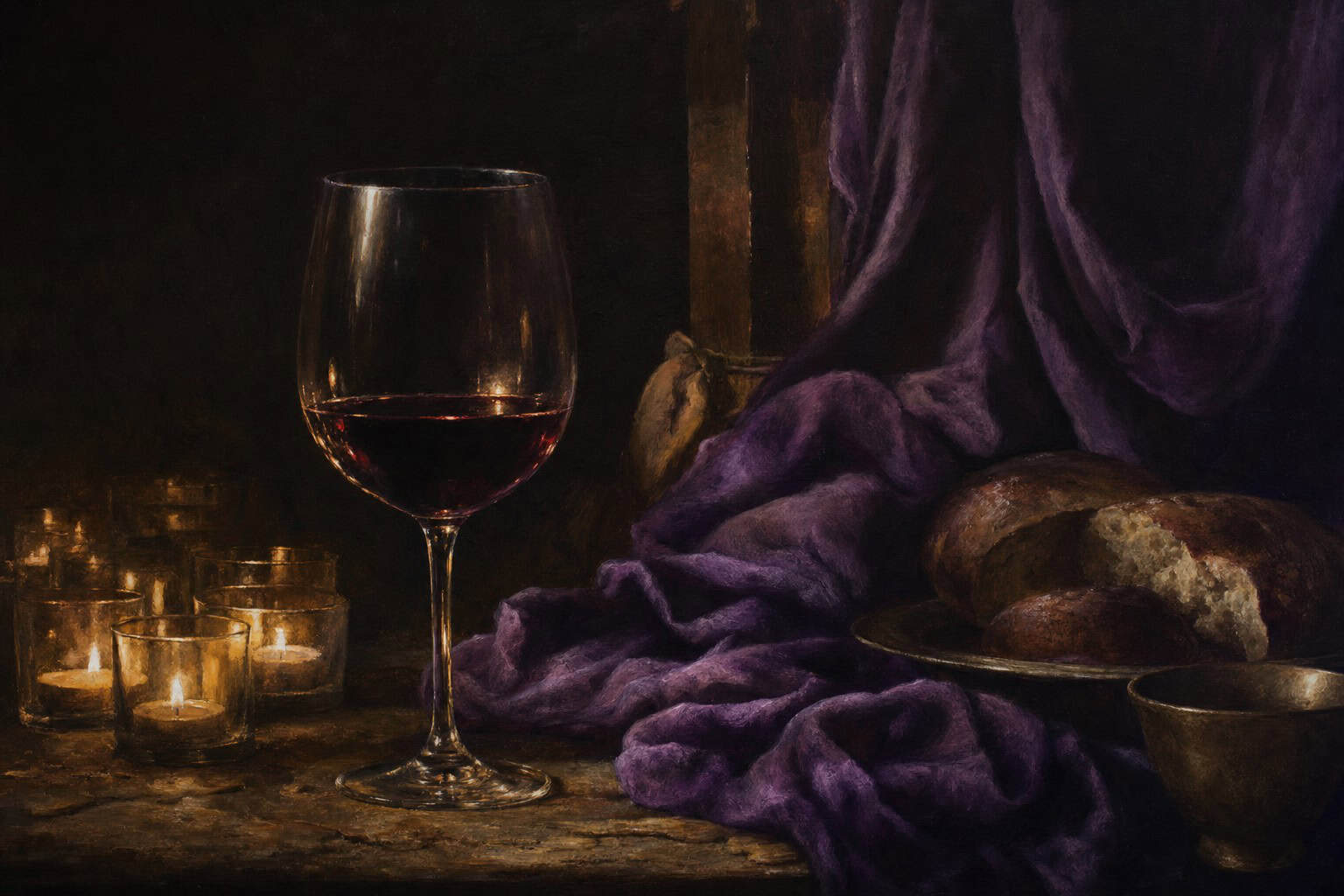
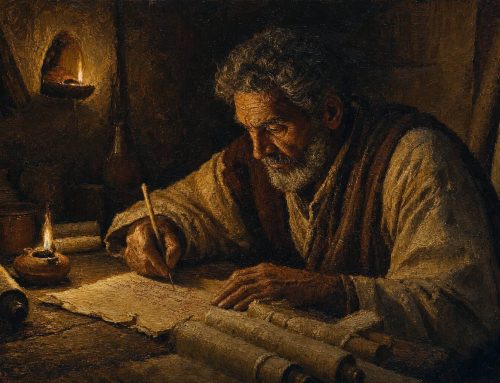
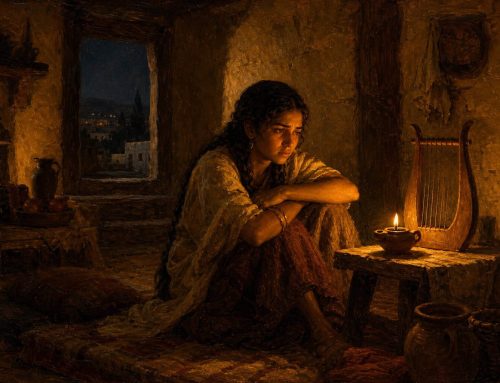
The offered cup sits untouched, catching the light like an accusation, guarded by a man who has made his own clear-eyed refusal the last country he still rules.
The Untouched Cup
A cup is offered and left sitting, its surface unbroken, catching the light like an accusation. In this passage, that small, ordinary object is dragged into the gravity of that ancient hill: the boy-turned-man remembers the Christ who would not drink the numbing mix pressed toward his lips. From that remembrance, he forges a rule: his own mouth will not touch what softens the world, not wine, not pills, not anything that might tilt his vision even a few degrees. Around him, people laugh, pass bottles, let their shoulders drop; he studies the sheen on the liquid and feels the gap widen. The refusal is not announced with pious slogans. It lands as a quiet, stubborn no, defended from the inside by a single scene of a crucified God choosing to stay awake. The untouched cup becomes more than temperance; it is an altar where he binds himself to a suffering he refuses to dilute.
Holding Pain Like a Burning Coal
The argument inside him is not abstract. His body remembers the early darkness: rooms where the air shrank, voices that bent reality, touches that taught him how easily a person can be overruled. In that history, altered states are not harmless adventures; they are rehearsals for being taken. So he chooses a hard clarity, gripping his own pain like a burning coal rather than passing it to anything that might carry it for him. If his thoughts stay sharp, then at least one part of him cannot be invaded or rewritten. Others see stiffness, self-righteousness, unnecessary suffering. He feels something else: the one place where consent is still his to give or withhold. By refusing the blur, he keeps custody of his own agony. This moment in the chapter lays that logic bare, not to justify it or cure it, but to show how a child’s training in terror can ripen into a man’s severe devotion to staying awake.
Words Launched Like Flares Across the Room
When he finally speaks about this refusal, he does it in public, but his voice is aimed like a flare toward one specific face. The scene hums with divided attention: on the surface, he is explaining why he does not drink, why he clings to a lucid Christ as his model; underneath, he is asking someone in particular, will you still want me like this? Each sentence carries two edges. For the crowd, it is a performance of conviction. For the one he is truly addressing, it is a confession: my intensity is not an act I can drop; it is the way my soul holds itself together. This is the pressure inside the moment—the risk of being fully legible to someone who might flinch. He hides inside theology because it feels safer to say God requires this than to say I am terrified of surrender. Yet the very act of saying it at all is a dare: stay, if you can stand the brightness.
Some souls refuse to blur, guarding sobriety as the last territory of control, testing who can bear to witness their raw and unaltered intensity.
When Numbness Is Not an Option
Most people are allowed to soften themselves now and then, to take the edge off a day with a glass, a pill, a clouded hour. This passage presses on the reader with a quieter accusation: what if easing your mind has never felt safe? The narrator’s rigidity, seen up close, is not about being better than anyone. It is about not knowing how to return from any state that lets go of control. For someone who knows that fear, the refusal to blur is not a lifestyle choice; it is a survival liturgy. Here the memoir brushes against ordinary nights—office parties, family dinners, casual invitations—where a simple no carries years of unspoken history. The text asks without asking: how many of our so-called quirks are actually protections built over harm we never named? To watch this man cling to consciousness is to recognize, uncomfortably, how often we ask each other to relax without understanding what relaxing might cost.
A Hand Hovering Above the Stem of the Glass
In the end of this passage, nothing grand happens. There is a glass within reach, a story about a God who stayed lucid while dying, and a man whose fingers hover near the stem without closing. Across from him, someone listens, does not interrupt, does not joke the tension away. The mythology he has built—Christ’s unaltered pain, the sacredness of staying awake—hangs in the air between them like thick incense. He has shown his least negotiable line and is watching to see whether this presence will fade or harden or remain. The glass does not move; neither does his rule. What shifts, if anything, will not be in the liquid or the body, but in whether his bare, unsoftened intensity can find a place to rest without being asked to dim. For now, the only certainty is that his hand stays open and empty, steady in the dense, shared air.