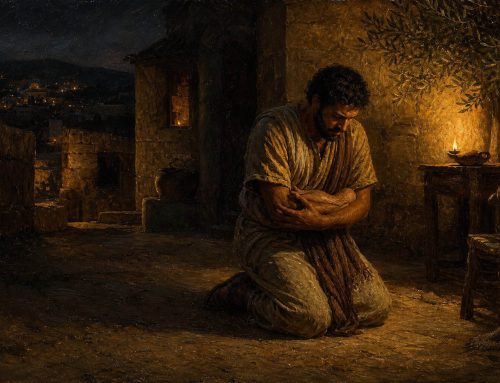
He cradles the hot cup and watches how long a stranger’s eyes can hold sorrow before they flinch, practicing the discipline of reading every nearness as a question, not a conquest.
Hands Wrapped Around A Coffee Cup
Steam climbs between them as he cradles the cup, letting the heat bite into his palms while a stranger talks. He tracks the small things: how long their eyes can hold sorrow before skittering away, whether their laughter sharpens when pain appears in the air. His own voice moves carefully, laying out fragments of beauty, hints of God, shards of his story like instruments on a tray. He is not hunting their body; he is testing their interior, listening for the hollow knock of someone with no quiet place inside. Moments stretch as he asks a question that comes too close to the bone and watches what they do with it—deflect, perform, or let the silence settle. This is where the chapter catches him: not in a bedroom or a church, but at a simple table, turning ordinary conversation into a slow, exacting search for a soul capable of holding something holy.
World-Building Instead Of The Hunt
Around that table, the old script of conquest hangs in the air like a bad smell he refuses to breathe. He knows how easily charm can corner someone, how a certain look, a well-timed compliment, can tilt the room toward his will. Instead, he chooses the harder thing: to build a small world between them where nothing is taken, where every step must be answered by a free step in return. His questions are not snares but scaffolding, raised slowly so the other person can see exactly what kind of structure they would be entering. This is seduction stripped of ambush, desire passing through the tight passage of reverence. Strength, in this moment, is the refusal to press, the discipline of letting interest hang unanswered until it becomes clear whether there is a soul on the other side or only appetite dressed as intimacy.
Skin That Won’t Forget
When their fingers brush reaching for the sugar, his whole body stiffens before his mind can explain why. Touch, for him, is no longer casual background to connection; it is the loudest language in the room. Old violations live there, buried but not dead, and every stray contact can wake them. So he watches how this stranger navigates the shared space of the table—whether they lean in without being invited, whether their hand lingers a half-second too long on his arm, whether they wait for a slight nod before closing distance. His own gestures are measured, almost liturgical, each one asking the same silent question: will you honor the borders of this body, or will you treat them as obstacles to be worked around? The passage lets us feel how charged a simple touch has become, how his skin now serves as an early warning system and, at the same time, a fragile doorway toward the possibility of gentler hands.
To turn seduction into restraint is a terrible discipline, reading every touch as a question of consent in a world that only knows how to conquer.
When Small Talk Feels Like Sand
Anyone who has walked away from a crowded room feeling strangely emptier will recognize the weariness that seeps into this scene. The stranger across from him may be pleasant, even charming, but he can feel when their inner life has been turned into a storefront—opinions in the window, nothing of weight in the back. Jokes land, stories trade hands, yet nothing in the air grows thicker, truer, heavier. His fatigue is not snobbery; it is the ache of someone who knows that words can be a chalice and keeps being handed paper cups. For an ordinary reader, this is the quiet indictment: how often we answer deep questions with prepackaged lines, how rarely we risk a pause, a real admission, a thought not yet sanded smooth. The scene presses on the hunger many carry—less for more people and more for one person willing to let a conversation cost them something.
Learning To Be Chosen With Shaking Hands
By the time the mugs stand empty, the real struggle is not with the stranger’s limits but with his own vow. He has decided that he will not seize what he wants; he will become someone who can be safely wanted. That means holding back flattery that would work, muting a glance that would spark, resisting the quick slide into physicality that could drown out the deeper discernment. This restraint is not calm serenity; it hurts his chest, floods his body with frustrated heat, leaves his hands trembling slightly against the ceramic. The stakes, for anyone listening in, are sharp: to let God re-teach desire so that holiness does not erase his dark, dissonant history but passes through it, purifies it, even uses it. The passage does not yet show whether this terrible discipline will bring him a companion or leave him alone with his standards; it leaves him there at the table, pulse still loud in his ears, as the stranger stands and reaches for their coat.