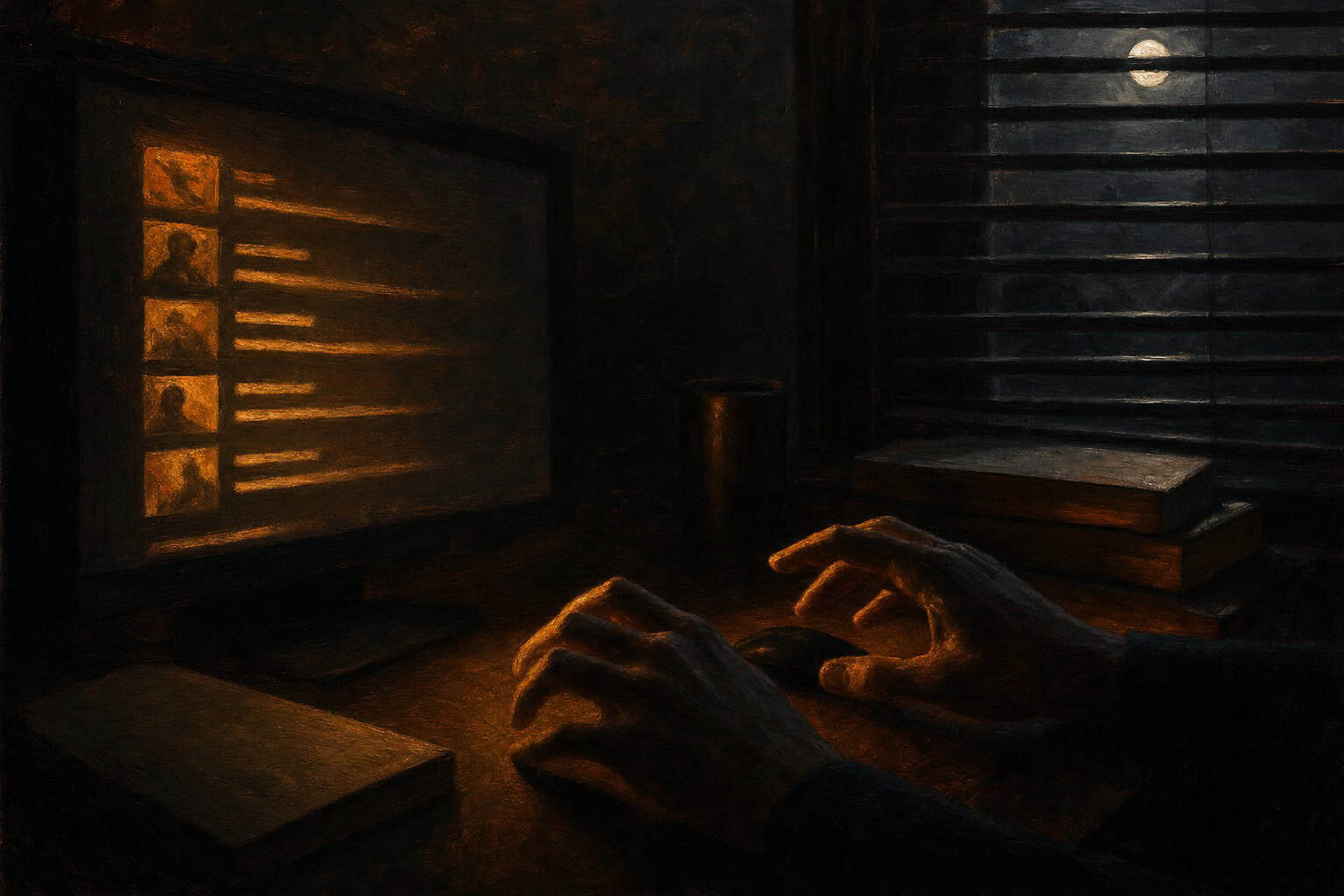
The playlist stacks in the dark like a column of lab results, bass low enough to feel in the teeth, each song a reading of how far he drifted from what he was made for.
Bass Lines Like a Second Pulse
A monitor glows in the dark, the playlist stacked tight like a column of lab results, each song a private reading of the body. Bass rolls through cheap speakers, low enough to be felt in the ribs before it reaches the ears, a second pulse laid over the first. Industrial kicks hit at a heart’s panic tempo, that shallow, trapped beat the chest remembers from nights in crowded rooms and stranger’s hands. Darkwave synths smear out over it, a slow, cold wash that feels like lying still while the mind leaves the skin behind. None of this is decoration. He scrolls through titles that once shook club floors and car interiors, now drafted into testimony. Under one heading he corrals the tracks that carried him into Deep Ellum’s neon heat; under another, the softer pieces that found him later, staring at a crucifix and trying not to look away. The cursor blinks beside it all, like a tiny metronome keeping time with his unease.
A Secular Breviary in Flickering Blue
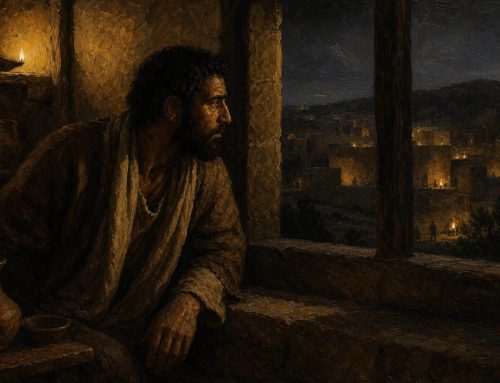
He treats the playlist like a set of hours to be prayed, but the prayers here come in drum patterns and sampled moans instead of psalm tones. This is the reckoning the scene presses: the same body that once bent to the beat in rooms thick with smoke now stands in a chapel, while those beats still own his nerves. He drags a brutal, carnal anthem next to a track that hums with longing for a world remade, forcing them to touch in the queue, refusing to lie about where he has been. Every selection is a small judgment: this one for the night a woman’s recorded gasps passed from man to man, that one for the hours his own arousal felt like theft. The screen becomes an altar laid with evidence instead of candles. He is not asking whether the music is allowed; he is asking whether the God he now serves will consent to meet him inside these frequencies that were tuned, for years, to worship of a different kind.
When the Kick Drum Carries Her Clenched Fists
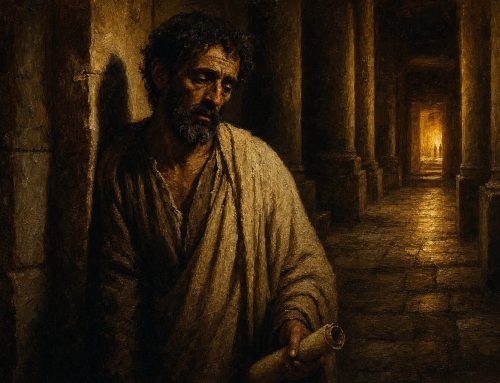
As the playlist tightens, some tracks stop being songs and turn instead into rooms he cannot leave, though he is no longer there. A harsh, metallic rhythm comes on and he sees again a naked shoulder, fists bunched near ears, jaw locked—not arched in pleasure but braced, like a body waiting for impact. The hi-hat’s relentless tick becomes her breath, fast and shallow. The distorted vocal, barely human, echoes the way consent had sounded in that world: not a free yes, but the quiet calculation of the least dangerous no. When his friends later replayed her recorded sounds for sport, that same beat ran under their laughter, turning violation into a kind of entertainment loop. Now, alone before the screen, he lets the track run without skipping, feeling his own stomach clench the way her shoulders once did. He is arranging files, but also replaying verdicts on himself, wondering if this dark, grinding tempo is the only music honest enough to hold what he helped happen.
A man’s playlist can be his most honest confession, mapping the exact distance between the love he was made for and the noise he settled for.
The Songs You Can’t Skip in Your Own Head
Most people won’t have a Deep Ellum playlist, but almost everyone knows a track that makes the throat tighten by the third bar. Maybe it’s a slow ballad that always played in the car after a breakup, or a club hit that still smells like sweat and liquor when the first note drops. This passage presses on that ordinary fact: our bodies keep time better than our minds tell the truth. The memoirist’s industrial and darkwave cuts simply make visible what often stays unspoken—that some of the songs we love were first wired into us in moments of harm, compromise, or numb consent. To face them is to feel again how the muscles braced, how the stomach knotted, how the soul ducked out of the room so the body could go on. The question underneath the scrolling screen reaches into any life trying to become faithful: what do you do with the art that formed you in sin, yet now seems to be the only language your heart understands when it tries to speak to God?
Waiting for the Next Track to Dare God’s Name
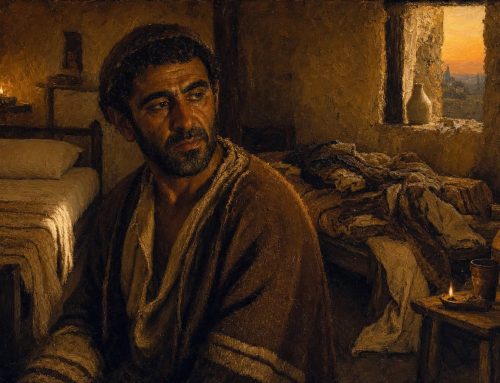
Later in the list, a different kind of song waits—still electronic, still pulsing, but straining toward language about newness, about stars, about a world where flesh is not a hunting ground. He hovers the mouse over it, not yet clicking, feeling the drag between the brutal honesty of the earlier tracks and the almost embarrassing hope of this one. To play it next would be to admit a desire for more than survival, more than the clever darkness he and his friends once shared like a password. Yet he also fears that if he lets this gentler piece follow the self-destructive anthems, it will sound false, like a costume thrown over a body that still reeks of the last party. So he leaves the cursor trembling there, between ruin and promise, while the current song’s beat continues to thud through his desk. Somewhere inside that stalled gesture, a different kind of consent is forming, as quiet and stubborn as a bruise that refuses to fade on schedule.