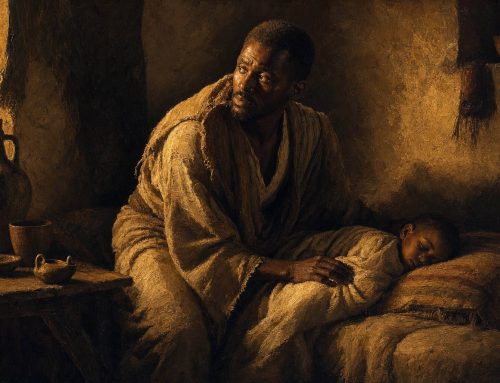
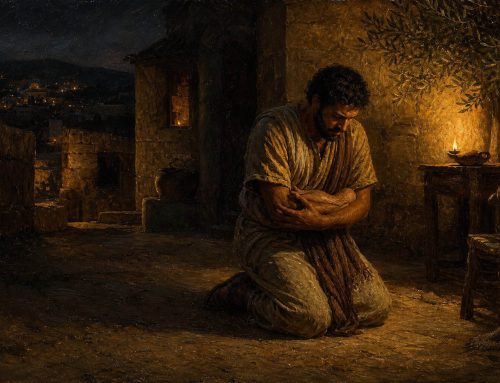
He goes back to campus knowing the truth arrived late — she detached long before the goodbye — and sets about building the coldest architecture a man builds to survive a leaving already over.
Scalpel in a Shaking Hand
Chapter 8 lives where a bed has barely cooled and a whole life already feels condemned. He returns to campus with the knowledge that she detached long before the goodbye, that their last intimacies were haunted by someone already gone. The shock is not just heartbreak but a sense that the frame of reality itself has caved in, like a building that looked sound until one beam snapped. In that rubble, he reaches for intellect the way a man reaches for a tourniquet, not because he loves its clean lines but because he is bleeding out. He begins to cut into his own story with borrowed terms, treating her betrayal as data, instinct, inherited pattern—anything but a personal choice aimed at him. Evolutionary theory and talk of instinct arrive later as names for pain he already knows in his bones. The chapter circles that first decision: to trust a cold, sharp explanation more than the raw wound pulsing in his chest.
Whiskey Glass Raised to an Empty Seat
The chapter’s reckoning gathers around a small, stubborn ritual: a young man, a stereo, a bottle, and a chair she no longer fills. While his roommate is gone, he sits in that cramped dorm room, turning love songs into knives he holds against his own ribs. He presses replay on imagined scenes of her with another man until his lungs scream, and still he refuses fresh air. Night after night, he lifts Seagram’s mixed with cheap soda in a twisted toast to their new happiness, hoping the burn in his throat will finally outrun the burn in his chest. Her quick erasure cuts deeper than any insult—hate would at least point a finger toward him, but this blankness feels like he never existed. He calls the punishment wisdom because pain, unlike people, stays. That glass becomes an altar where he offers himself up to absence, learning to confuse self-inflicted hurt with clear sight.
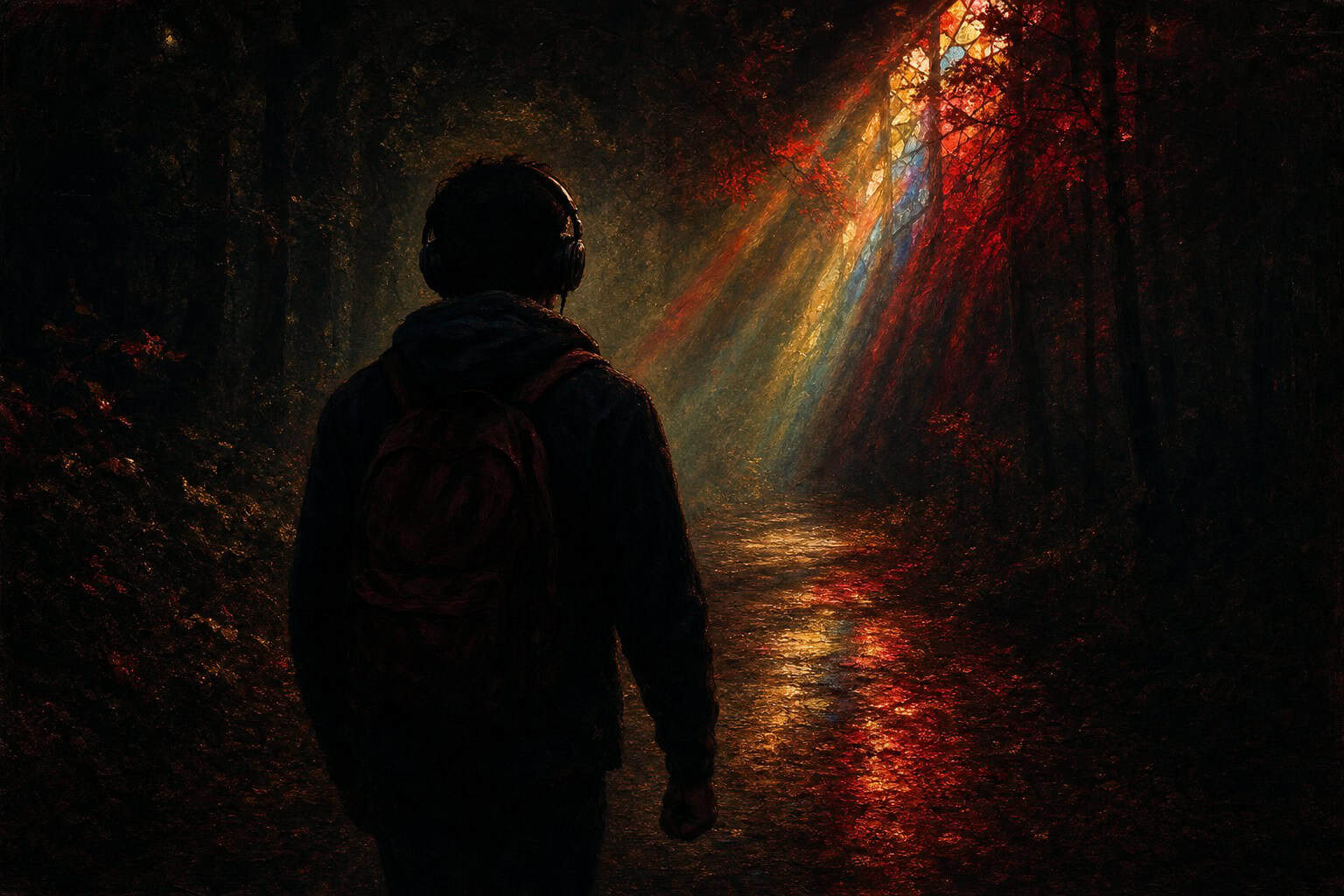
Footsteps on the Dark Campus Trail
Grief will not sit still, so he forces it into motion. When the dorm walls close in, he takes his anger outside, pacing wooded campus trails under indifferent stars. Each footfall is a metronome for thoughts that want to sprint off cliffs; he walks, runs, and lifts weights until muscles shake and sweat stings his eyes. The workouts look like discipline from the outside, but inside they are a slow, grinding argument with God and with himself. He believes he is mastering his body, when in truth he is finding new ways to agree with the voice that says he deserves to hurt. The hopeful, almost childlike side of him that once waited for tenderness begins to die back in that darkness, replaced by a calmer, colder intelligence that takes notes on every sting. He names the hardening “growth,” but every mile logged in the dark tightens the knot between pain and control.
Betrayal usually finishes long before it announces itself, and we build our coldest systems to survive a leaving that already happened.
Lilith Stirring in the Broken Heart
This is the chapter where older shadow and fresh heartbreak finally mix into one current. The long ache that began when God went silent now braids together with Jeannètte’s abandonment, and he senses something like Lilith moving in the joined waters. The Codex, which will later govern his dealings with women, first appears here as emergency doctrine—a way to shrink confusing human faces into predictable drives so he never has to stand unguarded again. Intellect becomes both shield and filter: women reduced to strategic survivors, men to expendable romantics, love to a transaction no sane man should trust. That simplification comforts him even as it flattens everyone in his path, including himself. Around this, the book’s dual melodies tighten: one line mourns the apparent favoritism of a God who seems to bless her joy; the other hardens into the proud, vain music of a man who vows never again to arrive at the altar unarmed.
The Coal He Refuses to Drop
By the time this chapter closes, grief has become something deliberate: a live coal he keeps pressed into his own palm to prove he is still capable of feeling. He tells himself that all roads toward love bend finally toward abandonment, so he will now choose his torment rather than wait to be chosen by someone else’s whim. Out of that vow, a whole way of seeing is born—human intimacy measured in risk calculations, tenderness translated into leverage and timing, trust treated as a luxury for fools. The ember of sorrow joins with the older chill of divine silence, and together they teach him that darkness is at least consistent. This chapter does not fix that lesson; it brands it. Its promise is stark: to watch a soul decide that pain is safer than hope, that cleverness is safer than consent, and to see how a single clutched coal can warm and burn the same hand as he walks deeper into the night.