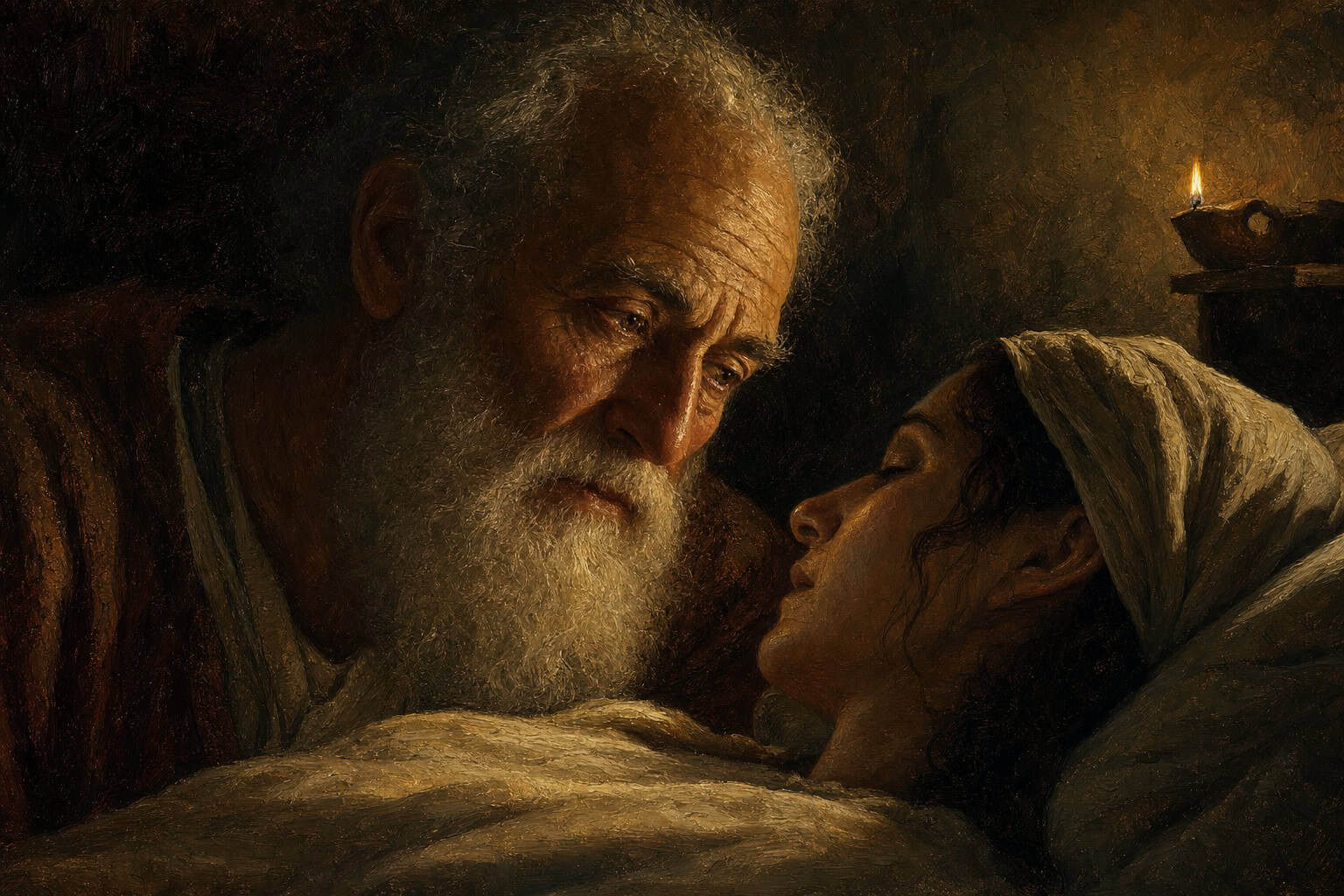
Missionary position meaning, and why it’s so hard: a Catholic memoir reads sex as flesh sharpening spirit, and the challenge of learning to see it.
The Question Asked With One Hand on a Cold Mug
It began as a plain thing, the kind of question a man types at midnight with one hand while the other cups a mug gone cold. What does it mean, this oldest arrangement of two bodies facing each other, and why is it so hard to hold? I remember the first night the question turned serious for me, years before I had any words for it. The ceiling seemed to sag toward the mattress. Someone I loved slept turned away, her shoulder a pale ridge in the streetlight that came through the blinds in stripes. The mechanics of the thing were simple; a boy learns those quickly and forgets nothing. What refused to come simple was the meaning underneath, the sense that something more than skin had been asked of me and something more than pleasure had been set on the table, and that I had answered neither. In Fractions of the Soul, the seventh chapter walks straight into that exact room and refuses to treat two people meeting as only nerves and instinct on a schedule. The narrator sets a hard frame at once. Human history, he says, is one long detour away from a lost garden, a banishment and a mercy folded into the same act, and the flesh is caught inside that whole story whether we consent or not. He will not let the body sit alone in a locked room away from the soul. He insists the two are wired to each other, that spirit can reach down into the grain of the flesh and change it. This is not the comfort the searcher wants. It is closer to a drop in the stomach, the vertigo of learning that a small act carries freight you never agreed to carry. The searcher came for a definition and a tidy list of challenges. The chapter answers by widening the frame until the bed becomes the one place where something outside of time leans in and the clock loses its grip. I sat with that opening a long while, feeling my own memory rise up through the page to test it. The past would not stay behind me here. It came in and lay down beside me in the striped light. Every clumsy nearness I ever knew walked back into the room to see whether the narrator was right. If he was, then nothing I did in the dark had ever been only physical, and that thought landed as both a mercy and a slow-spreading fear. The scene starts there, at the edge of that recognition, before a single resolution has been offered to anyone.
Metal Dragged Across Stone in a Sleepless House
The chapter reaches for a working picture, and it is not a gentle one. It names two people a blade and a stone, and their meeting a slow grinding, friction that either wears you down to nothing or draws you into the sharp thing you were meant to become. Here the challenge the searcher half-senses finally takes on a body you can feel. The blade lays itself against the stone and tells itself the pressure is being done to it, forced on it, when the truth is that the blade chose the contact and could have stayed in the drawer. That is the first lie, and I know its taste. I have pressed my own life against another person and pretended I was dragged there, that appetite hauled me by the collar, that I had no free hand in any of it. The narrator does not spare himself this exposure. He turns the lens back on his own motives and asks the ugly question outright: was I the blade being sharpened, or was I the quiet hand gripping the blade the whole time and calling the outcome fate? The body itself holds the answer, he suggests, in the muscles, in whether they brace for ruin or lean forward into becoming. That is a precise, embodied thing, and reading it I felt my own shoulders remember. There is worse tension beneath the picture. The grinding is not always fair. One party can walk away with a new edge while the other loses material, worn thinner with every stroke, and both agree to call the erosion a mutual love. I have been the one who left sharpened, having taken exactly what I needed from a stone I let believe it was cherished, and then closed the door. The chapter refuses to let any of this be innocent or automatic. Animals mate on instinct and season; if that were the whole story, there would be no meaning here worth searching for at all. But he claims something else moves between two souls, unseen, a resonance, a reaching that the flesh only carries and cannot cause. And here the dread deepens instead of lifting. If the connection is real, then every careless touch was a small theft of something holy, and every honest one asked more courage than I ever had ready. Time will not leave the scene alone either. The choices already made press into the present bed and will not be undone. The narrator stands inside that pressure and does not pretend he can step out of it. He questions who these others truly were to him, what he refused to read in their faces, what he did with the trust they set down in front of him. The metal keeps dragging across the stone, and no easy word arrives to make it stop.
Two Kinds of Eyes Fixed on the Same Skin
The turn comes when the chapter names the real challenge, and it has nothing to do with technique or the shape two bodies make. It has to do with the eyes. There are two ways of looking at the identical act, and they open onto two different worlds. Look with the eyes of the flesh alone, and you find only flesh, even while you are staring straight at a mystery that is trying to show itself to you. The spirit, the narrator claims, will not reveal itself to a gaze that has decided in advance to shrink it. This is the sharpest thing in the whole passage, and it reorganized how I read my own history. Spiritual blindness, he says, is not a soft innocence you drift into by accident. It is an active refusal, a way of guarding yourself against a sight that would cost you everything you have arranged to keep. For years I told myself I simply could not perceive what others swore was there in the room with us. The chapter lifts that excuse out of my hands and sets it down where I can see the weight of it. He offers the image of his own body in a coffin. Gaze at the hollow shape with fleshly eyes, and you find a corpse, a final loss, a lid closing. But he says plainly that he is not there, that the box holds only what he was never meant to keep. The eye trained for skin alone cannot follow him past the wood. And the same holds, exactly, for what passes between two people who love with faith. If your ears were never trained to hear the spirit whispering through desire, then all the deep meaning of the thing arrives as noise, as sweet nothings, as a sadness tapping somewhere behind your ribs that you cannot name or answer. That is the true challenge under the searcher’s question. Not the arrangement of limbs. The training of the eye. Whether you have let yourself learn to see the soul inside the friction, or whether you keep it kindergarten-plain so it can never turn and ask anything of you.
If you love without faith, even the truest touch dissolves into pillow talk you forget by morning.
What the Fleshly Eye Leaves Behind in the Box
After a turn like that, you cannot walk back to the question the way you first asked it. The fallout is quiet and it is long. If the meaning of two bodies depends on trained sight, then the challenge is never finished, and no position, no method, no clever technique solves it once and for all. You carry the labor into every meeting for the rest of your days. The narrator does not pretend this comes easily to him or that he ever fully mastered it. He circles back to his own failures with an honesty that stings the reader as much as it must have stung him. He faces the fact that he spent long years with fleshly eyes by deliberate choice, seeing corpses where living souls were breathing in front of him, seeing convenience where a real reaching had been offered and refused. Time will not let this fallout close cleanly either. The past he built keeps pressing into his present; the people he ground against and then left cannot be called back and loved rightly now. He sits down inside that unfinished ache rather than tying a bow on it. There is a mercy threaded through the chapter, but it is never a rescue. God, here, is not the hand that lifts him out of the dark room and stands him clean in the daylight. God is nearer than that, and stranger. He is present inside the very confusion, walking with the narrator in his own sin, quiet in each tear the man cannot stop, showing something in the dark rather than clearing the dark away. That is the register the whole memoir holds without flinching. The comfort does not arrive as a fix. It arrives as company, a presence that stays while the grinding goes on, while the meaning refuses to resolve into anything neat. The narrator lets death and love do the same work in these pages. Each one either opens a way toward something genuinely new, some real risk of believing and acting differently, or it turns you back onto the safe merry-go-round of the familiar and the habitual. He knows which way he chose too often. The dread of his own freedom rises up in him again: he could have seen, and did not; he could have loved with faith, and handed over pillow talk instead. The fallout is not quite despair. It is the sober reckoning of a man counting what fleshly sight has cost him and refusing to pretend it cost him nothing. He leaves the corpse in the box and admits, without softening it, that the eye which sees only the corpse was, for a long season of his life, his own.
A Whisper You Were Never Taught to Hear
Where does it settle at last. Not in an answer you could print on a card and slide into your wallet against the next lonely night. The chapter ends the search by turning it inward, moving it off the body and onto the trained soul. The meaning of two people meeting is not a fixed fact waiting to be looked up and memorized; it is a resonance that shows itself only to those who ask for eyes to see it and hearts changed enough to feel it. To everyone else it stays a sadness tapping at a door they have decided not to open. I closed the chapter and sat there listening to my own tapping. I have loved without faith and called it love, out loud, to a face that believed me. I have taken the sharpening and left the stone worn thin and told myself the trade was even. I have looked at the mystery of another person with the flat, fleshly stare that finds only flesh, and then lain awake wondering why nothing in the room had felt holy. The narrator will not let me off the hook, and he grants himself no gentler treatment. That is precisely why this memoir keeps its grip on the throat. It refuses the therapeutic answer and the tidy moral both. What it hands you instead is the harder gift: a way of seeing you must choose, and choose again, with no promise it will ever arrive as victory or even as peace. The dread stays. The past stays where it fell. But into that unhealed room something quiet keeps walking, not to lift the ache out but to be present inside it, to sit down beside a man in his failure and simply not leave. If you came looking only for what two bodies mean, this book will press far more into your hands than you asked to hold, and it will charge you the comfort of the small question as the price. It asks whether you are willing to train the eye that finds the soul inside the friction, knowing full well what that eye will then demand of every touch you are given for the rest of your life. That is where the seventh chapter sets you down: not at a definition, but at the raw start of a slow and dangerous learning to see. The whisper it leans toward is one most of us were never taught to hear, and standing there in the dark, straining after it, is the whole of the wager. The book is the training. I am still, badly, learning it.