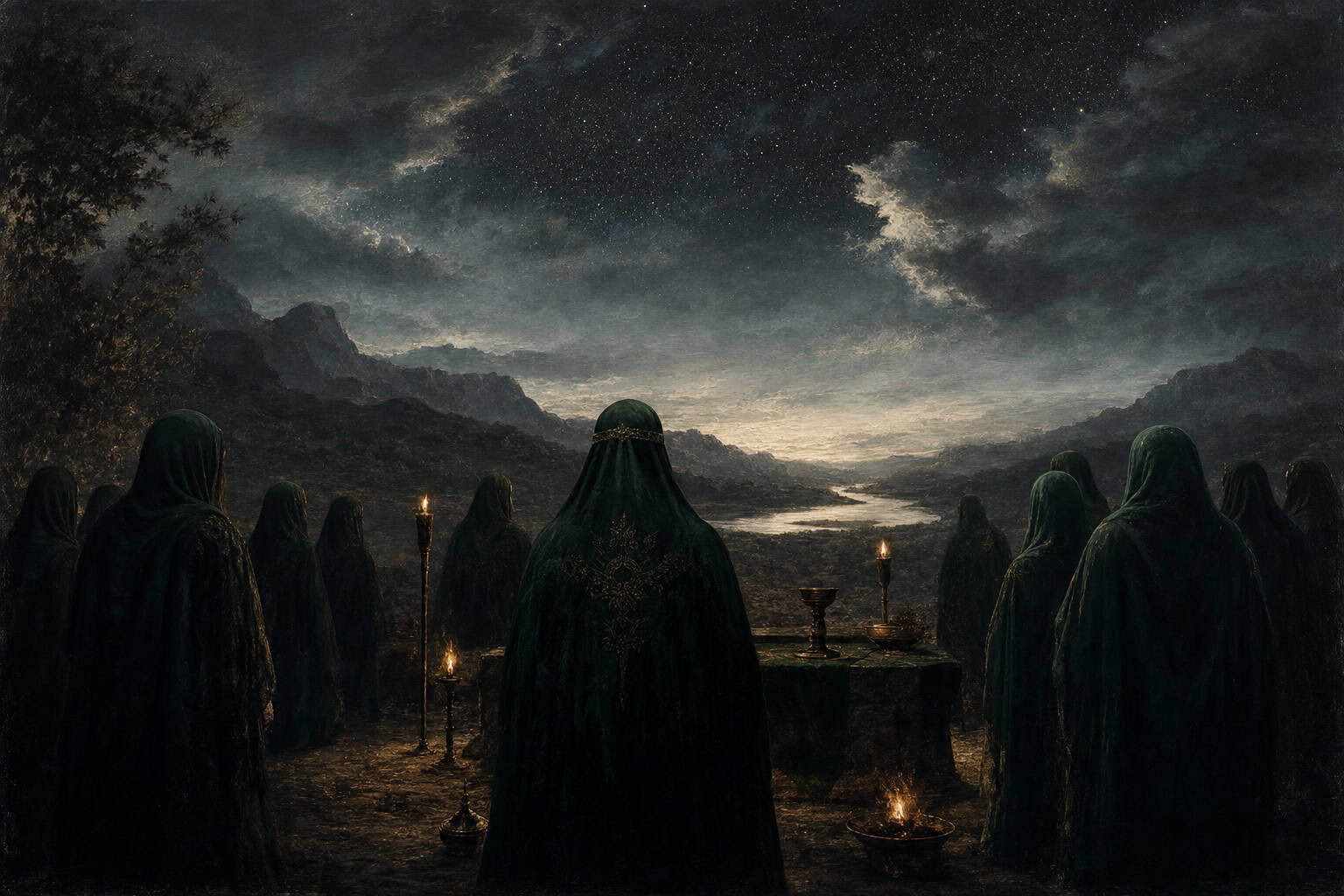
He says the vow aloud and feels the old sky lean in — the same stars that once kept watch over a frightened boy, now asked to witness a man choosing joy.
The Night Sky Standing Over the Vows
A man stands beneath a dark sky, the air cool on his skin, breath turning faint in the night as vows are spoken aloud. Above him, the same stars burn that once watched a small boy huddled in a backyard or at a bedroom window, shoulders tight, jaw clenched against sobs he could not name. Those cold lights have seen fists, harsh words, the sick churn in a child’s stomach as he learned what safety did not mean. Now they look down on a public moment: a ceremony, a promise, a new binding undertaken in front of faces turned toward him instead of away. The passage lets these two nights overlap—the old grief and the present joy—without smoothing one into the other. The sky holds both stories without blinking, as if creation itself has been summoned to testify. Here, in this sliver of a chapter, the stars become a single, unbroken gaze across his life, refusing to forget what they saw when nobody else was looking.
When Old Grief Refuses to Leave the Wedding
That shared sky forces a reckoning: if the same stars watched the breaking and now watch the binding, then this joy cannot pretend to be innocent. The body that offers vows tonight is the same body that once flinched at every sound, that learned to sleep in fragments. The passage will not let him step into love as if darkness were a phase he outgrew. Instead, the childhood nights crowd close, like uninvited guests at the edge of the gathering, insisting on their right to stand there. His question is not whether God loves him, but whether he can let himself be loved in front of the very witnesses that saw him ruined. Can he stand under that remembered sky and speak words of promise without feeling like a fraud, without scrubbing his history clean? The scene presses him to accept that this joy is not a fresh start, but a strange continuation—grief and gladness sharing the same ceiling of stars.
Dissonant Notes Threaded Through a Wedding Song
In this passage, his inner landscape is not quiet while the vows are spoken. The old demons do not sit down politely; they bring their own music—sharp, off-key, too loud in his chest. Memories throb like a headache behind the eyes even as words of love leave his mouth. The text dares to say that God does not demand those notes be silenced before the song can count as holy. Instead, there is a hint of something riskier: the harsh sounds being pulled, unwilling, into another melody that does not erase them. This is not comfort; it is pressure. If the dark chords are woven in, they cannot be disowned later. The man at the altar feels the cost of that integration. To consent to divine love here is to allow every jagged thing in him to be claimed, tuned, and used. No tidy healing. No blank slate. Only a widening music that has room for both blessing and bruise, and he is not yet sure he wants that kind of exposure.
The same stars that witnessed your private grief will one day witness your joy; consenting to love means letting them see both.
Hands That Tremble Between Heaven and the Embrace Beside You
An ordinary reader might feel this scene like a weight in the chest, because the conflict is not exotic. You think of your own attachments: the child you would never leave, the partner whose breathing you know by sound, the friend who sat with you when no one else would. The passage names a fear we rarely confess—that if God lifts us too high, we will have to let go of what feels most human and most ours. We do not resist God because we doubt His reality; we hesitate because we love the faces in front of us and worry that holiness means neglecting them. In the image of a soul afraid of becoming a salt pillar, frozen mid-glance toward what it cannot abandon, we see the danger of loving earth well. This moment asks whether a life scarred by darkness can stretch toward heaven without turning its back on the small, warm body beside it. The tension lands in our own arms, wherever we are holding someone we cannot imagine releasing.
Under the Same Stars, the Song Is Still Unfinished
By the end of this passage, nothing resolves. The night sky does not change color; the stars neither applaud nor condemn. A man stands in that open space between terror and trust, demons humming low, vows hanging in the air like notes not yet resolved. He is afraid of rising too far from the ground that once hurt him and now holds what he loves, afraid that saying yes to God will harden him into a monument at the edge of his own life. The text does not tell us whether his consent will deepen his humanity or strip it bare; it leaves him there, under the same cold lights that remember everything. For the reader, this unfinished chord lingers. Somewhere in your own night, you can almost feel that shared sky, heavy and watchful, waiting to see what kind of music your next small, trembling assent will make in the dark.