Looking for signs that God has abandoned you? A raw, honest reflection on the silence that feels like abandonment, and what may be hiding inside it.
The Ceiling You Stare At in the Dark
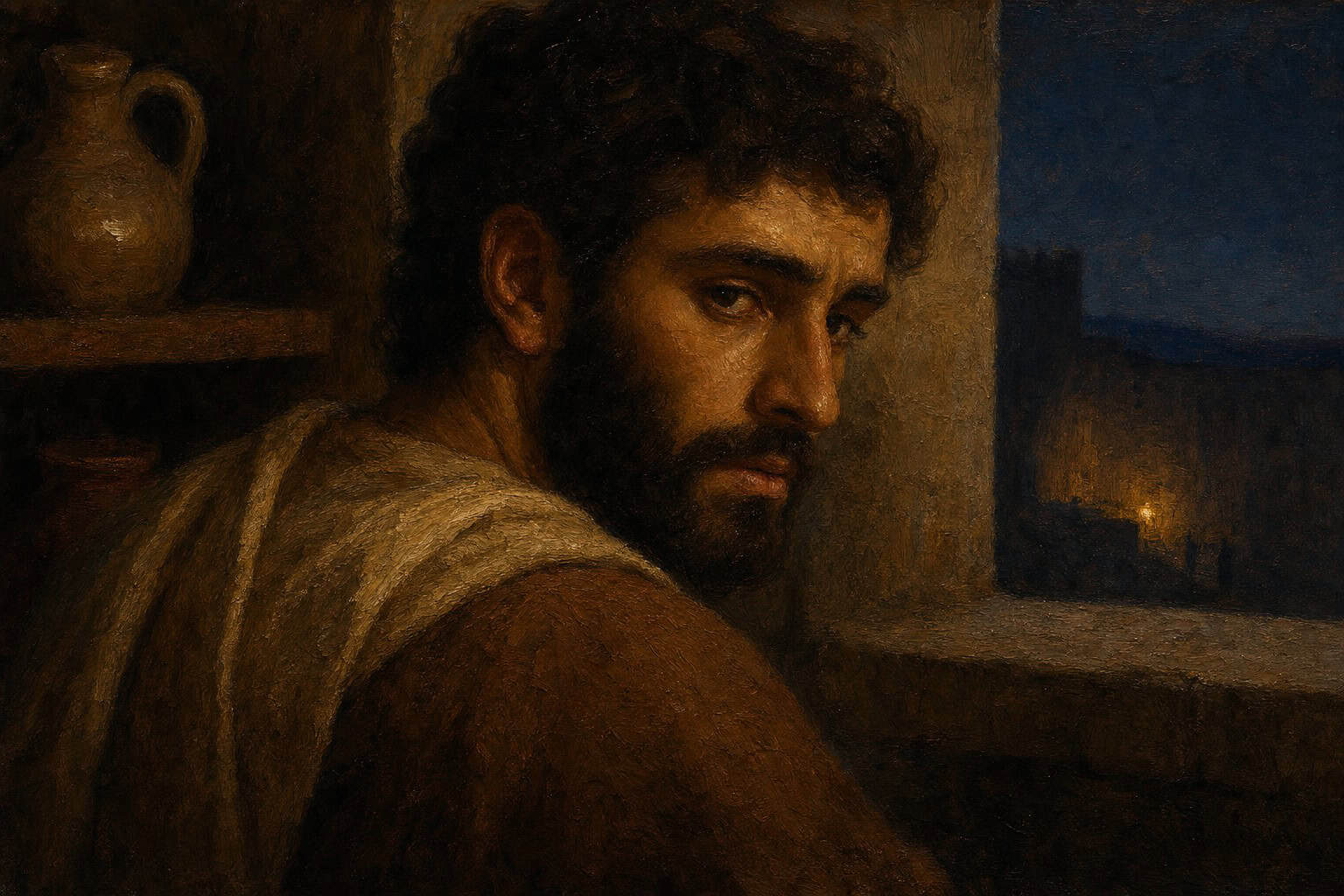
Have you started to suspect that God turned His face away and did not tell you? You lie awake and count the hours by the small sounds the house makes as it cools. The refrigerator hums and stops. A car passes and the light slides across the ceiling and is gone. Inside that stillness you strain for something, anything, that would prove you are not alone in your own skin. You pray, and the words fall like coins into a dry well, and you hear no splash at the bottom. You wait for the small warmth that used to come, the sense of being held, and it does not come. This is the state you carry when you finally give up on sleep and type the question into the glowing box at two in the morning: signs that God has abandoned you. It is not a question of theology. It is a question of the body. Your chest is tight. Your jaw aches from a clenching you did not notice starting. Your hands are cold. You have done the things you were told would keep the connection open, the prayers and the confessions and the good behavior, and the line has gone dead anyway, and now the real fear surfaces: that it was never a line at all, that you were talking into a room with no one in it. There is a particular shame threaded through this dread. You feel found out. You feel as though some vast attention looked at you closely, saw exactly what was there, and quietly withdrew. You want to cover yourself. You want to disappear from your own sight, because your own sight has become unbearable to hold. The worst part is not the silence around you. It is the growing certainty that the silence is a verdict, that everything you are and everything you hide has been weighed and judged not worth the effort of an answer. You built your days to keep from being hurt. You learned early that the world could wound you, so you grew careful and guarded and hard to reach. Now the very carefulness that once protected you seems to have made you unreachable even to mercy. You wonder if the quiet is a punishment. You wonder if it is proof. You have not yet let yourself consider a third possibility, that the quiet might be the exact shape of a nearness you cannot feel because something in you has gone numb. Anthony Adoré knows this state from inside it, and in Confessions to the Empty Chair he does not rush past it toward comfort. He sits down in the dark and lets it stay dark a while, because the honest thing is that God does not always lift it. Sometimes He walks in it beside you instead.
The Wall You Mistook for a Sanctuary
Look back at how you learned to protect yourself, and be honest about the cost. Somewhere young, the world showed you that being open was the same as being hurt, and you drew a conclusion and never revisited it. So you began to stack stone on stone around your heart and you called the work holiness. You told yourself the wall was for God, a defense of something clean inside you against a filthy world outside. You took a strange pride in the strength of each stone. You watched other people spend themselves on parties and drinking and the tangle of bodies, and you felt set apart, unstained, safe from all of it. But underneath the pride sat something you knew and refused to name: the foundation was not faith. It was hatred. You did not raise the wall to keep God in. You raised it to keep every other person out, and the rage you kept behind it fed on the loneliness the wall created, until you could no longer tell the sanctuary from the cell. Here is the trap you did not see coming. A wall built to keep contamination out also keeps you from being reached. Every misunderstanding you feared, every complication you dreaded, every temptation you did not trust yourself to face, you sealed them all out, and in the very same motion you sealed yourself away from any hand that might have touched your shoulder. You became a king ruling an empty country. No one nearby to speak with about the things of the soul. No arms around you at the end of a hard day. No one who looked at you and stayed. And God, when you went searching for Him, seemed to be waiting on the far side of the same wall, exiled out there with everyone else you had shut away. This is what you might reconsider now, awake with the dry prayer still in your mouth. The silence you take for abandonment may be the echo coming back off your own fortress. You cannot hear a voice you have deliberately walled out. You cannot feel a nearness when your whole way of standing in the world was engineered to feel as little as possible. Pride swells the face and closes the eyes. You set lesser things above God and let them press down on you, and under that pressure you named Him absent. But maybe He was never gone at all. Maybe you simply made yourself a man no one could climb toward, and then lay awake grieving that no one climbed. The severity here is not cruelty. It is the mercy of being told the truth about the stones you laid with your own hands, so that you might one day recognize the difference between a room where God is silent and a room you built to keep Him from speaking.
The Moment Someone Climbs the Stones
Sit for a moment with what it does to a guarded person when someone reaches past the guard. Not with force. Not with a battering ram against the gate. With something small and unarmed, a joke passed between rehearsals, a first word offered before you asked for it, an ordinary friendship held out like an olive branch exactly where you least expected any hand at all. You did nothing to earn it. You were quiet and reserved and drawn to solitude, keeping company with the few you already trusted and no one else. Nothing about the way you carried yourself should have drawn a single soul near. And yet a soul came anyway, saw straight past the calculated civility, past the still face and the level voice you had practiced, and reached for the person hiding behind all of it. This is the thing to hold, and it cuts two ways at once and will not let you pick one. It is mercy, because someone saw you and did not turn away. And it is terror, because someone saw you, which means the covering slipped, which means you stood exposed in the one place you had sworn to keep hidden. The gaze of another person can land like being caught in a crime. When someone truly looks at you, you become a thing in their eyes, weighed and read and known, and the whole careful self you performed for years collapses down into the raw fact of what you actually are. For a soul that raised a fortress precisely to prevent this, the moment is an earthquake under the foundation stones. And here is the strangest confession of all: part of you wanted it. Sometimes we build the walls not only to keep everyone out but to see who will bother to climb them. We test the world with our coldness, half-hoping someone will prove the whole defense unnecessary. Then, when someone finally does, we do not know whether to weep with relief or bolt for the door. This is exactly where the question of God’s silence turns on its hinge. You spent years reading His quiet as rejection, and here comes a person refusing to accept your quiet as rejection, refusing to read your walls as a final word. If a girl in a band section could see through the performance and reach anyway, then perhaps the silence you charged against heaven was only ever the sound of your own defenses, and never the verdict you feared.
When you can no longer feel God, ask first whether you have made yourself unseeable.
What the Softening Costs You
There is a price to letting the wall come down, and it is not the price you brace for. You imagine that softening will heal you, that if you finally let someone in, or let God in, the ache will lift and the silence will fill with music. The truth is harder and stranger than that. To soften after years of cultivated hardness is to choose mercy over destruction, and that choice makes you blind in a brand new way. The cold, careful mind that once trusted nothing at all suddenly trusts nearly everything. The man who used to see through every performance becomes the most credulous fool in the room, gathering up evidence of coherence where there may only be more performance, his own or someone else’s. Love makes you complicit in your own deception. You lower the guard and you can no longer tell what is real from what you desperately want to be real. This is precisely why the silence of God is so hard to read as any kind of reliable sign. You are not a neutral instrument taking a clean measurement. You are a soul that spent years teaching itself either to feel nothing or to feel everything, and neither of those states sees straight. When you were walled, you called His absence a verdict against you. If you soften now, you may name every warm rush of feeling His presence, whether it is or not. There was a time you loved to grieve, when you sought out sorrows to weep over and feigned miseries to draw tears, because feeling anything at all was better than the numbness of the citadel. So how do you trust your own reading of the dark now, coming from a self that has swung between iron and flood? How do you tell whether the quiet is God gone, or God near and you unable to feel Him, or God simply waiting for you to stop performing long enough to notice the breathing next to you? These are the questions Anthony Adoré refuses to answer on the cheap. He hands you no tidy checklist of signs. He does not tell you that feeling abandoned proves you are, or that praying hard enough will make the feeling lift on schedule. He shows a man turning the lens on himself, catching his own motives mid-lie, unsure whether the person who climbed his wall was a genuine gift or a mirage his loneliness conjured, unsure whether God’s silence was a sentence or a companionship too quiet to register. The honest thing is that from inside the dark you often cannot tell. And the second honest thing, the one that changes everything without solving anything, is that not being able to tell is not the same as being abandoned. Uncertainty is not the same as absence. A room can be full and still feel empty to a man who has forgotten how full rooms feel.
The Breathing Beside You in the Small Hours
So where does this leave you, awake in the small hours with the dead prayer and the dry well? Not with an answer that seals the wound shut. The despair is real, and this book will not pretend otherwise or paint over it. But there is a turn, and it is quieter than any rescue you were hoping for. Consider that the signs you have been hunting, the withdrawn warmth, the unanswered prayer, the ache of being unseen, may not be the marks of a God who packed up and left. They may be the marks of a God who stays, walking beside you in the exact place you cannot feel Him, present in every tear you are ashamed of shedding, near in a dark He chooses not to lift. Grace, when it finally comes, rarely arrives as an escape from the night. Far more often it arrives as company inside the night. The striking thing was never that the darkness ends on cue. The striking thing is Who turns out to be sitting there in it with you the whole time. Remember the man who stood before the holy so aware of his own smallness that he covered his face and dared not look up. That was not abandonment. That was a nearness so real it made him tremble. The shame you carry, the wish to cover yourself and vanish from your own gaze, may be the very spot where God stands closest, because shame means you have finally seen yourself truly, and the God who sees you truly has not turned His face away. He was never the one who left the room. You laid the wall yourself. You closed your own eyes with your own pride. And a God who honors you too much to smash the wall down by force will instead wait, patient and unhurried, at the foot of it, for the night you decide to lift one stone with your own two hands. Confessions to the Empty Chair is the long, unflinching record of a man learning to lift those stones one at a time, of a fortress that felt like holiness and proved to be a prison, of the person who climbed it without an invitation, of the softening that stole his clear sight and handed back a living heart. It will not tell you that God has abandoned you. It will do something more dangerous and more merciful than that. It will keep you company in the dark until the moment your own ragged breathing quiets enough that you catch, underneath it, another breathing you had stopped believing was there, and you understand at last that you were never as alone as the walls had convinced you.