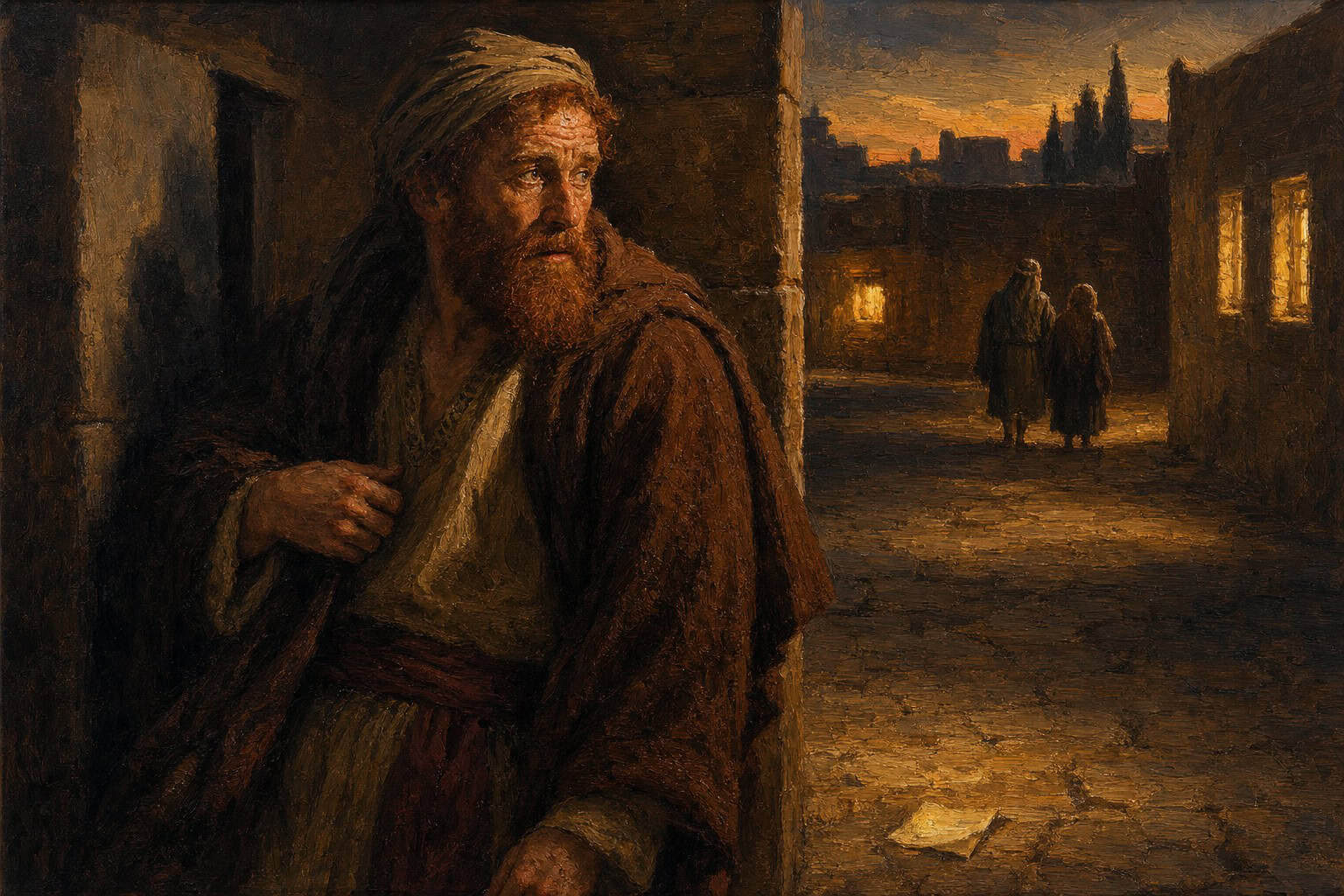
What is the modern-day Molech? In one chapter of Confessions to the Empty Chair, the old child-devouring idol turns up on a school playground, in a hierarchy of wealth that punishes some kids for wanting what others are freely allowed to want.
Two Boys and a Letter They Should Not Have Written
Have you ever wanted someone so badly that you were sure the wanting itself was a crime? That is where this chapter of Confessions to the Empty Chair begins, on a playground that pretends to be neutral ground and is secretly a small kingdom with its own laws. Two boys, the narrator and his friend Samir, are barely old enough to name what they feel. Their voices have not dropped. Their hands still shake when they think of her. They are not cruel boys, and this matters, because they have endured years of quiet cruelty from Kate’s circle and still carry no hatred toward her. She is simply captivating to them, a bright figure ringed by other boys who hope for a single glance. So they do the only honest thing their young hearts know. They write a letter. They bend over the paper together and pour a real, awkward, stumbling sincerity into it, hoping the plain truth of their feeling might reach her, might loosen her even slightly from the shadow of her friends. You can feel the boyish faith in it, the belief that honesty is money in the bank, that if you mean a thing hard enough it will count for something. The word for their state is infatuation, but that word is too tidy for the heat of it. This is the loneliness the modern-day Molech feeds on, the loneliness so many of us carry through those years, of standing outside a warm room with your face pressed to cold glass, watching a life you are not invited into. The narrator, looking back as an older man, refuses to laugh at these two. He treats their longing as soft and true, the first stirring of a desire that will trail him for decades. What breaks the heart in the reading is how certain they are that sincerity will be enough. They do not yet know the rules. They do not yet know the blacktop is not neutral, that an old idol still keeps an altar under it, that some boys are allowed to approach some girls and others are forbidden before they open their mouths. They have not learned that the same feeling can be legal in one child and a criminal act in another. This scene sits early in the book, and it works like a bruise the rest of the memoir keeps pressing. The letter is the hinge on which everything turns. Every soft thing about these boys is about to be gathered up and turned into evidence against them, and they are walking toward that reversal with their hearts wide open, holding their small folded page like an offering they still believe will be received.
When the Principal’s Decree Turns Feeling Into Crime
The answer to their letter does not come from Kate. It comes from the office. The principal hands down a decree, cold and total: maintain complete distance from Kate for the rest of the year, no interaction, under threat of severe punishment. Read those words slowly and feel their weight land on a child’s chest. A boy’s first honest feeling has just been declared a hazard to be contained, and the word unauthorized hangs over it like a stamp on a file. The tension gathers because the punishment does not merely forbid an act. It reclassifies the boy himself. He is now a danger, a thing to be kept at arm’s length, a criminal of the heart before he has done anything but tell the truth. And the machinery goes further. It forces the boys to explain themselves, to lay out their own tenderness in words, as though their affection were the very proof of their crime. This is the vicious part, the part that curdles the stomach. Institutions punish most cruelly when they make the innocent confess in language that already assumes guilt. The boy must speak his softest feeling aloud and watch it harden into the case against him. And the narrator sees, even in the moment, that the rules bend one way for him and another for the boys born inside Kate’s circle. The same glance, the same folded letter, would have been charming from one of them. From him it is intrusion, an interaction to be forbidden. He is learning that money has a kind of gravity, an invisible field that shields the ones already blessed and exposes everyone else to the full force of the law. What was warm goes bitter in his mouth. The affection that once made his chest glow now cuts him from the inside, the same feeling turned into the instrument of his own suffering. A dread opens here that runs deeper than embarrassment. It is the sick swirl of discovering that your own freedom was never really yours, that you were free to feel but not free to be received, that the door of another person’s regard was bolted shut before you were born. The older narrator does not soften any of this. He does not lean down and tell the boy it will be fine. He sits inside the injustice and lets it stay ugly and raw. And he begins to put hard questions to himself, to Kate, to the whole small court that condemned them. Who were these people to him, really? What did he refuse to see about them, and about his own hunger? And what did their verdict do to the shape of his soul for the long years that came after, when the sting had faded but the lesson had not?
The Altar Under the Blacktop
Then the reflection turns, and the playground becomes something older and darker in the narrator’s eyes. He no longer sees only children being cruel to other children. He sees a whole system that produced those children, a machinery of wealth and power with its own appetite, its own worship, its own hidden altar. He reaches back into ancient memory for the demon Molech, the idol with a bull’s head who received living children into the burning bronze belly of his statue, a monstrous trade of infants for a promise of prosperity. The narrator argues that the fire never went out. It only moved inside. That is the modern-day Molech. Modern parents, he says, still make the sacrifice, only now the altar is cultural and the thing burned is the soul. They raise their children to guard status, to hold the hierarchy in place, to know their rank and defend it against anyone reaching up from below. They indoctrinate the young into a worship that dresses itself in good manners and proper distance. And the working-class boy standing on the blacktop with his rejected letter learns, with a cold shock, that he is the offering and not the chosen one. This is the climax of the passage, the moment the private wound tears open onto something vast and old. His small humiliation is suddenly part of a ritual older than the school, and he can feel the heat of it rising off the pavement. The terror and the truth of this turn is that it refuses to keep his pain small or personal. A boy’s crush becomes a window onto how an entire world teaches certain children they are less, and how it hides that teaching behind the language of politeness. God does not appear here to snatch the boy off the altar. There is no hand from the sky, no rescue. What breaks in instead is a terrible clarity, the sudden ability to see the fire for exactly what it is, and to name the people feeding it. That clarity does not make the burning stop. It only means the boy is no longer confused about who lit it.
The cruelest lesson of adolescence is not that no one wants you, but that some are permitted to want and you are not.
What the Fire Left in Him
After a revelation like that, nothing settles back into softness. The fallout drifts down into the narrator like ash and stays. He carries away a conviction that will poison years of his life, the belief that affection, Kate’s and the affection of anyone like her, is a prize handed out only to those born blessed by the social order. He has learned that people like him reach beyond their grasp the instant they reach at all, and that the world will slap the hand down every single time. Watch what this does to time itself inside him. The rejection refuses to stay in the past. It presses forward and arrives ahead of him at every future encounter, whispering before the girl even speaks that he is already disqualified, already the wrong kind of boy. His present becomes a corridor where an old verdict keeps echoing off the walls. This is where the older narrator turns the lens hardest on himself, and it is the most unsettling part to read. He does not let himself off as a pure victim. He sees, with painful honesty, how a boy marked as unwelcome starts to protect himself in ruinous ways. To dodge the terror of being discarded again, he learns to blow things up first, to seize a bitter control over the ending rather than wait to be refused. He would rather be the one who destroys the thing than the one who gets thrown away. He mistakes this coldness for strength, the way boys are trained to. He learns to swallow the whimper rising in his chest, because the script he was handed forbids the sound of a man in pain. And so the wound does not simply ache. It teaches him a whole crooked trade of survival, one that will go on to wound other people in turn. The narrator does not paint any of this as noble. He names it plainly as a sickness, a self-chosen exile born of fear. What makes this stretch of the book bearable rather than merely grim is that honesty. He will not lay all of it on Kate. He will not lay all of it on the principal. He sits in the uncomfortable middle, asking what was done to him and what he did to himself, refusing to slice the two cleanly apart. The loneliness the modern-day Molech leaves behind in its offerings is shown here not as one clean injury but as a habit the injured heart forms in its own defense, a habit that keeps the original wound bleeding long after the blacktop is gone.
Not Rescued, but Accompanied in the Ash
So where does this leave the one the modern-day Molech has already marked, still standing at the edge of the room? The memoir does not hand out comfort like candy from a jar, and that refusal is its strange mercy. It will not tell you that the burning you felt in high school was only a phase, that it meant nothing, that you were merely misunderstood and everyone grows out of it in the end. The narrator honors the pain instead. He treats that boy’s humiliation as real and lasting, a thing that shaped the man he became. And yet, down in the ash, something else stirs. The spine of the book is not that God reaches in and lifts the boy off the altar at the last second. It is that God is present in the tears themselves, close in the very dark the boy cannot climb out of. There is a warning the narrator circles back to, the old caution about anyone who causes one of the little ones to stumble, and it settles onto the shoulders like a steady hand. It means the boy was not the criminal after all. The system that shamed him was. Heaven took his side even when the office would not. That does not wipe out the loneliness, but it changes what the loneliness means. To be lonely because you dared to feel and were punished for it is not proof that you are worth less. It may be proof that you were among the little ones, and that the fire was lit by other hands. The narrator does not tie his old dread off with a bow. He still interrogates his own motives, still wonders what he refused to see in Kate, still counts the damage he later did with the grim survival he learned that year. But he offers the reader something rarer than a fix. He offers company in the dark, the plain sense that the worst hour of your youth was seen, that your longing was never the shameful thing, that someone else walked the same cold pavement and lived long enough to set it down in words. If you have felt invisible at the edge of a crowded room, this chapter will not lie to you about the cost. It will simply refuse to leave you standing there alone.