You gotta lock in but can’t. Here’s what it means when desire becomes a discipline, not a mood – read through Fractions of the Soul.
The Season I Mistook Comfort for Devotion
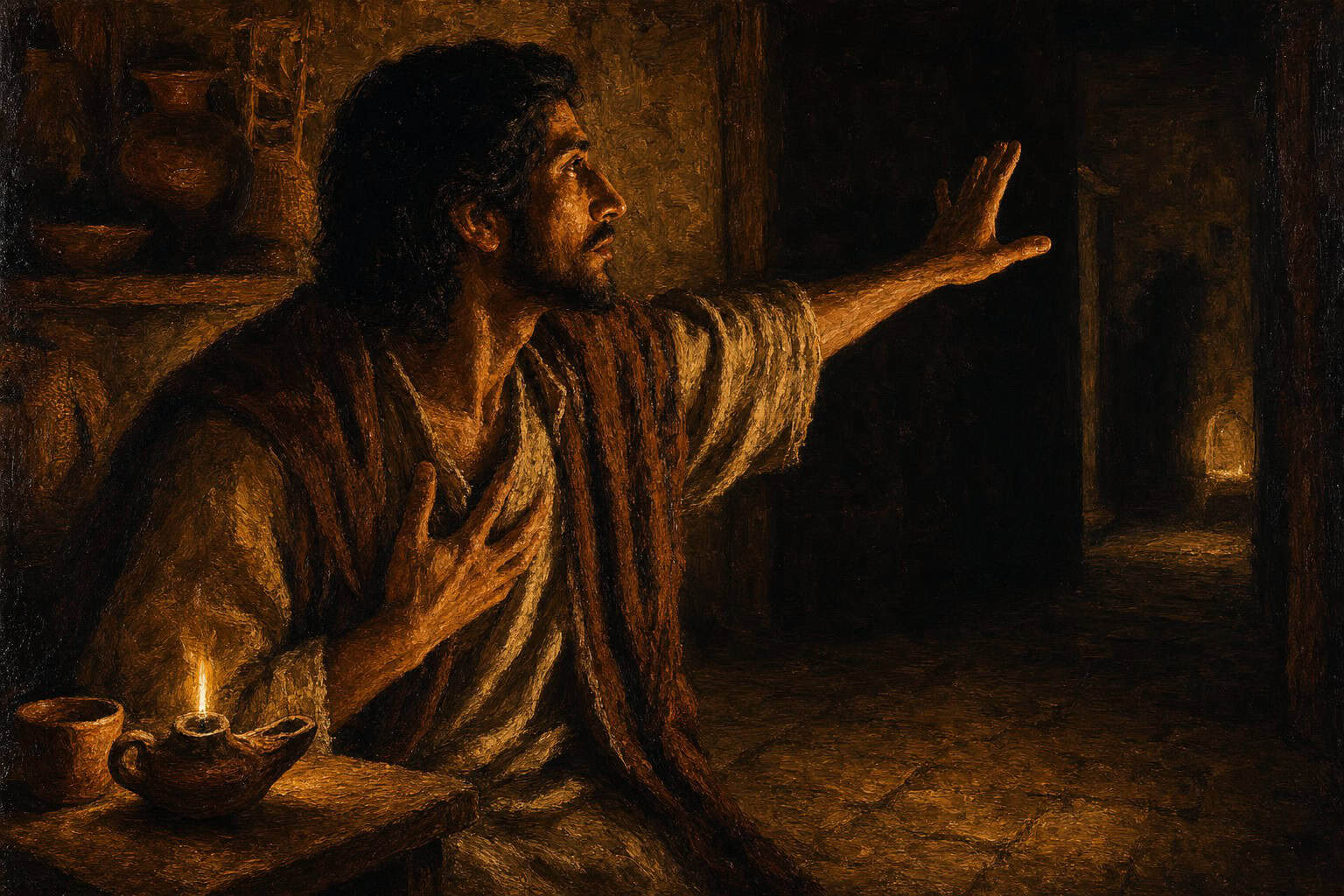
There was a season, years back now, when I sat close to a woman on a low couch in a small apartment and felt the whole thing bloom up through my chest, and I called that blooming love. I remember the lamp on the table beside us, the warm yellow of it, the way her shoulder fit under my arm as if the space had been cut for exactly that. I remember wanting to stay there forever and calling the wanting devotion. It cost me nothing. That was its charm. I could hold her and feel large, feel useful, feel like a man giving everything, and not once did anything I did not want to give get asked of me. The pull toward her body and her voice was real, I will not lie about that, but I dressed the appetite in a nicer coat and told myself the coat was the man. In Fractions of the Soul the narrator names a moment much like this, the way a life with God can begin as warmth and easy talk and a kind of hugging closeness, and he does not sneer at it, and neither will I. That warmth is honest as far as it goes. It is the first room you walk into, and it should be gentle, because a beginner cannot yet bear anything harder than gentleness. But I stayed in that room far past my time. I confused the good feeling of nearness with the long, unglamorous labor of staying near. What I wanted from her was the sensation of closeness confirmed and handed back to me, the pulse of desire answered, and I named that willingness. It was not willingness. It was hunger that had learned to sit still and look devout. When you tell yourself you have to lock in and cannot, part of you already knows this difference. You feel the gap between wanting someone and wanting to keep wanting them, between the flush that arrives on its own and the choice the body has not yet been trained to make. I sat on that couch in the yellow lamplight believing the feeling was the whole of it, and I came back to it the way a cold man comes back to a warm room in the morning, not because it led anywhere but because it demanded nothing of me. The trouble with such a room is that the air never moves. Nothing grows in still air. You can pass years inside it and mistake the comfort for progress, mistake arrival for staying. I did exactly that. I looked at her across that small warm space and believed I was pouring myself out, when in fact I had only just arrived and refused to move an inch further in.
The Grinding That Comes for What You Would Keep
Then the lessons got harder, the way they always do, and this is where the narrator turns unbearably honest and I have to turn honest with him. He writes of pruning, of rocks and blades grinding against him as against a whetstone, of a Master who does not only console but cuts, who demands and forgives in the same breath. For a long time I resisted this, because it sounded like cruelty, and I wanted a God, and a love, that only warmed my hands. But watch what actually happens between two people who decide to stay. The pleasant season runs out. She begins to see you, really see you, the flinch in you, the taking you have been calling giving, the way you reach for her when you feel small and call the reaching tenderness. She sees it and does not leave the room, and you do not leave, and the plain fact of being seen becomes its own slow grinding. Early love cannot survive that. It is too new, too soft, too easily bruised. But a love that has stayed long enough grows a strange muscle, an ability to be shown its own meanness and not bolt. Here the whole question of locking in sharpens into something with an edge. To lock in is to consent to the grinding. It is to say to another person: wear away what in me stands against this, even the parts I am fond of, even the appetite I keep mistaking for love. Desire does not disappear in this place. It deepens, and it turns dangerous, because now it wants union and not merely sensation, and union asks for the death of the self that only ever wanted to feel warm. The narrator insists no trial arrives heavier than a person can carry, that with each test comes, folded inside it, the strength to bear it. I did not believe a word of that while I was inside it. I was certain I was being asked for more than I owned. What I could not see then, what the older man writing this can see now, is that I was being asked for more precisely because I had become capable of more. The blade only comes for what you have finally grown strong enough to lose. And still I flinched. I want to say that plainly and not soften it. When the grinding started I wanted the warm couch back, the still air, the yellow lamp, and I reached backward for all of it. The reaching backward was the whole of my failure, and I knew it even as my hand moved.
What I Was Choosing Every Single Morning
Here is the turn, and it cracked something in me when it finally came. I had been living inside a story where the coldness between us belonged to her, or to the world, or to some old wound from a childhood I could hold up like a doctor’s note. The story kept me warm the way the couch had. It kept me innocent. But the narrator of this book walks straight into a merciless recognition, and after him, limping, so did I: there comes a morning when the unchanged thing in your life stops being something that happens to you and becomes something you are choosing. You preserve it. You get up and you keep it exactly where it is. You go on peering at love through one narrow opening and mistaking the keyhole for the whole of the sky, and the keyhole keeps confirming your smallness because you keep pressing your eye back to it. The wound was never only what had been done to me. The wound was my loyalty to the small opening, my refusal to stand up, cross the floor, and let the wider air in. When you cannot lock in, this is the question waiting for you, and it is a hard one to hold. Not what was done to you. What are you doing, this very morning, to keep the distance sitting right where it sits? I could no longer lay it on her. I could no longer lay it on the past. The life I kept living was the life I kept choosing, moment by moment, out of a fear I had renamed and dressed up as wisdom. There is a nakedness in that sentence I still cannot stand for long. To say it out loud is to lose every excuse at once, and a man does not part with his excuses gladly. But I had run out of anywhere else to put the blame, and the only face left in the room was my own.
Desire that refuses the blade is not love; it is a warm room where nothing is ever asked of you.
The Longer Labor After I Put the Scalpel Down
Desire that refuses the blade is not love; it is a warm room where nothing is ever asked of you. That sentence cost me years to earn, and it did not fix a thing when I finally learned it. I need to say that, because lesser voices than this book had promised me that once I chose rightly the ache would lift like fog off water. It did not lift. What followed the recognition was not relief but a longer, quieter labor. I had to sit in the same room with the same woman and love her when the warm feeling was not there to carry me across. Some mornings the desire ran strong and easy and I hardly had to try. Other mornings it was simply gone, the lamp cold, the couch empty of any glow, and I had to choose her anyway, choose the willingness the narrator writes about, whether or not it took root and produced what I wanted from it. This is the part no one warns you about. Locking in is not one heroic act done once in good light. It is a thousand small stayings, most of them unwitnessed, many of them dull as dishwater. The narrator says his Master demands and forgives, leads and then shows how to follow, is patient and also firm past all argument. I felt every bit of that in its small human size, the way two people who have decided to stay must be both tender and unbending with each other in the same hour. And I want to be honest about who she was to me, because I spent years refusing to look. She was not a warm room. She was not a supply of good feeling laid out for my use. She was another whole person, lived from the inside, wanting to be held exactly as I wanted it, standing over her own need with her own scalpel, afraid in ways I never once troubled myself to learn. I had shrunk her down to what she made me feel. That was my real sin, larger than the flinching, older than the appetite. I never asked what the staying cost her. I imagined I was the one being pruned, and it never crossed my mind that she was being cut just as deep, and that I was too busy nursing my own smart to notice hers. The guarding we both did was real, the careful strategy of two people protecting themselves. But under the strategy sat a tenderness in each of us so frightened it could barely draw breath. And God did not lift the difficulty out of the way. He walked into it. That is the thing I never expected. He was in the flat mornings and the dull ones, not carrying the burden off but somehow present down inside it, near in the exact place where I was failing. Not a rescue. An accompaniment. A quiet nearness in the dark that never turned the dark to daylight but made it possible to remain in it.
Walking Toward the Room I Have Not Yet Entered
So where does the whole business of locking in finally come to rest? Not in mastery. I have not mastered it, and I distrust anyone who tells me they have. It rests in a longer obedience, a willingness to keep the blade near and the far side of the floor open and the scalpel set down, knowing the lessons will not stop. The narrator asks whether death itself completes our schooling, whether we die at last knowing all there is to know, and he doubts it, and so do I. There is always further up and further in. Even now I catch myself drifting back toward the warm couch, toward the keyhole, toward the small view that flatters my smallness by confirming it. The pull never fully dies in a man. What changes is that I recognize it now, the way you recognize an old cowardice that has only put on a fresh face. To lock in, I have come to believe, is not to arrive at some fixed and finished love with the edges sanded smooth. It is to consent, again each morning, to be worn down toward a fuller life I cannot yet make out, to want the fullness of living more than I want the comfort of standing dead still. The wisdom books speak of life and of living over and over, and I understand at last that the deepest thing in me was never the appetite at all. It was a hunger for the fullness that appetite only mimics, a cheap forgery of the real coin. The body’s longing for union turns holy the moment it consents to be more than sensation, the moment it agrees to give itself out the way the Cross gives, poured out and not swallowed up. I did not know that on the low couch in the yellow light. I thought love was the thing I felt. I know now that love is what I keep choosing to give after the feeling has walked out of the room and left me alone with the choosing. If you came here because you cannot lock in, I will not hand you a technique. There is none to hand. There is only the floor to cross, and the grinding waiting on the other side of it, and the strange, stubborn promise that you will never be asked for more than you have already grown able to give. Fractions of the Soul carried me the rest of the way into this, further than I can carry you in one sitting. Some things have to be entered, not explained. The far end of the house is still dark, and the room I have not yet reached is somewhere in it, and I find that I am, at long last, walking that way instead of backing off.