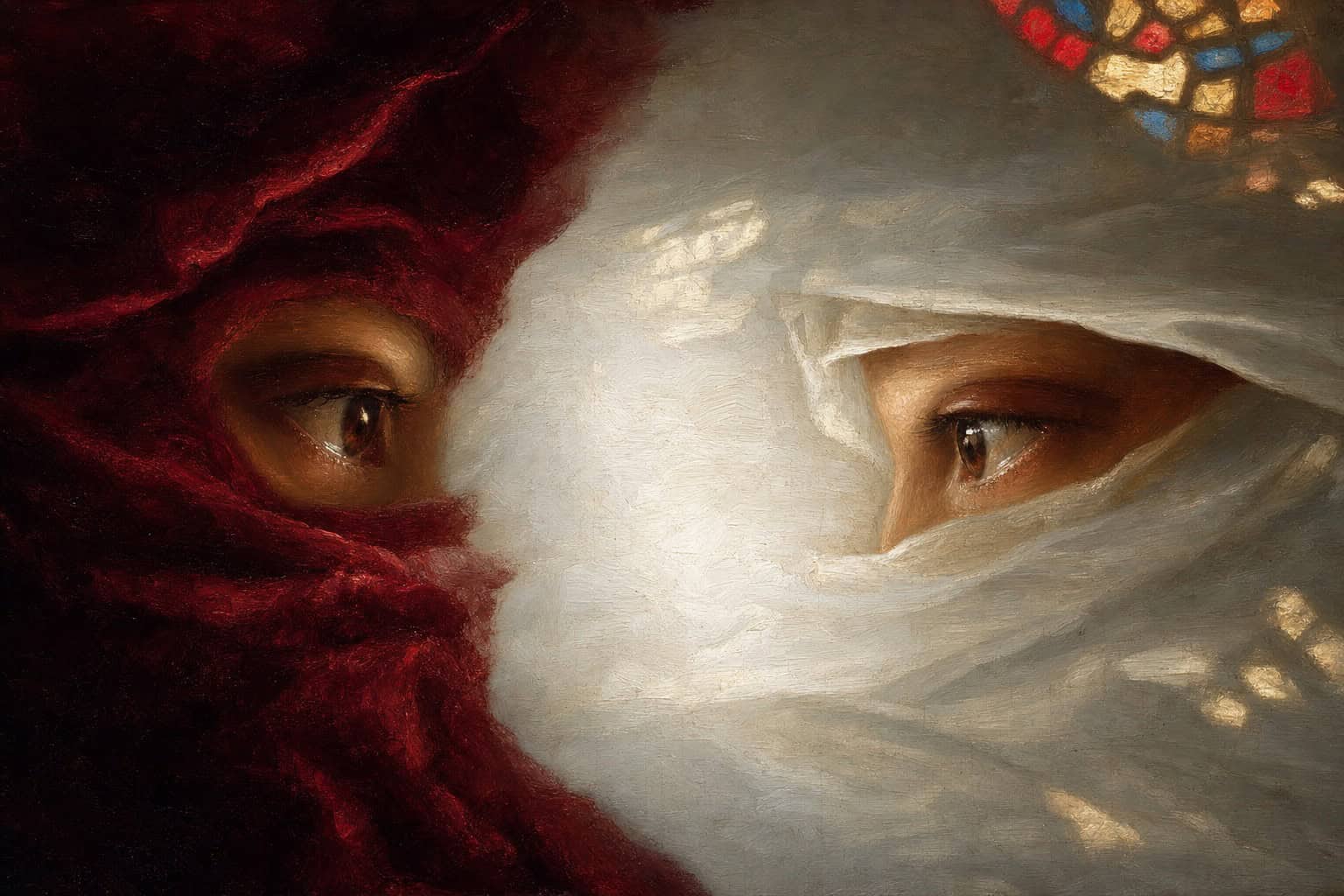
Plastic rails and thin blankets and the sour smell of waiting, and between the machine’s beeps her long, slow blinks become the only sentence either of them can still speak.
Her Eyes Counting Down Between Beeps
Plastic rails, thin blankets, the sour mix of disinfectant and old sweat—everything in the hospital room feels temporary except her gaze. He sits close enough to smell the dryness on her breath, the way illness makes even exhale feel tired. Monitors click and hum behind him, measuring hidden numbers, but his whole body orients toward the slow work her eyelids are doing. Each time they close, they stay shut a little longer, as if she is rehearsing for the moment they will not open again. When they lift, her eyes find his with surprising steadiness, like a hand reaching for the same worn doorknob it has always known. This is not the fierce woman who once carried groceries up three flights of stairs; this is a face collapsing inward, skin slack, yet her look is exact, almost sharp. Between each blink he feels time narrowing, a strange countdown performed not by machines but by the simple, stubborn act of her still choosing to see him.
When the Mouth Retires and the Eyes Take Over
Her lips move, but no sound comes that either of them can trust. Words have turned thin and frayed, caught on dryness, lost in the rasp at the back of her throat. He tries one sentence, then another, hears how small they land in the air, and lets them die there. So they trade what they have left: the bare act of looking. Her long blinks stretch out like commas in a sentence with no final period, pauses where speech used to live. It is clumsy, this new grammar, but it is honest. In the absence of clever phrasing or well-timed jokes, the truth emerges: I am here. You are here. We know what is happening. No declaration can compete with the quiet fact of his eyes staying on hers while her body slowly folds toward departure. The silence between them is not empty; it is crowded with everything they no longer have the strength to say aloud.
Held in the Mercy of an Unblinking Moment
Then there is a blink that lingers just a fraction too long, enough to make his chest seize. When her eyes open again, they lock onto his with a concentration that strips him bare. Childhood lies, half-grown cruelties, the private filth of his adult life—all of it seems lit up under that tired, unwavering stare. She is not interrogating him, but neither is she sparing him. The look carries both the memory of the boy he was and the knowledge of the man he has become, and it refuses to separate them. He feels the urge to drop his gaze, to reach for his phone, to study the patterned floor—anything to break the intensity. Instead he forces himself still, palms damp on his jeans, throat tight. This is the pressure point of the passage: to remain visible under a love that does not pretend he is better than he is, and to accept that she will die knowing exactly who she is leaving behind.
When words finally fail us, what remains is the willingness to hold another’s gaze; sometimes love’s last language is simply refusing to look away.
Learning Not to Flinch from a Dying Face
For anyone who has ever hovered at a bedside, this scene names a discipline that rarely gets taught. We are trained to bring flowers, offer jokes, tidy the tray, but not to hold a gaze that makes our own pulse stutter. Yet this is what the grandson is pressed into here: staying present to a face unraveling in real time, not turning away when the muscles twitch or when confusion clouds the familiar features. Most of us practice escape—into screens, into chatter, into tasks that let us feel useful instead of helpless. This passage suggests another curriculum: to let a dying person see us without armor, and to let ourselves really see them when beauty has been scraped down to bone and breath. The soul marked by early darkness often expects that such seeing will destroy him or confirm his worst verdicts. But here he discovers a stranger possibility: enduring the gaze and finding that it does not accuse, even while it misses none of the damage.
The Last Look That Keeps Looking Back
Long after the machines are wheeled away and the sheets changed for another body, that final exchange of glances will go on working in him. The hospital smell will eventually fade, the exact phrasing of any stray sentences will blur, but the weight of her eyes—tired, wet, unmistakably alert—will remain lodged like a stone under his ribs. In later nights, when old appetites return like ghosts and the old strategies of self-protection feel almost natural again, he will find himself arrested by the memory of that gaze. Not as a haunted threat, but as a steady fact he cannot out-argue: once, someone saw me without disguise and did not turn away. For a man who has learned to distrust every desire, including his own, that remembered look becomes both burden and gift. It will not solve his divided heart or silence the darker music inside him. It simply waits there, like a pair of eyes across a dim room, asking whether he will meet their patience once more.