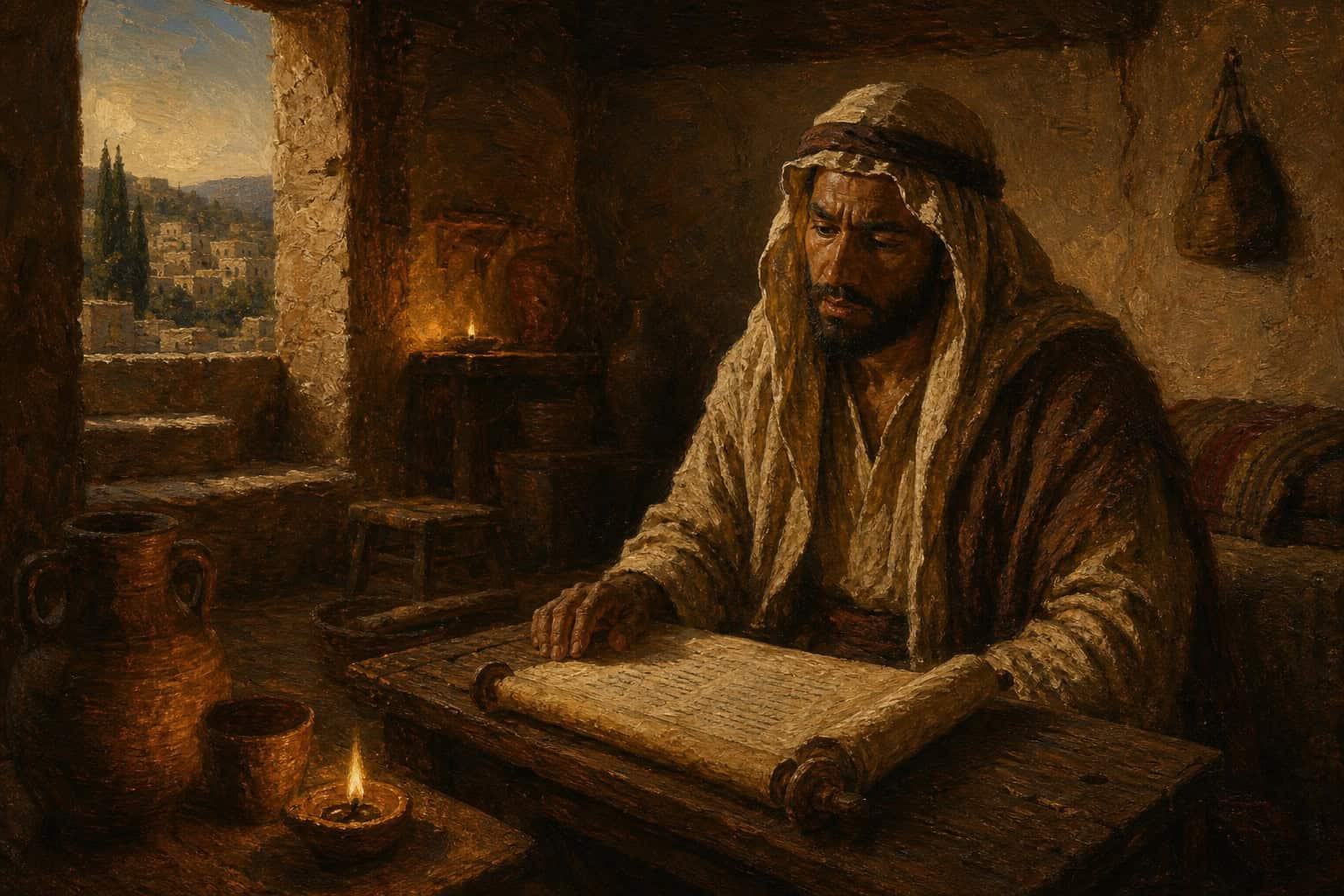
Why do I feel a book so deeply before I can explain it? A reflection on the way meaning reaches the body before the mind can name it.
The Page That Touches You in the Chest
You feel a book before you can say what it means. There you are, holding it, some ordinary afternoon light lying flat on the paper, and a sentence lands somewhere under your ribs before your mind has caught up. Your throat tightens. Your eyes sting without permission. You could not, if someone asked you in that instant, explain what happened. The words are small black marks on a white field, nothing more, and yet they have reached past your understanding and pressed against a place you did not know was open. This is the strange thing you are asking about. Why the feeling comes first. Why the body answers before the intellect has done its slow work of sorting and explaining. It is not that you are sentimental or weak. It is that meaning does not arrive the way we assume it does. We assume we read, we comprehend, and then, having understood, we feel. But the order is often flipped. Something in the ink reaches something in you, and only afterward do you turn back and try to name the thing that already moved you. Think of how it is with anything vast and half-hidden. You cannot see what lies outside the range of your eyes. You cannot hear a sound your ears were never built to catch. There is a whole band of the world that stays imperceptible to you, not because it is absent, but because your senses have edges. And yet you sense, sometimes, that something is near, pressing at the rim of what you can take in. A book can do this. It carries something too large to be handed over whole, so it comes to you reduced, translated into words you can hold, the way a great fire is felt first as warmth on the skin before it is understood as heat and light. You feel the book because it has been made small enough to enter you. That smallness is a mercy. If the full thing came at you undiminished, you would not survive receiving it; there would be no room in you for it. Your five senses are the narrow gate everything must pass through to reach you, and everything that reaches you has already agreed to become small at the door. So the feeling is not a failure of understanding. It is the first true contact, the shadow of the thing landing on you before your mind has any words for it, the faintest molecule of a meaning that beckons you deeper in. Your chest knows before your head does. You sit there, holding a book, quietly undone by marks on a page, and you are not confused. You are being reached, and the reaching is the whole point.
Reaching for What Will Not Sit Still on the Surface
The trouble is that we do not trust the feeling. It comes, and we grow uneasy, because we live in a time that wants everything pulled up to the surface, made visible, made plain, made available on demand. We want the book to explain itself. We want the meaning laid flat where we can point to it, weigh it, put it in words that stay put. And so, when a passage moves us and we cannot say why, a small panic rises, as if we have flunked a test we did not know we were sitting. We reach for a reason. We rush to name it. And in the rush we lose the very thing we reached for. We trade the living pressure of the feeling for a tidy verdict about it, and the verdict is always smaller than what we felt. It is like grabbing at water; the harder the grip, the less remains in the hand. Here is where the honest questions begin, the ones I have had to put to myself and hold without flinching. When I say I do not understand why a book moves me, am I being humble, or am I hiding? Is the not-knowing a real reverence, or is it a way of dodging the harder thing, which is to decide what this book has asked of me and whether I will answer it? It is easy to hide inside mystery. It is easy to dress up my confusion as depth when it is really just refusal wearing a good coat. A book that moves me is asking something of me. It has opened a room in me and is standing in the doorway of it, waiting. And I can call that opening a beautiful puzzle I will never solve, and by calling it that, I never have to cross the floor. The feeling becomes a thing I admire from a safe distance instead of a summons I am bound to obey. This is the tension you are inside, whether you have named it or not. The feeling is real. It reached you. But the feeling also frightens you, because it will not stay a feeling. It wants to become a choice. It wants you to say plainly what the book means to you and then to live as though that meaning were true, with your hands and your hours. And so the very thing that draws you also unsettles you, and part of you would rather keep the book at the level of a warm blur than let it harden into a question you must answer with your life. There is a kind of fruitfulness in a book that a lazy reading refuses; it wants to bear something in you, and bearing costs. The unavailability of the meaning, the way it will not sit still and be pinned to the board, is not the book’s failure or yours. It is the book waiting for you to stop grasping and start listening, which is harder and slower and asks more of you than any grasping ever could.
The Meaning Was Never Yours to Manufacture
Then the turn comes, and it is a hard one to swallow. You feel the book so deeply because the deepest things were never meant to be produced by your effort at all. You cannot see beyond your eyes by trying harder. You cannot hear past your ears by straining until your head aches. You cannot force yourself to perceive a thing that lies outside your reach, no matter how you clench your will around it, the way you cannot will your eyes to a new color or your body to a new height. And you cannot manufacture the meaning of a book, or of a life, or of another human being, by sheer determination to understand it. It has to be given. It has to reach you first. The moment of being moved is precisely the moment you were not in control, when something crossed a distance you could not have crossed on your own strength and arrived, unbidden, in your body. That is why it feels like grace and not like achievement. You did not earn the tears. They came. This is the thing that dwarfs us, the vastness that should stop us where we sit. We spend our lives certain that if we only work hard enough, everything will become clear and available and ours to hold. Some people grasp things others never will, the way one mind seizes a mathematical truth that stays sealed to another; and even then, the largest things stay just past every grasp, imperceptible to the eye that demands to see them, arriving only when they choose, in the poverty of a warmth on the skin, a tightening in the chest, a sentence that will not leave you alone at night.
What moves you first arrives in the flesh, and only later asks the mind to give it a name.
This is the humbling at the center of your question. You feel the book because you are not its master. It has reached you the way anything holy reaches a small and mortal creature, not in its full and annihilating form, which would leave nothing of you standing, but diminished, gentled, made bearable, translated into marks on a page that your fallen senses can actually hold. The feeling is the meaning meeting your limits and honoring them instead of shattering them. It did not demand that you first become something other than you are, some mind wide enough to take it whole. It came down to where you already were, cramped and finite and unable to see far, and it touched you there, on your own low ground. That is why the feeling is more true than any explanation you could build afterward with your clever hands. The explanation is your work, and it is always a little too small. The feeling was a gift, and it was exactly the right size, because it was shaped to your smallness. What dwarfs you also, in the same motion, makes room for you. It meets you in your poverty and speaks in the only tongue your senses were ever equipped to receive.
What moves you first arrives in the flesh, and only later asks the mind to give it a name.
After the Tears, the Uneasy Silence
So what do you do with a feeling you cannot explain and did not make. This is where most of us falter, in the quiet after the tears, when the passage is finished and you are left holding something you have no name for. The temptation is to close the book and let the feeling fade, to file it under a pleasant afternoon, to keep the meaning at the level of a mood that drifted through you and left no debt behind. I have done this more times than I want to count. I have let a thing reach me and then, frightened of what it was asking, I have turned away and called the turning-away by kinder names. I told myself I was savoring the mystery. I told myself understanding would come in its own time. But the truth, when I stop lying, is that I was protecting myself from being changed. Because a book that reaches you is not neutral. It reorganizes something in you without asking permission. The way the body pulls back from a wrong touch before the mind knows the reason, the way the hands refuse an offering before the words for refusing arrive, a real reading works in the sinews and the breath before it ever works in the thoughts. You knew something before you could say it. And now the knowing sits inside you, uneasy, waiting to be answered. The fallout of being moved is that you are no longer quite the same person who opened the cover, and you cannot honestly pretend you did not feel what you felt. You can bury it, but the burying costs, and you go on paying quietly. You can rush to explain it and lose it in the explaining, or you can let it fade and so betray it, or you can do the harder thing, which is to sit inside the feeling without grasping and without fleeing, and let it do its slow work in you. This is the discomfort no one warns you about at the start. The book has given you something you cannot fully understand and cannot fully forget. It is like being seen clean through by someone who knows you better than you know yourself, and then looking down at your own hands, unable to bear the accuracy of that gaze resting on you. Part of you longs to be seen like that, to be known past your own hiding. Part of you wants to bolt for the door. And in the narrow space between the longing and the bolting, the meaning waits, patient, refusing to shrink into a summary, refusing to let you off with a neat closing line. You are haunted, gently, by a thing you cannot pin down and cannot dismiss. And the haunting itself is the proof that what touched you was real, and that it has not finished with you yet.
Carrying the Half-Named Thing Home
You leave the book still not knowing entirely why it moved you, and that not-knowing is now yours to carry through the ordinary days. This is not a failure to resolve. It is the honest condition of a small creature who has been reached by something larger than his own powers of naming. You will not, this side of everything, fully understand why certain sentences opened you and others slid past without touching a thing. The full meaning of it lives in a dimension your senses cannot enter, the way the deepest reason for a suffering can lie beyond the sufferer’s power to see it, kept somewhere above his reach even while it presses on him. But you were touched, and the touch was true, and you do not need the whole explanation before you are allowed to trust the reaching. You only need to stop demanding that the feeling justify itself in fluent speech before you let it count. Here is what I have come to, slowly, and against much of my own resistance. The feeling that outruns understanding is not the lesser thing. It is the more human thing. It is the body confessing that it has met something it cannot contain and will not deny. And the right response is not to squeeze it into words and not to let it quietly evaporate, but to keep it, tenderly, as a real event that happened to you, a place where something crossed the distance and arrived in your flesh. When a book moves you and you cannot say why, you have been handed a small parable of how the very largest things reach us at all, always mediated, always diminished to the scale of our senses, always more felt than grasped, and never one degree less real for having come down so far. This is the ground beneath the book I keep returning to, Fractions of the Soul, that the deepest contact comes not as a clear explanation handed down from above but as a nearness felt in the dark, a presence that meets us in our smallness and does not require us to first make ourselves large. You feel the book because you were made to be reached, not to master. So you carry the half-named thing home, still warm under your ribs, and you resist the urge to flatten it into a sentence. You let it stay what it actually is, a meeting that happened, a mercy that stooped to your level and touched you where you stood, in the plain light of an ordinary hour. That is enough. That, in fact, is nearly everything you were given to keep.