Wondering the average length of a relationship before breakup? A raw reflection on why we count the days—and what the numbers never hold.
The Spreadsheet You Keep Behind Your Ribs
You typed it into the search bar past midnight, the phone the only light in the room, your thumb hovering over the little magnifying glass. Average length of a relationship before breakup. You wanted a number, a clean one, something hard to press against your own soft months. Fourteen? Twenty-seven? A figure that would tell you whether you lasted longer than most, whether you failed faster, whether the thing you buried was ordinary or somehow rare. But even as you asked, you knew the real accounting was already running in you, and no stranger’s chart could reach it. You have your own dates memorized the way some people memorize prayers, and you say them to yourself in the dark without meaning to. The night you met. The first time you stayed until morning and heard the birds start. The last argument, the exact words, the sound the door made and how the sound kept ringing after the door was still. You carry a ledger behind your ribs that no one else can read, and you keep it precise because precision feels like the last handhold you have. If you can fix the beginning and the end, maybe you can hold the middle still, keep it from dissolving into fog. But the fog comes anyway, and it comes from the middle first. The face blurs before the dates do. Then the voice. Then the specific way they laughed at something only the two of you found funny, a joke you could not explain to anyone now if your life depended on it. So you count. You count the months as though the sum could hold what the person no longer will. Two years and three months. Eight months. Six weeks that felt like a whole life poured into a paper cup. The number you land on is a coroner’s number, a time of death stamped on a certificate, official and cold and completely beside the point. Because what you shared was never a length. It was not a span you could lay end to end and set beside a national average like a tape measure against a wall. It was a whole weather, a climate that colored everything you touched while you lived inside it. The morning coffee tasted different then. The city looked different from the passenger seat with them driving. You cannot average that. You cannot chart the exact hour the light in your ordinary days changed key. And still you want the number, because the number is easier to hold in your hand than the truth of how much of yourself you handed over to something that is now only dates on a screen you cannot stop rereading at two in the morning.
The Song That Still Knows Your Old Address
There is a track that ambushes you. You are in a grocery store, or a stranger’s back seat, or scrolling past a video you did not mean to open, and three notes arrive and your whole body goes still in the frozen aisle. It is from that time, the one that played in the kitchen while you cooked shoulder to shoulder, or thumped through some club the night you first felt the thing turning serious and dangerous. The self you thought was long gone stands up inside you, blinking, and it still knows every word. This is how the past keeps its records. Not in tidy memory but in exact pressings, specific mixes, the forensic scraps of who you were before you knew yourself. You can name the version. Not just the song but the particular remix, the year, the strange little label almost. Your mind, which forgets birthdays and where you dropped your keys, has archived the precise grain of a beat you moved to when you still believed it would never end. You have become the keeper of a museum with a single visitor, and you know the visitor by heart. The strange part is that the one in those recordings feels both intimately yours and completely foreign, a younger self who loved with a nerve you can no longer find in your own chest. You want to warn them. You want to lean into the recording and tell them how it ends, that the count they think is endless already has a final number stamped on it somewhere, waiting in a drawer. But they cannot hear you, and if they could, they would not slow down for you. That is the ache under the archive. You catalog the past this obsessively because you are trying to prove you existed before the ending made you into whoever you are now, cautious and counting. Every dated track, every remembered mix, is a small revolt against the way time deletes what it decides it no longer needs. The end did not just take a person out of your days. It took the self who trusted, the self who made plans out loud at the kitchen table, the self who believed the music would keep meaning what it meant in that room. So when the song finds you between the frozen peas and the ice cream, you do not turn it off. You stand there and let it play through, mourning not only the one who walked out but the one you were while you still had them, both of you pressed into a recording you cannot bring yourself to delete, both of you singing under fluorescent light to no one.
The Speed at Which a Whole Life Turns Over
What the averages will never tell you is how fast it happens, the making and the unmaking both. You imagine love builds slowly, brick by careful brick, and so you imagine its collapse must also take its patient time, stone by stone. The truth is crueler and faster. The defining hinges of a life swing shut in a matter of days. You met someone in a week you barely remember planning, an ordinary week you could not point to on a calendar now. Within months the whole shape of your future had rearranged itself around them, the apartment, the holidays, the way you started saying we without noticing. The self you had spent decades slowly assembling dissolved and re-set so quickly that you could only mark the dates afterward, standing over them the way a coroner stands over a timeline, noting the exact hour everything quietly became something else. And the ending obeys the same brutal speed. You can spend years inside something and watch it undone in a single afternoon, a single sentence, a single closing of a glass door whose sound you will carry the rest of your life like a splinter under the nail. This is what no search result can give you. It offers spans and medians and tidy averages of how long other people managed to last, as if length were the story. Length is never the story. The story is the velocity, the way the floor moved under you with no warning, the way you had built a whole architecture of belonging on a foundation you never once bent down to check. Here is the reckoning you cannot walk around. Your own part in it. Not the flattering version where you were simply wronged, and not the flogging version where you were simply the one who did wrong. The harder version. The one you turn over at three in the morning with the ceiling grey above you. What did you refuse to see while the days were still stacking up in your favor? Where were you hiding, even from yourself, showing a polished version that could be safely loved instead of the actual one? The anger that arrived at the end, if it arrived, came in exactly where your love had failed to fix things. You tried to mend it and the world would not be mended by your hands, and something in you rose up, and the rising up exposed how much of your goodness had been a quiet bargain struck with the outcome. You wanted it to last so that you could be a person whose loves last. The number, in the end, was never about them at all.
You count the months because you cannot count the ache, and the number always weighs less than the loss.
What the Coroner’s Date Cannot Certify
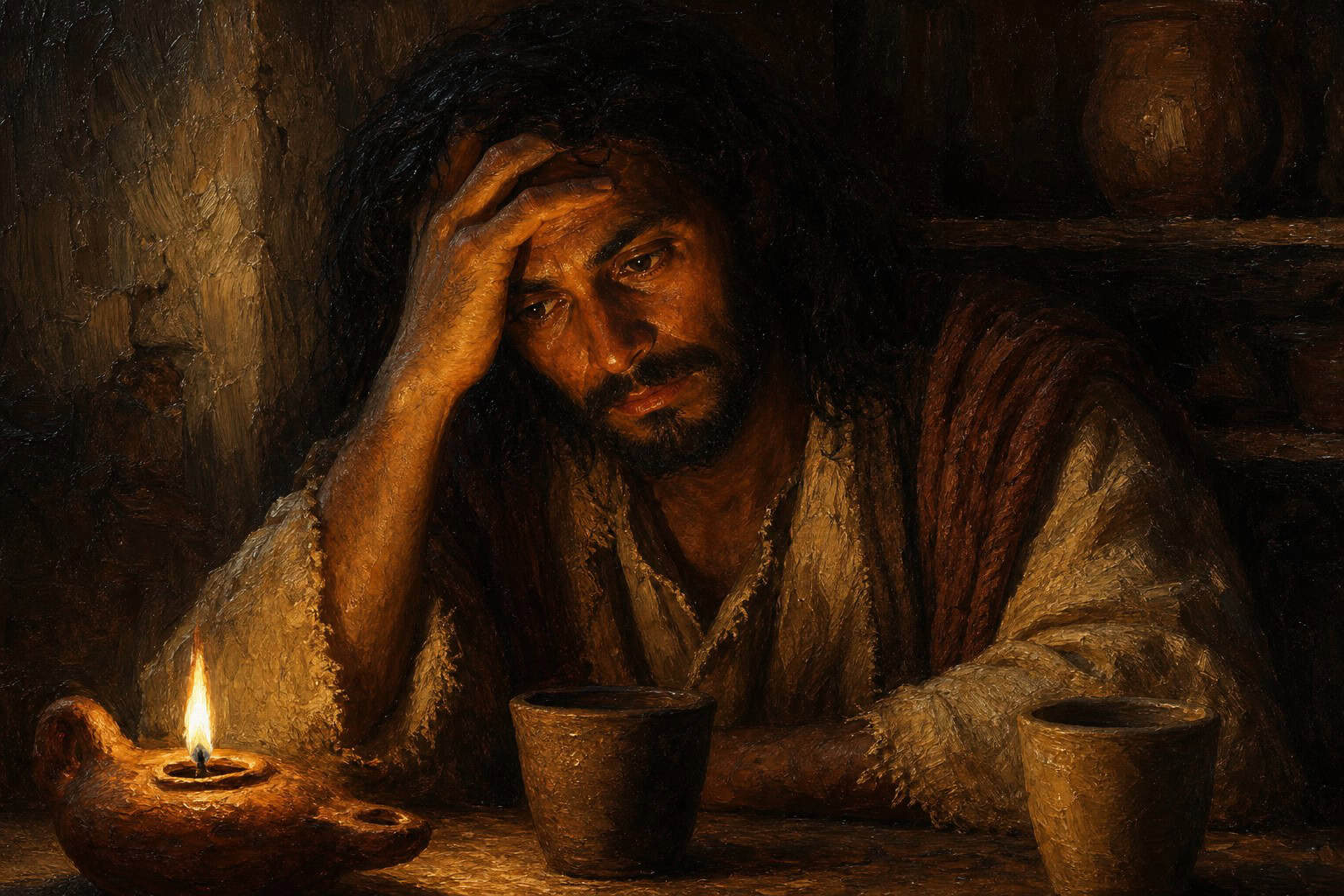
So you have your figure now. You lasted two years, or five, or eleven months, and somewhere on a screen a graph tells you the median is longer, or shorter, and either way you feel the same hollow scooped out under your sternum. The number sits there on the table, exact and useless as a stopped watch. Because you understand at last that you were never really asking how long love lasts. You were asking whether it counted. Whether the time you gave was wasted or whole, whether the self you poured into someone who left was a fool or a saint or simply a person loving as well as they knew how at the age they happened to be. No average answers that. The averages flatten every love into a length, and love is not a length. It is a mood you lived inside, a tone that colored your mornings and your commute and the taste of plain toast. When it ends, the mood does not lift like a curtain drawn back. You find yourself thrown, one grey ordinary morning, into a grief that has already colored the whole day before you have chosen anything, before you are even fully awake and upright. The bereavement does not wait for your permission or your readiness. It is already there in the cold half of the bed. It is in the second cup you reach for out of five years of habit and then set back empty in the cupboard, quietly, so no one will hear. The fallout is not one clean collapse. It is a slow leak, a thousand small discoveries of absence spread thin across weeks. You lift your phone to tell them something small and remember. You laugh at a joke and turn to share it with an empty chair. This is the part the timeline can never certify. The date of death is stamped and filed, but the dying keeps going for months, in fragments, in the frozen aisle and the emptied cupboard and the song that will not let you leave. And the hardest question sits under all of it, refusing to close. Were you loving them, or were you loving the version of yourself their nearness let you believe in? When they went, did you grieve the actual person, with their bad moods and their unfair silences, or did you grieve the mirror they held up, the one that showed you as chosen, as good, as the kind of man whose count runs long? You do not know. You may not ever know. And the not-knowing is its own long sentence, one no statistic on earth will ever commute.
The Company You Did Not Expect in the Dark
Here is what surprised you, if you are honest about the worst of it. You expected the grief to be a locked cell where you sat alone. You expected the quiet after the ending to be total, an emptiness holding nothing but your own circling thoughts and the useless number you kept doing arithmetic with, over and over, as if the sum might change. But somewhere in the middle of the leaking weeks, on a morning when you could not make your body get up, you noticed you were not entirely alone in the dark. Nothing dramatic. No voice out of the ceiling, no light breaking through the curtains, no sudden lifting of the ache off your chest. The ache stayed exactly where it was. The grief was not fixed or explained or tied off with a clean lesson to write on a card. What changed was only this, faint and stubborn as a pulse. A sense that you were being accompanied inside it, that the tears were not falling into nothing, that something patient had lowered itself down beside you in the very place where you had done wrong and been wronged, where your love had been half a bargain and your goodness had cracked open like cheap plaster. Not lifted out of the dark. Met within it, on the floor, in the mess. That is the quiet thing worth saying to the one who types the question you typed, the one hunting a number that will finally make the loss make sense. There is no average that can hold your grief. The length was never the true measure of anything. What you carried and gave and failed at inside those months, that is the only real count, and it will never fit on a graph. If you want the whole weight of this reckoning held without a single cheap comfort, it waits in Confessions to the Empty Chair, where the same brutal arithmetic gets done on a life, and where, in the middle of the counting, a strange near presence turns out to have been there all along. You will not find the average there either. You will find something better and much harder. Permission to set down the tape measure, and to sit, at last, with what was actually lost, and with the one who does not walk out when everyone else already has.