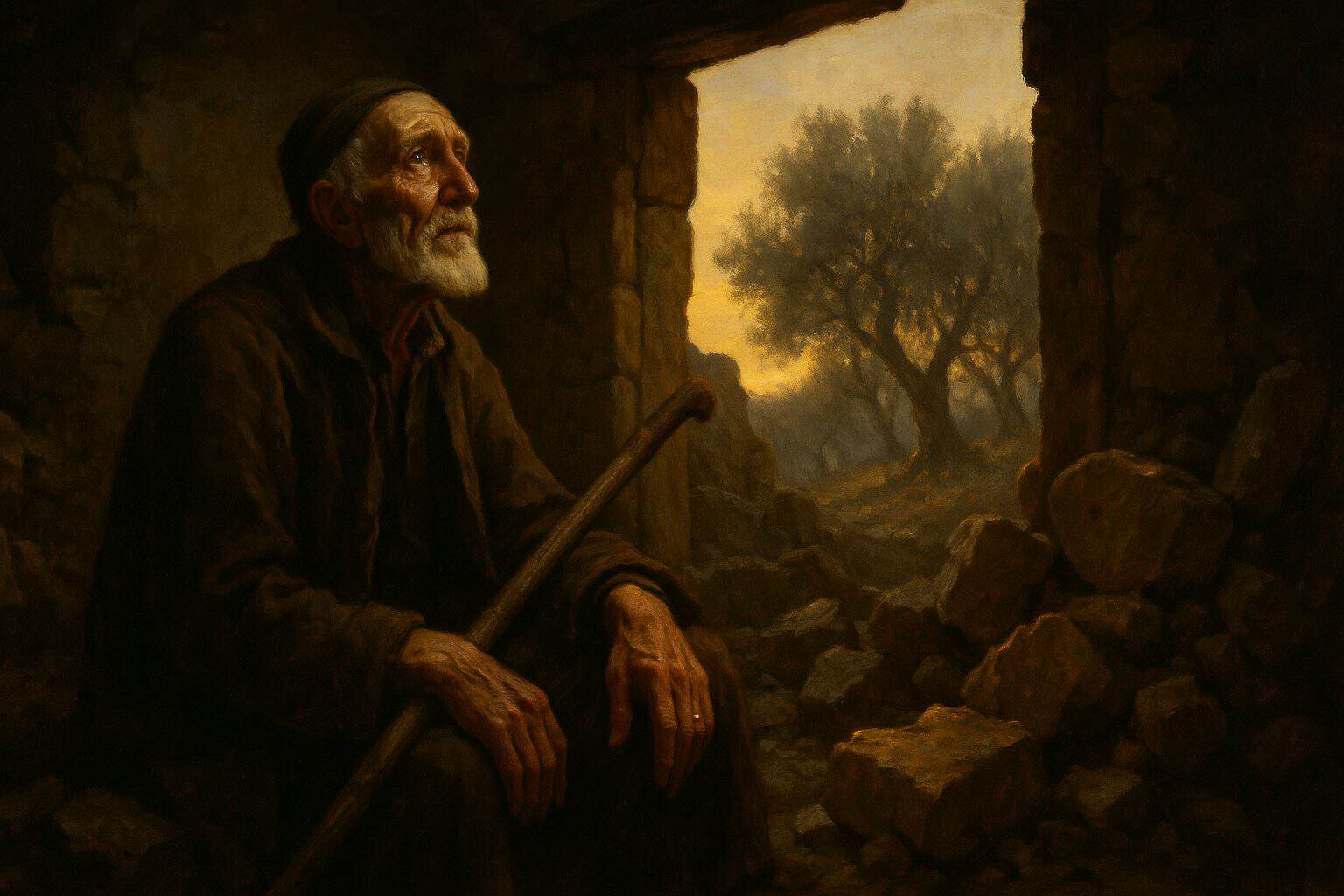
How the wound becomes the window through which grace enters
The morning after. Not merely the temporal marker following night, but that peculiar quality of consciousness when we surface from depths we never chose to enter. The eyes open to familiar walls that have become strange. The body rises from a bed that holds the impression of who we were yesterday, before the world shifted on its axis. This is the territory Anthony Adore maps in his memoirs—not the dramatic moment of rupture itself, but the long aftermath where we discover ourselves inhabitants of a landscape we no longer recognize.
The Architecture of Aftermath
“My spirit writhed in futile protest before collapsing, succumbing to a new desolate sorrow… the disorientation of being thrown back into the world…” The passive voice here carries its own truth. We do not throw ourselves back; we are thrown. The world that receives us after profound loss is the same world, yet utterly transformed. The coffee cup sits where it always sat. The morning light falls through the same window. But something fundamental has shifted in the very structure of appearance.
What Adore discovers in this disorientation is not merely psychological but ontological. The fall from grace—whether Adam’s in Eden or ours in the particular gardens we lose—restructures the very ground of being. “The problem pre-fall and post-fall is that A focuses on E to the exclusion of G, and E focuses on A to the exclusion of G.” The algebraic notation strips the truth to its skeleton: in our original wholeness, we saw each other through something greater. After the fall, we see only each other, and the weight of that exclusive focus crushes what it meant to preserve.
The lived body knows this truth before consciousness can articulate it. We wake to find ourselves limping, though no physical injury explains the altered gait. The limp becomes what Adore calls “the permanent, physical reminder that Jacob’s own strength, his cleverness, his identity as the ‘supplanter’… were insufficient.” Like Jacob after wrestling the angel, we carry in our very flesh the mark of our encounter with forces beyond our mastery.
The Phenomenology of Shattering
“A broken heart unmasks illusions a complacent mind never thinks to test. In this unveiling, suffering itself became a strange instructor.”
Consider how breaking actually occurs in lived experience. Not as a single dramatic moment—though such moments punctuate the process—but as a gradual recognition that the frameworks supporting our world have already collapsed. “I gathered all the previous frameworks fed to me from the wreckage inside my heart, mind, and spirit… I plunged them all into the kiln.” The metaphor of the kiln suggests not mere destruction but transformation through fire. What emerges from such heat is not restoration of what was, but something essentially altered.
The phenomenology of heartbreak reveals itself most acutely in the small moments. Reaching for the phone to share news with someone no longer there. The muscle memory of routines now purposeless. “Part of me died; love – now pretend. / She who knew me best… my friend… stayed not. / The end.” The truncated lines mirror the amputation of possibility. What remains is not half of what was, but something qualitatively different—a being reorganized around absence.
This reorganization touches the deepest structures of temporality. “Losing Jane felt like forfeiting the chance to evolve into a higher version of myself, a man I was just beginning to glimpse.” The loss is not merely of what was, but of what was becoming. The future that had been opening closes like a door swinging shut. We find ourselves in what Adore elsewhere describes as the peculiar temporality of aftermath—no longer able to inhabit the past that is gone, not yet able to imagine a future worth wanting.
The Luciferian Bind
“When humanity fell from grace, Lucifer claimed equal parentage with God and forever bound his essence to our own, marring God’s breath of life within us.” This is not theology as doctrine but as lived experience. We discover within ourselves contradictory movements that cannot be reconciled through will alone. The very structure of consciousness after the fall contains what cannot be integrated.
“To this day, Adam’s loneliness and Eve’s narcissism are found in the hearts of both men and women along with Lucifer’s intertwined essence.” The gendered archetypes dissolve into universal patterns. We are all Adam in our essential aloneness, all Eve in our self-fascination, all carriers of that rebellious principle that would rather reign in hell than serve in heaven. These are not moral failings to be corrected but structural features of post-Edenic existence.
The world itself mirrors this corruption. “To me, the world and its people reminded me of those in the middle of copulating… before the fire fell, reducing everything and everyone there to ash.” The image is deliberately excessive, almost apocalyptic. Yet it captures something essential about how the world appears when we have been expelled from our private Eden. Everything seems caught in cycles of desperate grasping followed by inevitable dissolution.
The Wound as Window
“This limp, my wound, is what finally shattered my pride and forced me to stop running. It became the way my ascent would always carry the memory of my descent within it.” The wound is not overcome but incorporated. It becomes the very means through which new sight becomes possible. What seemed pure catastrophe reveals itself as strange grace.
“Loneliness, heartbreak, disappointment, weariness, and misunderstanding strip the soul of every false comfort, leaving it raw and exposed.”
The stripping away is not gentle. Each false comfort must be pried from our desperate grip. “Confidence in loneliness and pride in solitude resurged, overtaking any aspiration of my being human again.” The temptation after profound hurt is to become invulnerable, to mistake isolation for strength. But this too is a false comfort that must eventually fall.
What remains when everything false has been stripped away? “I confronted sorrow’s full measure, admitting to my role in the regrets now defining me; I was and am the primary architect of my suffering.” This is not self-flagellation but the beginning of genuine responsibility. To recognize oneself as architect of one’s suffering is simultaneously to recognize oneself as capable of building differently.
The Community of the Wounded
“You are a ghost from my past, or the very self I once was. You are the heir who will read these words long after I am gone. You are the archetypal Adam or Eve I seek to understand.” In addressing the reader, Adore acknowledges that post-Edenic existence is fundamentally shared. We are all exiles from various gardens, all nursing wounds that will not quite heal, all seeking in each other’s faces some reflection of our own displacement.
The recognition of shared woundedness creates a peculiar form of communion. Not the easy fellowship of the unbroken, but something more tentative and therefore more real. “I care about you deeply, but I also care about myself. If you have unresolved feelings for someone else… tell me now so that I can stop myself from falling.” The honesty is almost brutal, yet it acknowledges what we all know: that we approach each other now with defenses raised, that trust must be earned in the currency of truth.
Death as Pedagogue
“Additionally, death itself offers a profound stimulus to individuals sedimented in average everydayness, enabling them to ‘wake up.'” Death is not merely ending but revelation. It shows us what we have been sleepwalking through. “Either death will come along and take someone close to us or we fall in love with someone with whom we are receptive to their being in the world.” The two possibilities—death and love—are more intimately related than they first appear. Both shatter the illusion of self-sufficiency.
“Part of each person believes that death is unnatural and foreign to the Spirit; in one final act of rebellion against death, the living weep, feel defeated and impotent, and whisper prayers on behalf of the dead.” The rebellion against death is itself a memory of Eden, where death was not. We carry within us the Stimmung of a deathless world, which makes our actual mortality feel like violence rather than nature.
Yet death also teaches. “Their sin broke the perfect balance of their passions, senses, emotions, intellect, and will, exposing them and their progeny to suffering and death.” The exposure is total. We stand naked before forces we cannot master, in bodies that will betray us, in relationships that will end. This exposure is the ground of both our suffering and our peculiar dignity.
The Persistence of Grace
“Guide my steps and place my feet in the steps you once took. Never let me stray too far or for too long; pursue me even if I abandon You…” The prayer acknowledges both human waywardness and divine pursuit. Even in our post-Edenic wandering, something seeks us. The ruins we wake inside are not abandoned but haunted—by memory, by possibility, by a presence that will not quite let us go.
The descent into these ruins “reveals the idols; the ascent reveals the God who remains when idols fall.” Each framework that collapses, each comfort that fails, each person who leaves—all become occasions for discovering what cannot be lost. “Looking back through the windows these wounds became, I trace the insistent grace…” The wounds become windows. What seemed pure loss becomes aperture.
This is the paradox of post-Edenic existence as Adore lives it: we are simultaneously broken and breaking open. The shattering that seems to destroy us also cracks us open to graces we could not otherwise receive. We wake each morning in the ruins of what we thought our lives would be, and in that waking, something else becomes possible. Not restoration—Eden’s gates remain guarded by angels with flaming swords—but transformation. The ruins we wake inside become the raw material for what we might yet build.