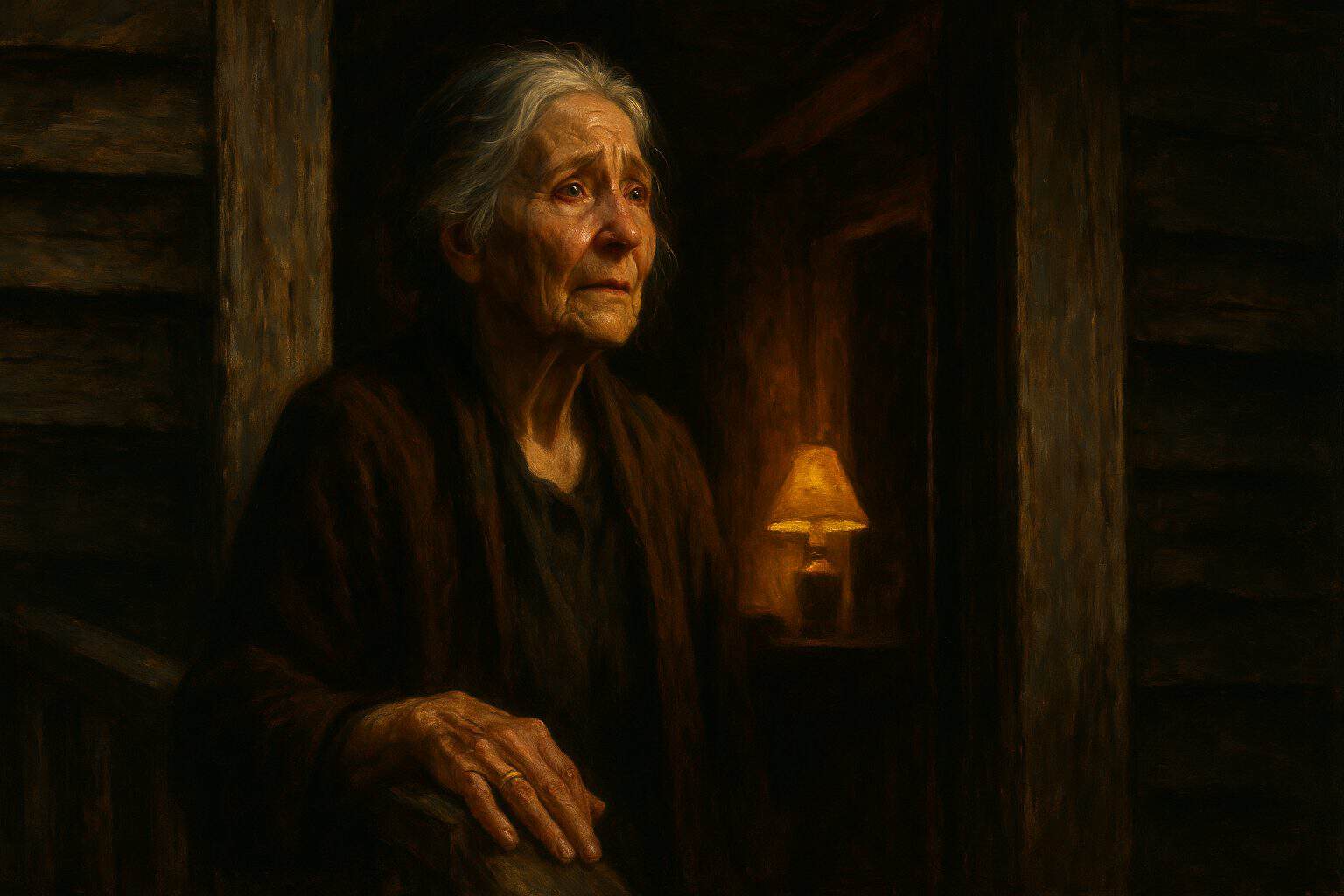
How the heart learns its native tongue through exile and return
The child’s fingers trace the familiar grain of the banister, each whorl and knot a braille of belonging. Years later, those same fingers—now bearing rings, scars, the weight of elsewhere—will seek that wood again, finding it both utterly unchanged and impossibly foreign. Between these two touches lies the entire grammar of homecoming: not a simple return but a complex conjugation of what was, what became, and what can never quite be recovered.
The Architecture of Departure
Every homecoming begins in a leaving that doesn’t know itself as such. The chapel pews that once held better than arms could—empty, patient, carved from wood that remembers centuries of prayer—release their hold so gently we mistake it for our own choosing. We rise from those pews believing ourselves the agents of our departure, not recognizing how the very space that sheltered us has already begun teaching us the necessity of exile.
The familiar becomes a prison only in retrospect. First, it is simply the world: the keyhole through which we peer, believing everything you see is everything that there is to see. The walls we mistake for truth stand so close we cannot perceive them as walls at all. They are the horizon itself, the edge where earth meets sky, until one day—through exhaustion or grace or simple accident—we discover there are worlds beyond the frame.
This discovery rarely announces itself as liberation. More often it arrives as a kind of vertigo, the stomach-dropping recognition that what we took for solid ground was only one possible surface among infinite others. The threads and tapestries of the past, once the very fabric of reality, suddenly reveal themselves as merely one weaving, one pattern among countless possible designs.
The Wilderness Between
Between the leaving and any possible return stretches a terrain that has no proper name. Call it exile, call it wandering, call it the dark wood before the sunlit clearing—none of these quite capture the particular texture of being neither here nor there, of carrying one place in your bones while learning the grammar of another.
“Confidence in loneliness and pride in solitude resurged, overtaking any aspiration of my being human again.”
This is the paradox of the between-space: it teaches us a fierce self-sufficiency even as it hollows us out for a different kind of filling. The solitary learns to favor contemplation over gathering, abstract ideas over sensory stimuli, not from preference but from the simple mechanics of survival. When you cannot return to the known, you must make a home of the unknown, fashion a dwelling from the very fact of your displacement.
Yet this wilderness carries its own revelation. The house of mirrors that once concealed every exit begins to crack. Light enters through the fissures—not the gentle, filtered light of stained glass, but the harsh, revealing light of unmediated day. In this light, we discover that our flesh remains a loyal traitor, answering calls we thought we’d transcended, pulling us back toward hungers we imagined we’d outgrown.
The spirit that crashed back into flesh discovers this reality has turned gray and hollow, a cage separating the soul from whatever it imagines as its true home. But even this gray hollowing serves its purpose, teaching us that desire is not meant to be an end in itself… but instead requires an object outside of itself. The wilderness strips away every false object until only the true ones remain—or until we learn to live with the question of what those might be.
The Impossible Return
When we do return—and we always return, if only in memory, if only in dream—we find the keyhole unchanged but our eye irreversibly altered. The stairs we once claimed as a temporary throne of detachment still stand, but they no longer hold our weight in quite the same way. We have learned too much about the nature of thrones, about the illusion of detachment, about how smoke disperses whether we call it prayer or not.
The returnee discovers what every exile learns: you cannot go home again, not because home has changed (though it has), but because the one who returns is not the one who left. The fingers that trace the banister carry knowledge the child’s fingers could never have imagined. They know now about locked doors and drawn shades, about scents that cling to everything, about the way anxiety tightens in the gut before the mind admits what it recognizes.
This is why homecoming requires a new grammar, a syntax that can hold both presence and absence, both the thing itself and its ghost. We thread honesty through jokes, praying no one tugs the stitch and unravels us completely. We guard certain memories like contraband while releasing others to the common air. We learn to inhabit spaces that are simultaneously sacred and violated, to dwell in a sacred space where you are to close the door behind you and dwell with God in secret and solitude while knowing that every secret has already been told, every solitude already broken.
The Dialectic of Dwelling
What emerges from this impossible return is neither the original home nor pure homelessness, but something more complex: a way of dwelling that incorporates its own undoing. We learn to be at home in the very movement between dispersal and gathering, to find our rest in restlessness itself.
“Faith, full-hearted and half-sure, is needed to step into the void of the unknown and deal with the resulting consequences.”
This faith—full-hearted yet half-sure—becomes the fundamental gesture of mature dwelling. We step through doorways knowing we will step through them again, in the other direction. We allow feelings and thoughts to follow us to solitude’s door, sometimes inviting them in, sometimes leaving them standing outside, knowing that the door itself is more threshold than barrier.
The grammar of homecoming reveals itself finally as a continuous present tense, a perpetual arriving that never quite completes itself. We discover that our dreams of peace, love, and happiness after never having known them is our distant remembrance of Eden—not a memory of an actual past but an orientation toward a possible future that gives shape to every present moment.
The Communion of Exile
Perhaps the deepest revelation of homecoming is that we never undergo it alone. Every exile recognizes every other exile, not through shared experience but through a certain quality of standing, a way of inhabiting space that acknowledges its provisional nature. We see it in how others hold their bodies—simultaneously here and elsewhere, committed and withdrawn, present and already departing.
In this recognition lies an unexpected grace. The very displacement that seemed to separate us from human community becomes the ground of a different kind of communion. Not the easy belonging of those who have never left, but the hard-won solidarity of those who know what it costs to return. We rise together to answer calls we only half-believe in, forced to interact with new hearts that are somehow both strange and familiar, both ours and not ours.
The grammar of homecoming, we discover, is not a private language but a shared tongue, spoken wherever humans navigate the space between what was and what might be. It conjugates loss and recovery, presence and absence, the already and the not-yet into a single, complex tense—the tense in which we actually live, suspended between the home we’ve left and the home we’ve yet to find, forever arriving at thresholds we’ve already crossed.
While there can be movement inside the tomb, we are still within a tomb—and yet we count the seconds for the sun to set, to find something new. This counting, this patient attention to the movement of light and shadow, becomes itself a kind of home, a dwelling made not of walls but of waiting, not of arrival but of anticipation. In this grammar, every ending declines into a new beginning, every return opens onto another departure, and home reveals itself not as a place we find but as a way of seeking that transforms both the seeker and the sought.