How memory lives not in the mind but in the skin, and why every touch carries the fingerprints of those who came before
The photograph sits on my desk: myself at seven, standing beside my mother in our garden, her hand resting on my shoulder. I study it now, decades later, and feel that hand still—not as memory but as present sensation, a weight that shapes how my shoulder curves even as I write. This is the first contamination: how touch outlives its moment, how the body becomes an archive where every contact leaves its trace, each new touch reading through the accumulated manuscript of all who touched before.
The Phantom Weight
In Confessions to the Empty Chair, I write of “the memory burned: a phantom limb, a cruel brand searing the remembered sweetness against the mundane bitterness.” The phenomenology reveals itself precisely here—not in the metaphor of burning but in the structure of phantom sensation itself. The absent touch that continues to touch, the hand no longer there that still shapes how we hold ourselves, how we lean into or away from approaching contact.
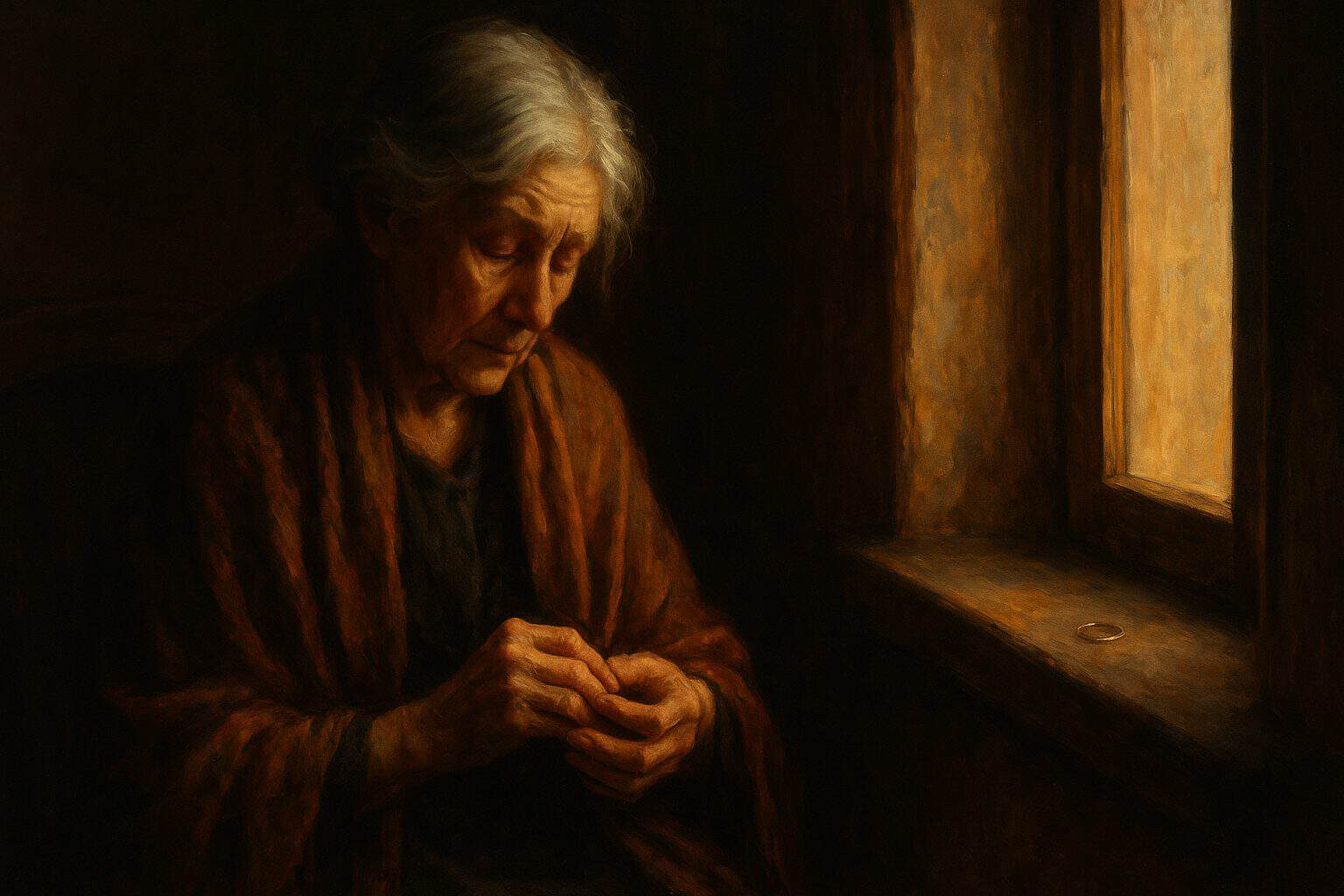
Watch a widow adjust her wedding ring that she no longer wears. See how her fingers move to that naked place, how they perform the familiar rotation of metal against skin, finding only skin against skin. Yet the gesture completes itself, the phantom ring turned, adjusted, confirmed. The body remembers what the mind knows is gone. Or rather: the body is memory, each gesture a citation of every time it was performed before.
This is why reunions with former lovers carry such particular charge. As I observed, “Being with the same man twice, three times, or more, regardless of the chronological time that has passed between reunions, shortcuts the necessary trivialities.” The body recognizes before the mind catches up. A specific tilt of head, a familiar pressure of palm, and suddenly ten years collapse. Not because we remember but because the body assumes its practiced shape, falls into grooves worn by repetition, discovers it has been holding this posture all along, waiting.
The Inherited Gesture
“Childhood is rehearsal,” I wrote, “and the lines we practice early are the ones we will speak most easily later in life.” But examine this more closely. Watch a father teaching his daughter to shake hands—firm grip, look them in the eye, one pump, two pumps, release. She practices on teddy bears, on visiting aunts, on the mailman. Years later, in her first job interview, her hand extends with that exact pressure, that precise timing. She thinks she is performing confidence. She is performing her father.
“No one’s heart is a tabula rasa… ghosts of who they were with others and ghosts of who others were with them—and these ghosts haunt the meeting.”
The phenomenology thickens here. Every touch we offer carries the instruction of every touch we received. The mother who cannot embrace because her mother could not embrace. The man whose handshake crushes because his father’s crushed. We think we touch with our own hands, but we touch with an inheritance, each gesture a palimpsest where earlier scripts bleed through.
I remember—though remember is the wrong word—I carry the first time someone held my hand romantically. Not the person, not the scene, but the precise sensation: how their thumb moved across my knuckles, the specific rhythm of that motion. Now, decades later, when I hold someone’s hand, my thumb moves in that same pattern. I am citing a touch I received when I was sixteen. The person I hold receives not just my touch but the touch of that long-ago other, translated through my body across time.
The Future That Touches Back
“It took several minutes for me to understand that my feelings did not reflect the present but the future, and that experiencing the future in the now robbed the present.” This temporal contamination reveals itself most acutely in touch. The mother holding her newborn already feels the absence when this child will leave home. The embrace contains its own ending. We touch through time—the present touch haunted not just by past touches but by future losses.
Consider the phenomenon of the last touch we don’t know is last. The casual goodbye hug that becomes, in retrospect, unbearable in its lightness. Had we known, we would have held longer, pressed deeper, memorized the exact temperature and texture. But we didn’t know, and so the touch remains frozen in its casualness, forever inadequate to the weight it came to carry.
The body knows this. Watch how elderly couples touch—how every casual contact carries a quality of attention, as if they’re storing up sensation against coming absence. The hand that rests on a shoulder while passing behind a chair. The fingers that straighten a collar. Each touch performs both presence and future memory, both having and storing against not-having.
The Echo Chamber of Skin
“Only years later did I understand. This was not a moment of self-reflection. It was residue from another man, an echo of his words in her head.” But it’s not just words that echo. Every lover’s body carries the impression of previous lovers—not metaphorically but literally, in the muscular memory of how to be held, in the automatic adjustments to another’s rhythm, in the vocabulary of touch learned and relearned across different bodies.
This is the deep contamination: we never touch just one person. Through them, we touch everyone who touched them, receive the accumulated archive of their skin’s education. The woman who flinches at a certain gesture—she is not flinching from you but from someone you’ll never meet, whose touch wrote itself into her nervous system years before. The man who goes rigid when embraced from behind—his body is citing a grammar of danger you didn’t author.
“The river of the past flows strong and hard underneath the land of the present. One needs but to dig in the correct place to access the latent water.”
But we don’t need to dig. The river surfaces constantly through touch. A specific pressure, angle, approach, and suddenly the past floods the present. The body time-travels without permission, finds itself simultaneously here and elsewhere, touched by present hands and phantom hands, unable to distinguish between memory and sensation because in the body they are the same thing.
The Sacred Contamination
“We also inherited faint memories of a time before the fall, now blurred through the veil of death and sin.” Perhaps this is why certain touches feel like recognition rather than discovery—the mother’s hand on the fevered forehead, the friend’s arm around shoulders in grief, the lover’s fingers tracing the architecture of face in darkness. These touches seem to remember something we never learned, to cite a grammar older than our individual histories.
Watch new parents with their first child. They’ve never done this before, yet their hands know how to hold, how to soothe, how to test for fever. Where does this knowledge live? Not in books they’ve read or classes they’ve taken, but in their skin itself, in an archive of touch that predates their own touching, that remembers being held before they could hold.
“Memories of Eden decorate the interior landscape of all who feel abandoned, alienated, betrayed, contemplative, curious…” Eden names this original contamination—not a place but a way of touching and being touched that we remember without having experienced, that every subsequent touch both seeks and fails to recover. The infant at the breast doesn’t learn satisfaction; she remembers it. The lovers who fit together as if designed for each other aren’t discovering but recovering a template their bodies recognize.
The Discipline of Distance
“Those memories belonged to me alone. I guarded them like contraband and walked on.” Sometimes the only way to preserve touch is to refuse it. The widow who won’t remove her husband’s clothes from the closet because they still smell like him, but won’t smell them either because each encounter diminishes the scent. The mother who keeps her dead child’s room exactly as it was, but never enters. They understand: to touch again is to overwrite, to contaminate the contamination with new present that dilutes the past.
This is why certain objects become untouchable—not sacred in the religious sense but in the phenomenological sense. The letter from the dead friend. The scarf that still carries perfume. The pillow that holds the impression of a head. These objects are archives, and to touch them is to alter the record, to add our present oils and heat to their careful preservation of the past.
I have a sweater I cannot wear. It was my father’s, and it still holds his shape—the stretch across shoulders broader than mine, the pull at buttons from his particular way of sitting. To wear it would be to reshape it to my body, to contaminate his impression with mine. So it hangs in my closet, holding his form, a textile memory of how he took up space in the world.
The Empty Chair’s Embrace
“Placing past selves and old conflicts in the empty chair, I now see patterns the original pain obscured.” The empty chair exercise reveals something essential about the contaminated archive of touch: we can touch across time, touch our earlier selves, receive from our own hands the comfort we couldn’t give then.
The practice seems simple: imagine your younger self in the chair, speak to them. But watch what the body does. The hand reaches out toward empty space and finds something there—not imagination but memory in spatial form. The gesture completes itself against absence. We touch the child we were, and more mysteriously, they touch us back. The body remembers being both the one who reaches and the one who is reached for.
This is how healing happens in the contaminated archive: not by cleaning the contamination but by adding new layers. The adult hand that reaches back to comfort the child overwrites nothing; it adds another text to the palimpsest. Now the childhood memory of abandonment contains also the future memory of being found, being held, being told it wasn’t your fault. Time is indeed “nonlinear, and past and future intertwine in the present in a meaningful way.”
The Repetition That Transforms
“The former takes shape through repetition, habit, and ritual over time, reinforced through an existing social network.” Every repeated touch creates a groove in the body’s memory, a pathway that becomes easier each time it’s traveled. The morning kiss goodbye. The hand on the lower back while navigating crowds. The specific way one body curves into another in sleep.
But repetition doesn’t just preserve; it transforms. Each iteration adds its own contamination. The thousandth goodbye kiss carries all nine hundred ninety-nine before it, but also its own unique pressure, temperature, duration. The archive isn’t static but living, each new entry revising what came before.
Watch long-married couples dance. They’re not performing memorized steps but navigating by body-memory, each movement citing thirty years of previous dances while also responding to this moment’s music, this night’s particular energy, these aging bodies that move differently than they did last year, last decade. The contamination is complete: they cannot dance without dancing every dance they’ve danced before, yet each dance is new.
The Recognition
“God knew the future in the past, I did not. To me, each interaction back then was unique and new, full of wonder and excitement.” This is the paradox of the contaminated archive: we touch forward and backward through time, but we experience each touch as present. The body holds all its history and future, but consciousness receives each moment as fresh.
Perhaps this is mercy. To experience every touch with full awareness of its contamination would be unbearable. To hold someone and feel every hand they’ve held, every hand that will hold them after you’re gone—who could bear such knowledge? So we’re given the gift of presentness, even as our bodies carry and transmit the whole archive.
Yet sometimes the veil lifts. In certain touches—the nurse’s hand on the dying patient, the parent’s touch on the sleeping child, lovers at the moment of parting—we feel the whole contaminated archive at once. Every touch that led to this touch, every touch this touch will enable. Time collapses and expands simultaneously. We touch through history, through mortality, through something that feels like eternity.
“An older Jeannètte will, I suspect, recast our time as youthful naïveté—that familiar polish people apply to past relationships for a new audience.” But the body won’t recast. It will remember exactly: the pressure, the temperature, the duration. And years later, when another hand touches that same place, the body will compare, measure, recognize or fail to recognize. This is the final contamination: we cannot touch or be touched without the whole archive activating, every past touch reading the present one, every present touch rewriting the past.
The contaminated archive of touch is not a burden but our humanity itself. We are the history of every hand that shaped us, the future of every hand we’ll shape. In touch, time reveals its true structure: not linear but layered, each moment a palimpsest where all moments coexist. To touch is to cite the entire human history of touching, to be touched is to join that history.
When I look again at the photograph—my mother’s hand on my seven-year-old shoulder—I understand: that hand is still there. Not metaphorically but phenomenologically. Every subsequent touch to that shoulder has had to negotiate with that first claiming, that original blessing. The archive is contaminated, yes, but contaminated with love, with loss, with the whole human story written in the simple grammar of skin against skin.
This is what we are: contaminated archives of touch, each body a manuscript where every contact has left its mark, where past and future touches interweave in the present moment of contact. We cannot touch purely, cannot be touched without history. And in this contamination lies both our burden and our grace—the burden of carrying every touch forward, the grace of never touching or being touched alone.