How we take on the strength of others when our own has been spent
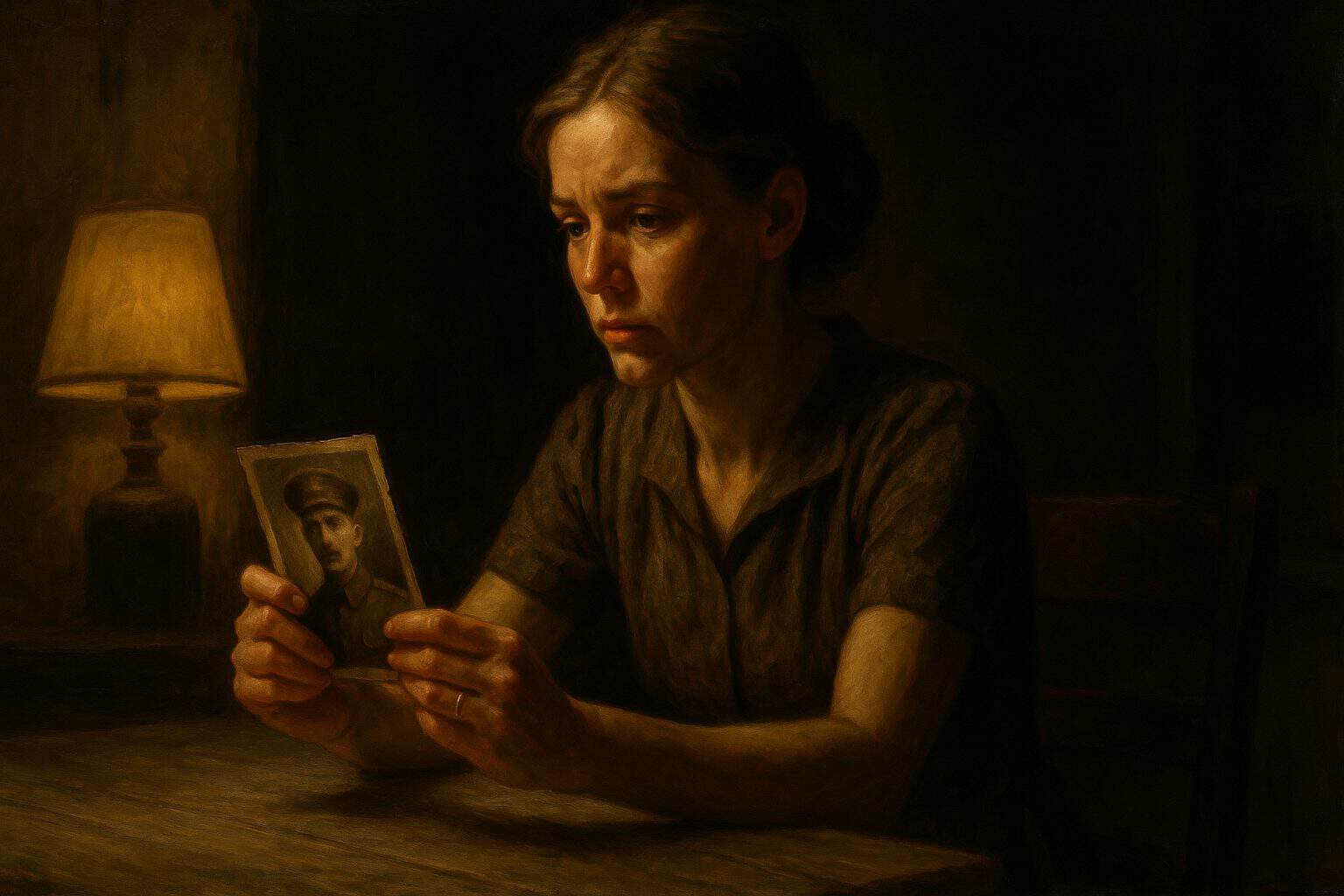
The photograph catches you unprepared. There you are, wearing your father’s expression—that particular set of the jaw when facing difficulty, though he has been gone these many years. Or perhaps it arrives in conversation, when you hear yourself speaking in the cadence of a mentor, their phrases emerging from your mouth as naturally as breath. We recognize it immediately, this phenomenon of borrowed strength, yet rarely pause to consider its structure. How is it that we can wear another’s courage like a coat? How do the dead continue to lend us their backbone?
The Hollow That Calls for Filling
The moment arrives first as depletion. Not mere tiredness—something has been spent that cannot be quickly restored. The body knows it before the mind: that particular heaviness in the chest, the way the shoulders want to fold forward, protecting nothing. You have given what you had to give, fought the fight that was yours to fight, and now stand empty-handed before what still demands response.
This is not the dramatic crisis that calls forth hidden reserves. Rather, it is the quiet devastation of having already called upon those reserves, having already reached the bottom of what you thought bottomless. The well is not merely low; the rope comes up dry. Rocking on my knees, head bowed, my chest ached—a chilling hollowness, a void smeared with death’s taste, leaving only dust and shadow.
In this hollowing, something shifts in the architecture of the self. The boundaries that normally maintain the distinction between self and other become permeable—not through dissolution but through necessity. The soul, finding itself insufficient to its task, begins to reach beyond its own perimeter. Not in the grasping way of acquisition, but in the way a plant reaches toward light—a fundamental orientation toward what might sustain.
The Gallery of the Absent
Before we borrow their armor, we must first have known them in their strength. The mind keeps a particular kind of inventory—not of people as they were in their fullness, but of their essential gestures of endurance. Your grandmother’s way of continuing to set the table through grief. Your teacher’s refusal to accept your own assessment of your limitations. The friend who showed you how to stand with loneliness rather than kneel with companionship in subjugation.
These memories are not stored as mere recollections but as living possibilities. They exist in what Merleau-Ponty might recognize as the pre-personal dimension of our being—that anonymous life of the body that carries forward what it has witnessed of strength. The body remembers not just events but ways of being, styles of existing, modes of standing in difficulty.
“After assembling enough fractions of the souls of women, like a spiritual collage, I crafted a weapon strong enough to defeat my reliance on a memory.”
This assembly is not conscious at first. We do not decide to borrow strength so much as find ourselves already clothed in it. The gesture emerges before the recognition—you are already standing the way they stood, already speaking with their particular kind of refusal to capitulate. The armor has been donned in that pre-reflective space where the body knows what the mind has not yet articulated.
The Mechanics of Transmission
How does this borrowing actually occur? Not through imitation—that would be too surface, too willed. Rather, it happens through what might be called sympathetic resonance. Having once witnessed authentic strength, having been in its presence, we carry within us not just its memory but its very possibility. The other’s courage has created a space in us, carved out a capacity we did not know we could contain.
The body grounds our thoughts. The physical anchors the spiritual. Unlike angels, we cannot feel without flesh. This is crucial: we borrow not abstract qualities but embodied ways of being. The straightness of spine under burden. The particular quality of voice that refuses to break. The way hands can remain steady when everything else trembles. These physical manifestations carry with them entire worlds of meaning, entire philosophies of endurance enacted rather than explained.
The transmission occurs through what Augustine might recognize as the mysterious commerce between souls—that fundamental relatedness that allows one person’s being to inform another’s becoming. We are not hermetically sealed units but porous, permeable, capable of carrying each other forward in ways that transcend the boundaries of individual existence.
The Weight of What We Carry
Yet this armor is not without its burden. To wear another’s strength is also to carry something of their struggle, their particular way of being wounded. The limp was the purpose. It was the permanent, physical reminder that Jacob’s own strength, his cleverness, his identity as the “supplanter”… were insufficient. Every strength we borrow comes marked by the struggle that forged it.
This is why the armor sometimes fits strangely. Your mother’s way of enduring may have been perfect for her particular battles but chafes against your different wars. The mentor’s intellectual armor may leave your heart exposed. The friend’s emotional resilience may not address your spiritual depletion. We must learn to wear what we borrow while maintaining our own shape beneath it.
There is also the question of permission—not legal or even ethical, but phenomenological. Can we truly borrow what was never offered? The dead cannot give consent, yet their strength seems to flow toward us nonetheless, as if strength itself seeks continuation, seeks to remain active in the world through whatever vessel presents itself.
The Alchemy of Integration
The most profound movement occurs when borrowed armor begins to transform into something that is genuinely ours—not through possession but through a kind of alchemy where the other’s strength catalyzes our own. It is in the tension between intimacy with God and mission in the world, between solace and struggle, that the soul grows strong.
This transformation requires time, patience, a willingness to remain in the uncomfortable space between who we have been and who we are becoming. The armor must be worn through seasons, through different battles, until it begins to conform to our particular shape while we simultaneously grow into its demands.
“Do not allow sorrow to take you! Do not bend the knee to grief, for he is not your God! Pray for the strength to endure not for the power to avoid.”
What begins as borrowed becomes, through wear and struggle, something new—neither purely theirs nor purely ours but a third thing, a alloy of spirits. This is perhaps what the tradition means when it speaks of the communion of saints, this mysterious circulation of strength among souls, this economy of courage that transcends individual boundaries.
The Return Circuit
The most surprising discovery: we are not only borrowers but lenders. Without knowing it, without willing it, our own struggles and small victories become available to others. Someone, somewhere, is wearing your particular way of not giving up. Your refusal to be diminished has become another’s armor.
This recognition changes everything. We are not simply individuals struggling alone, occasionally borrowing strength from the departed or the distant. We are participants in an vast exchange, a circulation of courage that moves through the human community across time and space. Divine command requires that primordial whetstones love their God, love themselves, and love the ones who hurt them.
The armor we borrow has been worn by many before us and will be worn by many after. Each wearing adds something—a particular scuff mark of struggle, a specific shaping through endurance. What we pass on is never quite what we received; it has been transformed through our particular battles, marked by our specific wounds, strengthened in the places where we most needed reinforcement.
The Sacred Ordinary
In the end, the armor we borrow reveals itself most clearly in the smallest gestures. The way you continue to make coffee in the morning because someone once showed you that despair can be answered with routine. The words you speak to your child that came first from a teacher’s mouth to your young ears. The prayer you pray in words you don’t quite understand but that carried someone you loved through their dark night.
These borrowings are so common we barely notice them, yet they constitute the very fabric of human endurance. We are all wearing each other’s armor, all the time, in a vast interchange of strength that makes possible what would be impossible for any of us alone. The phenomenon is so ordinary it escapes notice, yet so profound it touches the very structure of what it means to be human—these creatures who unlike angels, cannot feel without flesh, who must therefore borrow from each other the strength our flesh alone cannot sustain.
The armor waits, always, in the gallery of memory, in the communion of souls, in the mysterious space between self and other where strength circulates like breath, like blood, like love itself. We need only recognize our depletion, acknowledge our insufficiency, and reach—not grasping but opening—toward what has already been offered, what is always being offered, in the ceaseless gift exchange of human courage.