Why do I feel a book so deeply? A Catholic reflection on memory, spiritual warfare, and the songs that carry whole lost worlds inside us.
The Boy Stacking Verses Like Bricks
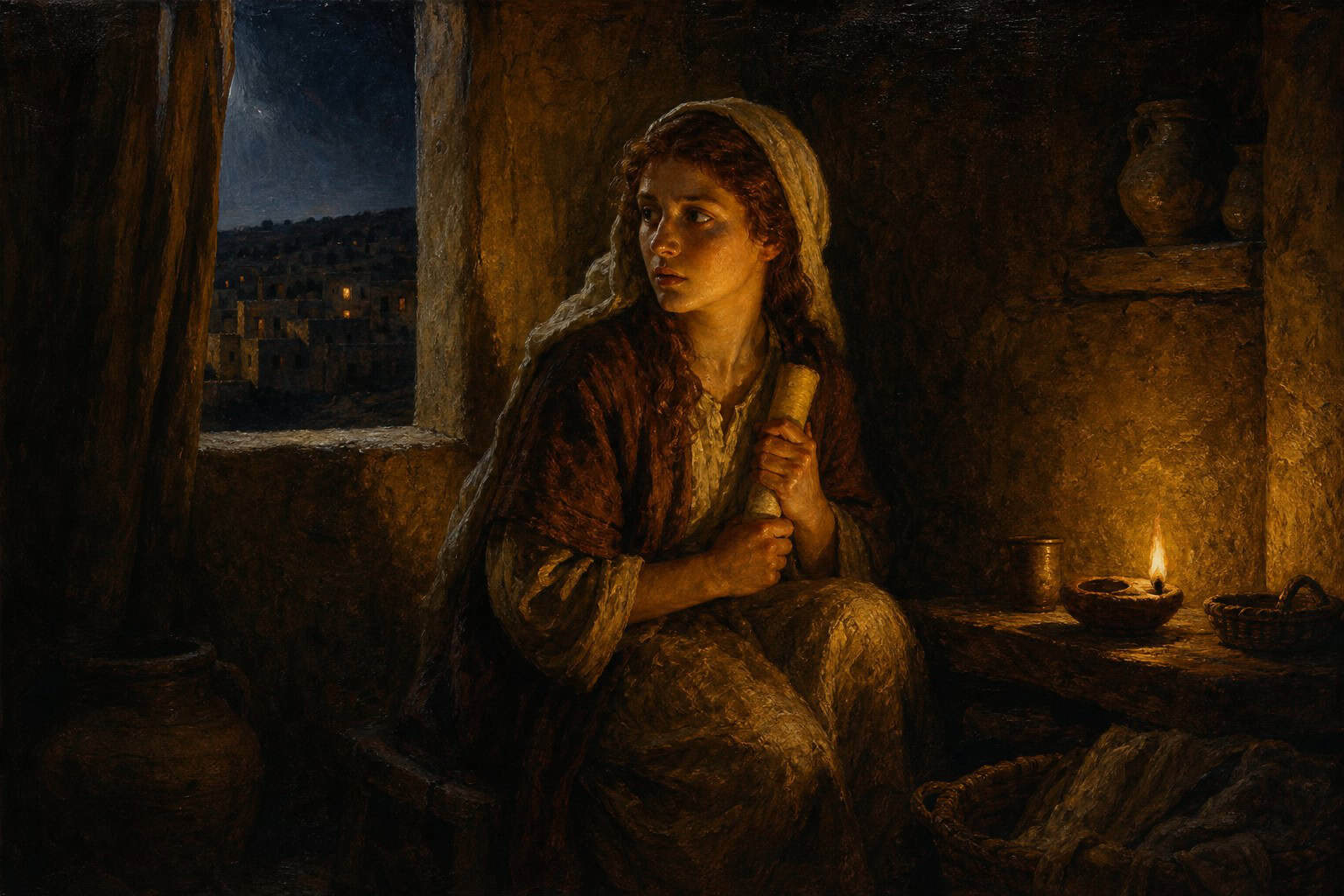
Why does a page of another man’s life seem to know the shape of your own dread? That is the question I carry into Chapter 16 of Confessions to the Empty Chair, where I stop and turn to look at a boy who could not yet name what he feared. I see him now, memorizing scripture the way a mason lays courses of stone, one verse set hard against the next, each line a brick against something moving in the dark. He thought he was arming himself against sin. He was, but the older man reading him sees more plainly what the boy could not see. The intensity of the defense was a map. Where the wall rose highest, the wound ran deepest, and he laid his thickest courses over the places he most feared to be found. This is what the Church has always known about temptation and the deep fracture of our nature, that the soul divided against itself carries a warfare it did not start and cannot end by sheer force of will. I recall the tightness in his small chest at night, the paperback Bible gripped until the cover softened at the corners, the words mouthed over and over until they blurred into a sound with no meaning. He was not praying so much as barricading. There was a difference, and he did not know it. Prayer opens a hand; barricading clenches it shut. When a reader feels that same tightness rise in his own throat, turning these pages, it is not sentiment leaking in. It is recognition. Something in the boy’s stacked verses names something the reader has never spoken aloud, not to a priest, not to a wife, not to himself in the dark. That, I think, is the beginning of why a book reaches in. It does not describe your fear from a safe distance. It walks the same narrow corridor you walk, in the same bad light, and turns a lamp on the thing you forgot was there. The boy did not know that God was already in the dark with him, not standing above the wall, not waiting somewhere past it, but crouched low beside the frightened child in the very hour of the fear. He thought holiness meant keeping the enemy out at all costs. He had not yet learned that the enemy was, in part, his own untended self, and that the Lord does not despise the trembling hands that build against Him what they only meant to build for Him. I read the boy now with a tenderness I could not give him then. I also read him with the honest severity he deserves, because his fear was real, and so was his flight from it, and I owe him both truths.
The Fantasist’s Warm and Bloodless Country
There is a harder thing under the wall of verses, and I have to name it or the whole chapter lies to you. The boy was safe in his body. No hand struck him. No one violated him, and I will not steal from those who suffered that horror by pretending I stood where they stood. What he lacked was tending. He grew in a house where no one warmed the small fire of his soul, where the rooms were fed and clean and yet somehow bare of the one thing a child cannot invent for himself. So he learned early to build another country inside his own head, a country of stories where he was seen, chosen, addressed by name. He became a maker of worlds before he was ten, skilled and quick at it, and the skill saved him and cost him in the very same motion. This is where the dread gathers, though it never announces itself as dread. It comes as a mood, a felt tone that colors the whole of a day, the low grey pressure of a child who suspects the real world will not hold his weight and so furnishes a warmer, bloodless one to live in instead. When a reader feels the pull of this book, he is often feeling that same ache in himself, the same early flight into imagined rooms, and he recognizes his own face in a stranger’s confession. That recognition is the vertigo. It is standing at the edge of your own freedom and seeing how early you began to run from it, how young you were when the fleeing became a habit and then a self. I ask the boy questions now that I could not ask then, and he does not answer, because he is too busy surviving, too busy hanging pictures in his invented halls. What did you refuse to feel, that you had to invent so much? Whom did you stop expecting at the table, so that you filled the empty chair with figures of your own making? And I confess my own part in it, because the fantasist did not die when the boy grew up. I have gone on building. I have dressed neglect in the borrowed clothes of gift and called my flight a calling, my hiding a discipline. The book you feel reaching into you is, in part, one man refusing to let his own escape go unexamined, holding it up to a light he would rather turn off. That refusal is what gives it substance in your hands. You feel it because it is not performing wholeness for you. It is confessing the crack, plainly, and the crack in him fits the crack in you, and in that fit there is a strange, unwanted communion neither of you asked for and neither can now undo.
When a Single Note Opens a Sealed Room
Then comes the turn, and it arrives through sound. I did not remember my early years as scenes so much as atmospheres, and each atmosphere had its own music. There was a season lit by space-age wonder, when the future felt clean and vast and full of quiet engines. There was a season of romantic intensity, when the whole body leaned toward one hoped-for face across a room. And there was winter, and the winter had its anger, a cold that got down into the blood and stayed there. I discovered, writing this chapter, that I do not carry my past the way a man carries a stack of photographs. I carry weather. Each threshold of my becoming preserved itself as a climate, and a single note can still split the seal and flood the room I thought was closed. This is why a song from a lost year can stop you flat in a grocery aisle and undo you before you understand what has happened to you. You did not recall an event. You were returned bodily to an entire world of who you were, its light, its fear, its unmet longing, all of it at once, in the space of two bars. And here is the answer to the question the reader keeps asking. You feel a book the way you feel that note. It does not hand you information. It restores an atmosphere. The words are not bricks of fact stacked for your instruction; they are weather that gets into your blood and resurrects a whole epoch of your own soul that you were sure had been sealed away for good. The dread in this is real, because the sealed rooms are not all sweet ones. Some open onto the cold, onto the anger of that childhood winter that permanently colored my perception, my faith, and my very capacity to reason clearly. When a book reaches in, it can open those rooms too, without asking your leave. That is the peril and the gift of feeling a book so deeply, that you are no longer the master of which door the note will open in you. And this is the sharpest thing I have to give you before we go further. The height of the wall you build against temptation measures the exact depth of the wound you are hiding behind it. The boy’s stacked verses, the fantasist’s warm country, the winter’s cold anger, all of it, they were walls, and the music went straight through them as though they were made of paper, because the wound they hid was always louder than any defense a frightened soul could raise.
The height of the wall you build against temptation measures the exact depth of the wound you are hiding behind it.
The Cold That Never Quite Leaves the Blood
After such a note sounds, the room does not simply settle back into place. Something has been let in, and the older man has to go on living in the aftermath of it. I find that the atmospheres do not resolve; they linger, low and patient. The childhood winter is not a memory I can shrug off like a coat at the door. It is still, in some low register I cannot reach, the medium through which I perceive. My faith moves through it. My reasoning moves through it. The anger of that early branding is not an episode I recall from a safe distance but a color laid down under everything I have looked at since. This is the falling away of any honest look backward, the discovery that you cannot quarantine the past into a sealed year and go on unmarked. The book does the same thing to the reader, and it is not always a comfort. To feel a book deeply is to let its weather mix with your own, and afterward you carry a little of its cold in your own blood, and you do not get to choose the day it surfaces. I once believed, in a confusion I have since had to unlearn slowly and with shame, that evil was a kind of substance, a dark material lodged in the body like a splinter under the skin. I could not think of the soul, or of God, except as some fine invisible stuff, a thinner air. So I imagined the fracture in me as a foreign thing that might be drawn out with the right verse, the right vigilance. The truth the Church set before me is harder and gentler at once. The fracture is not a substance and not a possession. It is the wound of a nature turned from its own source, and it is healed not by extraction but by return, by the long slow labor of reconciliation that no single verse and no invented country can ever perform on its own. I sit with the boy in this aftermath and I do not rescue him. I will not lie to you and say the winter lifted, because it did not lift, not then, not for years. What I can say, reading him now with clearer eyes, is that he was not alone in it. The Lord did not wait for the cold to break before He drew near. He was in the winter, walking in the child’s very fear, present in the tears the boy was too proud and too frozen to shed. That is not a fix. It is an accompaniment, rarer and stranger and far more real than rescue, and it is the thing I most want you to catch, because it is the thing the boy most needed and could not name.
Two Cracks That Fit Together in the Dark
So why do you feel this book. Now I can answer you plainly, having walked the whole corridor from the boy’s wall to the cold that outlasts him. You feel it because it is not a wall of finished verses handed down to instruct you from above. It is a wound kept honestly open, and the crack in one man’s telling fits the crack in your own hidden self, and in that fit something passes between you that is closer to prayer than to reading. This is where Chapter 16 settles, not on triumph, not on a lesson tied off with a neat ribbon, but on recognition, which is a poorer and truer thing. The boy built his fortress and the music went through it. The fantasist built his warm and bloodless country and the winter got in anyway, under the door, through the walls, into the blood. And the man who reads them both has finally stopped pretending the walls ever worked. What is left when the walls come down is not ruin, though for a long time I was sure it would be. It is company. You bring your sealed rooms to the page, and the page opens them, and for a moment you are less alone in the cold than you were before you sat down. That, I have come to believe, is what a book is for when it is doing its true and holy work. It is not there to arm you further against yourself. It is there to name the wound you armed yourself against, and to let you feel, in the very naming, that you were never the only child crouched behind the bricks in the dark, mouthing verses that would not hold. I make you no promise that the feeling will comfort you. Some of what this book opens is anger, and dread, and the plain vertigo of seeing how early and how thoroughly you learned to flee your own freedom. But I offer you this instead, which is truer than comfort and outlasts it. In the very place where you are most certain you have been abandoned, the Lord is often nearest, not lifting the darkness off you but sitting down inside it, present in every tear you were sure no one saw fall. This book does not resolve that ache. It sits in it, and it lets you sit there too. If you have ever felt a book reach in and open a room you had sealed, then you already know what these pages are, and you already know why your hands keep returning to the boy behind his wall. Sit with him a while. You will find, as I did, that you were never sitting alone.