How to get over a painful breakup when you realize you were only the backup plan. A hard, honest look at waiting to be chosen.
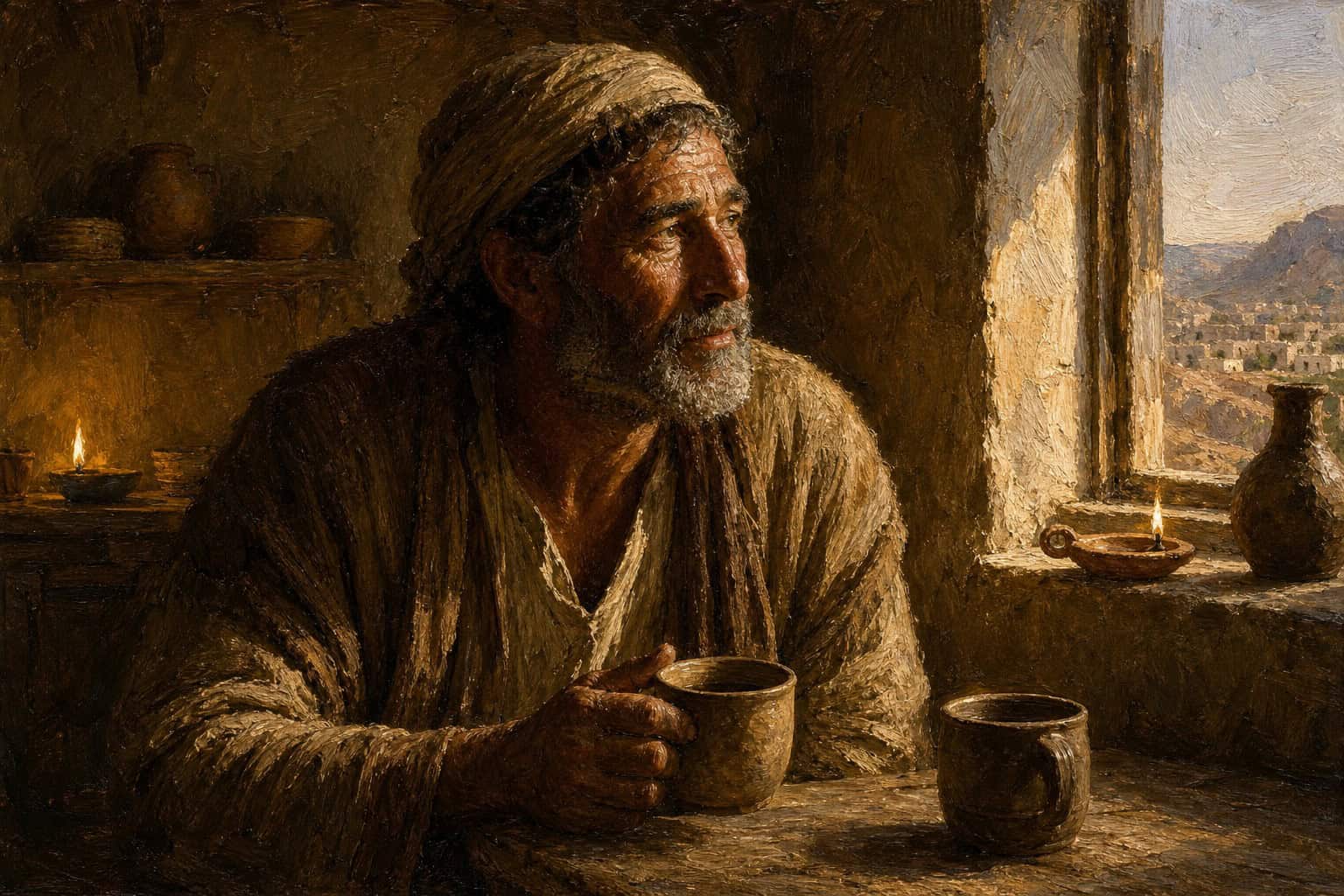
The Cup You Poured for a Guest Who Never Sat
Did she ever want you, or did she only want that you would still be there? The question sits low in your chest tonight, a stone you swallowed years ago and cannot cough back up. You made yourself easy. You answered on the first ring. You drove across the city at midnight when she called cold and lonely. You forgave before an apology was even offered, sometimes before she knew she had wronged you. You told yourself this patience was love, this endless willingness to wait was the highest kind of devotion. But love that only waits is not love; it is furniture. You became the couch she sank into between the men who thrilled her, the warm lamp she flicked on when the dark got bad. She left again the moment the warmth started somewhere brighter. Now she is gone, maybe for good this time, and you sit in the same quiet you always sat in, except no one is coming back to fill it. Your hand still reaches for the phone out of old muscle. Your ears still brace for the sound of her key scraping the lock. There is a cruel accounting you have started to do at two in the morning, lying flat and awake: how many months, how many favors, how many times you swallowed your own hunger so she would stay comfortable. You counted comfort as a kind of worth. You believed that if you were reliable enough, quiet enough, needed enough, she would finally see you clearly and stay. But reliability made you invisible. A thing that is always there stops being noticed, the way you stop hearing the refrigerator hum until the day it breaks and the sudden silence startles you awake. You broke, and only then did the quiet grow loud enough to hear. The breakup did not open this wound. It only pulled off the bandage you had been changing every morning for years, calling the dressing loyalty. Now you must sit with the plainest and hardest fact of your situation. You were not the one she chose. You were the one she kept in case no one better stayed long enough. That truth lands like a hand on the back of the neck. And the getting-over does not begin with her at all. It begins with the man who agreed to be kept, who set out an extra cup every evening for a guest he already knew would not sit down. The waiting itself was the marriage you made, and you married a chair.
The Ledger Written in Your Own Hand
The nights come back in fragments when you least want them. The dinners where you swallowed your real opinion so the evening would stay smooth as glass. The plans with friends you canceled the instant she was suddenly free. The way you learned to read her moods the way a farmer reads a sky, adjusting yourself hour by hour so she never once had to bend toward you. You called this being easy to love. You were even proud of how little you asked, proud of your low maintenance, your restraint, your endless accommodation. But look hard at what that pride was hiding. Under it sat a fear so deep you dressed it as a virtue and wore it in public. You were terrified that if you ever asked for something, ever said a plain no, ever became the smallest bit inconvenient, she would be gone. So you erased the parts of yourself that might cause friction. You sanded down your edges until there was nothing left to catch on, and then you lay awake wondering why she could hold you and feel nothing in her hands. A hand closes only around a thing that has shape. You gave her nothing to close around. The bitter part is that your surrenders bought you no safety at all. They bought contempt, or worse, a flat indifference, the way you feel nothing toward a light switch. Somewhere across those years she stopped seeing a man with his own weather and began seeing a fixed point, a place she could always locate in the dark. She never once demanded you make yourself this small. You did that yourself, willingly, hoping smallness would get you chosen. Now the ledger lies open on the table in front of you, every surrender entered in your own handwriting. You want to blame her, and some blame is fair; she took what you kept offering and gave back almost nothing. But the harder accounting is the one you owe yourself. Why did you keep offering? What in you decided that being needed sat close enough to being loved that a man could live on it? You were not weak because you loved her. You were weak because you loved her in a shape that required you to vanish. There is a hunger in every person to be extraordinary to one other soul, to be the one they cannot do without. You chased that hunger by becoming so useful you would be impossible to leave. But usefulness is not the same as being irreplaceable. A tool is useful. A tool is also set down and forgotten the second the work is done. You must ask now, plainly, whether you were ever more than a tool she had not yet finished using, and whether it was your own hand that passed her the handle.
The Morning the Body Refused to Wait
Then one ordinary morning the waiting simply ends, and not because you decided it. The body refuses first. You wake and your hand does not reach for the phone. You make the coffee, one cup, and drink it standing at the window as the gray light comes up over the roofs, and for the first time the quiet in the apartment is not the absence of her. It is the presence of you. This is the turn, and it brings no triumph with it. It feels like grief, clean and total, because to stop waiting is to finally admit the thing you waited for was never going to arrive. You were never her partner. You were her provision. You were the safe harbor she meant to sail back into after the storms she actually wanted to be out in. She would have run herself ragged through the world and come home to you when the running left her spent, and you would have taken her in, grateful, and called that winning. That was the whole future you were quietly building with both hands. A future where you got chosen only because everything else had been tried and set aside first, the last option in a long line. To see it laid out this plainly is to feel something inside you die, and you should let it die where it lies. You do not need to be gentle with that dying man, but you must not lie to him either. He believed, in his marrow, that devotion earns love the way work earns wages, that if he only kept the ledger clean enough she would one day settle the account and stay. That belief was the lie he lived inside for years, and now the floor of it gives way under him. The grief is not weakness. It is the price of finally seeing.
You were not too much for her; you were too available to matter, and availability is not the same as being wanted.
What the Empty Kitchen Hands Back
Do not run to resuscitate the old fantasy that she would have one day finally seen your worth and stayed. She saw it. She weighed it. She priced it and set it on a shelf in reserve. The fallout of this seeing is slower and stranger than you braced for. You thought getting over her would mean forgetting her, but it turns out to mean remembering yourself, and you are not sure the man is still in there. The evenings run long. You keep reaching for the shape of your old life, the vigilance, the readiness, the low constant hum of waiting to be needed, and finding it gone leaves a hollowness like a muscle worked every single day and then suddenly, permanently, at rest. You do not know what to do with your hands. You do not know what you want, because for years your wanting was subcontracted entirely to her wanting, and the contract has lapsed. This is the part nobody warns a man about. The freedom does not walk in wearing joy. It walks in as vertigo, a floor tilting under your feet. You have to relearn the most basic and embarrassing things. What you like to eat when no one is watching your plate. What you actually think when you are not busy managing someone else’s mood by the minute. What you would even do with a Saturday that belongs, start to finish, to you alone. And beneath all of it runs a colder current, the plain fact of your own mortality, the truth that you spent years of a life you do not get back keeping a seat warm for a woman already spending her own years elsewhere, with someone else, laughing. That grief is real and you must not rush past it to feel better faster. The time is gone. You cannot recount those nights or unspend those surrenders or reclaim the man you were before you started shrinking. But this finitude, held honestly in both hands, is not only loss. It is also the very thing that makes what remains matter. You have fewer years now than you had when you first set out that extra cup, and that is exactly why you can no longer afford to keep any of them warm for someone who will not stay. The old self would name this bitterness and turn away from it. The truer self, still faint but waking, knows it for what it is, which is clarity, hard and clean. You are learning, at a cost, that to be kept is not to be loved, and that a man who cannot bear to risk being unwanted has already, in advance, made himself unwanted. God does not lift this grief away. He does not hand you a tidy lesson wrapped and closed. But if you stay quiet in that kitchen, you may feel Him near inside the ache itself, not fixing it, only present, the way a friend sits beside you at a graveside and says nothing because nothing is the true and honest thing to say.
A Man Who Can Be Left and Still Stand
So how do you finally get over her? Not by hating her, and not by winning her back, and not by rushing out to find someone new to keep the same seat warm at the same table. You get over her by ceasing to be the man who needed to be kept at all. This is slower than revenge and much harder than forgetting. It asks you to build a self that can stand in an empty room and not feel erased by the emptiness. It asks you to want things out loud, to knock on doors even when your knuckles shake against the wood, to risk being told no by the whole world rather than shrinking into a safe corner where no one can reject you only because no one can find you. The invisibility you suffered was not simply done to you from outside. You chose it, one small surrender at a time, mistaking your own fear for a humble heart. Undoing it means choosing the harder course over and over, the course that will cost you comfort, that may draw fury from those who liked you better small, that may leave you standing alone for a long stretch. Alone is not the worst country a man can live in. The worst is to be present and unseen, kept and uncounted, alive in a life that does not notice you breathing in it. You know that country by heart now. You do not have to walk back into it. Grief will still knock at odd hours for a long while yet, and God will not always take it away the moment you ask Him to. But He walks with you inside it, closer in this ruin than He ever felt in the long years you spent performing patience like a role, and that nearness is the single thing the breakup could not carry off. Let the ache do its slow and thorough work in you. Let it teach you that love without the courage to be chosen for your own self is only maintenance, and you were made for far more than maintenance. This is the terrain Anthony Adoré walks in Fractions of the Soul, the long reckoning of a man learning what he refused to see in himself, set down without the cheap mercy of a clean ending. You are not there yet. You are in the kitchen, in the light, at the start of it. But you have stopped setting out the second cup, and that is the first true thing your hands have done in years. From here you do not go hunting for someone to keep you. You go looking for the man who does not need keeping, and you find, to your quiet surprise, that he was the one you were grieving all along.