Dating as a Christian woman when privacy is gone: a raw, honest look at longing, honesty, and the fractured self behind every conversation.
The Second Handset in the Cold Hallway
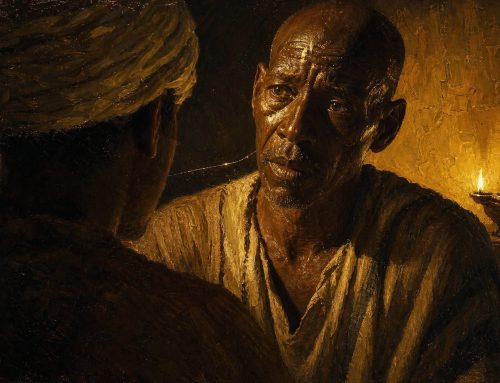
How do you date as a Christian woman without losing your soul in the wanting? That is the real question hiding under all the practical ones about texts and boundaries and how long to wait before you answer. Once, love had witnesses built into the walls. A single telephone line ran through the whole house, one cord, one signal, shared by everyone under that roof. If anyone else was home, all they had to do was lift a second handset in another room and listen. The girl who wanted to whisper to a boy after dark had to reckon with the plain fact that her father might be standing at the kitchen wall, receiver warm against his ear, breath held. Her sister might be crouched on the stairs. Her mother might have picked up to make a call and stayed for the sound of her daughter’s voice going soft. There was no private channel anywhere in that house. The architecture itself refused to let the heart hide. You could lower your voice, but you could not close the door on the sound of your own longing, because the wire carried it straight into shared air, into the ears of people who knew you. I think of that now with something close to envy, and it startles me to feel it. The old home was built so that desire could not go dark and unaccounted for. This is the ground I want to stand on before I say a word about the woman I once loved and failed, deeply, to understand. She grew up as I did, into a world where the copper wire vanished and the private channel appeared. The conversation that once bound itself to the communal room now lives in a sealed glass rectangle, warm in the palm, glowing under a blanket at two in the morning. No one lifts a second handset. No one overhears. And so the question of dating as a believing woman is no longer only, whom do I want. It has quietly become, who am I permitted to become when I am certain no one is listening. The shared line kept desire honest by keeping it audible. Take away the witness and you have not removed the longing at all. You have only removed the account of it, the record, the overheard truth that once told the whole house what a heart was doing. I want to sit inside that removal, because I lived on the far end of it, and for years I mistook the silence it made for peace. She was tender and she was hidden, and for a long time I could not tell those two things apart. The scene I keep circling is not a story I will retell. It is a condition I need to name plainly.
Warm Glass Where the Copper Used to Run
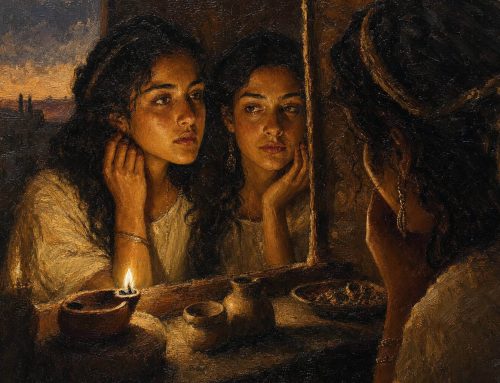
Consider what the sealed channel does to a woman who longs the way every one of us longs. Her desire is not a defect, and I refuse to name it one. It is the primitive pulse of a life reaching for connection, for wholeness, for the union her body was made to seek and her faith was made to hallow and lift. That reaching is holy in its root, a thirst the Maker put there and did not apologize for. But now the reaching happens without a father in the next room, without a wire that carries her voice into the family’s shared air where it can be heard and answered for. She can keep one conversation alive under the gentle name of friendship while another man shares her bed. She can hold an old flame close, an ember cupped in both hands against the possibility of some future encounter, while the present relationship never learns the full shape of what came before it. Two lives, running on separate lines, each one sealed, each one denying the other exists at all. I do not say this with a raised finger. I say it because I recognize the machinery, having run it myself in my own way, in my own hours of hiding. The strategic mind whispers that this is only prudence: keep the doors from ever touching, keep every man believing he is the only lit room in the whole house. And there is a colder reading available, the one that calls her a hunter who poses as prey, who arranges never to be alone with the men she dislikes and always to be alone with the ones she wants, who makes herself available to be pursued so that the burden of the chase, and its blame if it goes wrong, falls squarely on his shoulders and never on hers. That reading has teeth, and I will not pretend it has none. But it is not the whole woman, not even close. Beneath the arrangement is a person terrified of being known and then found wanting, a person who fragments herself into separate faces precisely because being whole would mean holding two contradictions in one trembling hand and confessing them out loud to someone who could leave. The inherited loneliness she carries runs far deeper than any tactic she ever learned. She is not a mechanism. She is another soul lived from the inside, aching in a room I could not see into because the wire was gone and she had taught herself, patiently, to guard the glass. What I refused to understand, back then, was that her hiddenness and her tenderness poured from the same wound in her. I kept mistaking the guardedness for coldness, the sealed channel for indifference. It was fear wearing armor. And I, who wanted so badly to be chosen without ever risking the hard labor of truly choosing, was no cleaner than she was. Not by a hair.
The Note Written for No Other Eyes
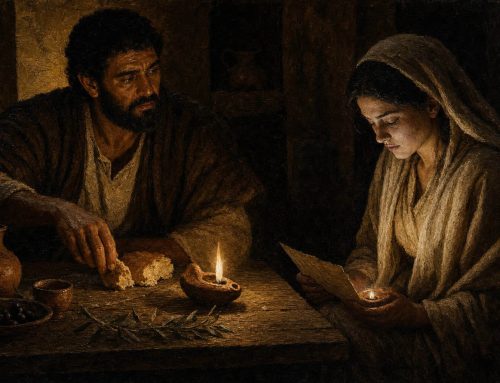
Here is the turn I could not make while it was happening, and can barely make even now, with all these years behind me. The problem was never that she desired. Desire was the best thing in her, the pulse that made her worth loving in the first place. The problem was that desire had been cut loose from any account of itself. When a conversation lived on the shared house line, love had to survive being overheard by someone who knew your name and would remember. It had to be a thing you could bear to have witnessed at the kitchen wall. Strip away the witness and something rots quietly inside the wanting, not because the wanting has gone evil, but because it never again has to answer for what it does in the dark. She could write the longing meant to be read only under cover of night, and no one anywhere would ever lift the second handset and hear it. The genius of the whole arrangement, the terrible genius, was that every provocative act came wrapped in the soft gauze of accident, every signal built carefully so that it could later be denied with a straight face. That is the corruption I keep circling in myself and in her: not the choosing of one wrong thing, which at least would be honest, but the slow patient construction of a world where choosing itself dissolves into a permanent maybe, where nothing is ever admitted and everything is always almost. And I was complicit in it, fully, because I loved the ambiguity too. It let me want her without the terror of being told no. It let me reach without risking the shame of a closed door. I let responsibility sit on no one’s shoulders, neither hers nor mine, and I called that patience, I called it gentleness, I told myself I was being kind. It was cowardice with excellent manners. Two people who longed rightly and hid wrongly, letting the maybe do the work our courage should have done, and calling the sealed room a mercy when it was only a hiding place we had both agreed never to name.
The soul that arranges never to be caught has already lost the one thing courtship was meant to test: whether it can be known.
What the Sealed Room Quietly Costs
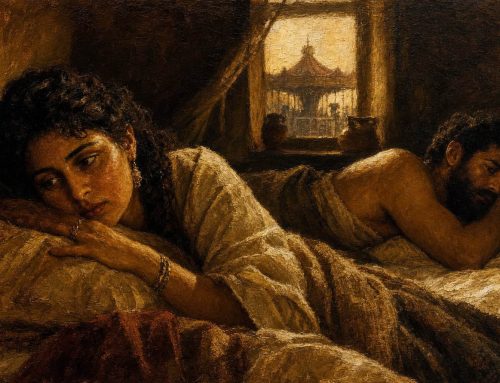
So the message meant for no other eyes is the thing I keep returning to, the sentence I would underline in my own life if I could stand to read it in the light. The soul that arranges never to be caught has already lost the one thing courtship was meant to test: whether it can be known. That is what the old shared line protected, without anyone in that house ever intending to protect it. The copper forced the question of knowability, made it unavoidable. Now I sit with the ruin of what came after us, and grace does not arrive to erase it or tidy it. God does not lift the second handset and set everything right with a single word. What I have found instead, in the long dark of remembering her, is stranger and quieter than rescue. He was already in the room where I hid. Present in the very sin of my hiding, sitting beside me while I told myself the ambiguity was tenderness, while I read the messages that meant nothing and everything and refused to hold either. He did not remove the loneliness that drove us both to the sealed channel. He walked down into it. That is the mercy, if you can call something so unadorned a mercy. The falling out of a love built on separate lines is not a clean grief with a shape you can hold. It is a grief full of unanswered questions, because you never had the account, never had the overheard truth, only the glowing glass and the plausible deniability and the two lives that were never once supposed to touch and somehow always did. I do not know, even now, at this end of things, who she truly was in the rooms I was never let into. I know who she was to me, and I know, with a shame that has not worn smooth, that I gave her a hiddenness to hide inside, because I wanted her already gilded, already half surrendered, without the cost of standing in the shared air of a real life and being plainly heard. We were two people longing rightly and hiding wrongly. The longing was the pulse of life reaching past the present toward some union we each half believed in and half feared. The hiding was the fall itself, dressed up in tact and good intentions. When it ended, what remained was not resolution but a silence where the wire used to hum through the walls. And into that silence, slowly, without announcement, came not an answer but a presence, sitting down in the wreckage with me, refusing to explain any of it away.
Let It Be a Thing That Can Be Heard
If you are a woman of faith asking how to date without losing yourself, I will not hand you a rule to follow. I will hand you the memory of a house wired for one conversation at a time, where love had to be a thing you could bear to have overheard by the people whose faces you knew. Ask of every message, every private lesson, every innocent check in, every conversation held late and alone, whether you could speak it into the shared air of the people who love you and not flinch, not scramble to explain. Not because you must be watched to be good, but because a love that cannot survive a witness is not yet love. It is a rehearsal for love, performed alone in a sealed room, applauded by no one. The tender woman I once knew was not one grain less holy for her longing. She was less free for her hiding, and so was I, and the two of us mistook that unfreedom for privacy and called it grown. Freedom is not the sealed channel and never was. Freedom is the terrifying willingness to let one true self be known by one true other, contradictions and all, the past that still burns your fingers and the future you cannot stop fearing. That is the harder country, and the faith we hold does not promise it will feel safe once you cross into it. It promises only that we are not alone in it, that the One who set the reaching in us waits inside the very dark where we first learned to conceal it. I am still learning, at this end of my life, to lift the second handset on my own heart, to overhear myself before I can deny it, to refuse the soft comfort of the maybe. I set this down in Fractions of the Soul not as a man who mastered it but as one who failed at it and was met, unaccountably, in the failing. The old telephone line is long gone. No wall will chaperone your longing now, and no father waits at the kitchen receiver. The witness you need, you will have to become for yourself, and invite freely from the few who truly love you. Here is the strangest thing I know, the thing I did not believe until the dark itself taught it to me over years: being fully known is not the death of desire. It is the only ground on which desire ever finally lies down and rests. The house had it right all along. Let the line run through every room again. Let love be a thing that can be heard by someone who will hold it.