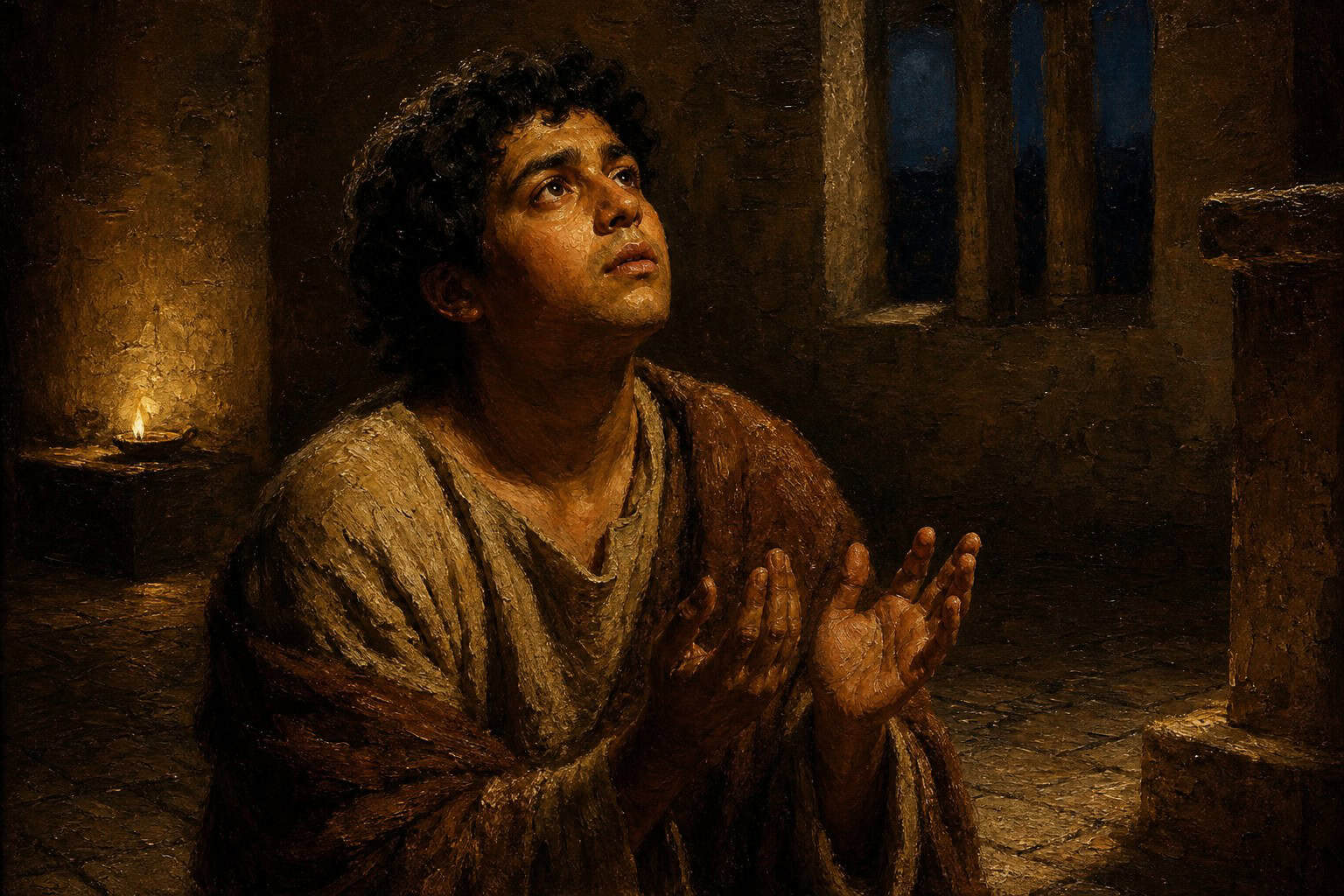
How to reject a guy without cruelty or self-betrayal—a reflection on honesty, mercy, and the courage to be truly seen.
The Text You Cannot Bring Yourself to Send
How do you turn a man away without becoming a monster? That is the question, isn’t it, and I hear the real ache underneath it, because I carried the same one into rooms far worse than a message left unsent. You are afraid of two things at once, and they pull against each other. You are afraid of hurting him. You are also afraid of being seen doing it—afraid of his eyes finding yours and knowing that you decided, that the no came from your own mouth and not from some accident of timing or bad luck. So you hunt for a formula. You want a script that lets the refusal happen while you stay half-hidden, present enough to end the thing, absent enough to dodge the blame. Your thumb hovers over the phone. You draft the words, delete them, draft them softer, delete them again. I know that hovering. I once perfected the art of being there and not there in every room I walked into. I threaded just enough truth through my smile that people believed the mask, my lips a thin sheet of glass over eyes that were always counting the empty space someone had left in me. I called that survival. But hear me from the far side of it: the thing you are truly asking is not how to reject a guy. You are asking how to be honest without being visible. How to close a door without your fingerprints on the handle. There is no such method, and I wish someone had told me that before I spent years proving it. Every refusal worth its salt asks you to stand in a lit place and say a plain thing to a face that will change while you watch it happen. That is the whole terror of it. That is also, though you cannot feel it yet, the whole dignity of it. I once sat on a cold chapel floor, far from the entrance, hoping no late visitor would round the corner and catch my shape against the wall. I wanted to pray and stay unwatched at the same time. It cannot be done, not honestly, and neither can this. You will have to be seen. You will have to let him see that you are the one saying it, and you will have to carry what that costs in your own chest. The good news, though it will not sound like good news for a while, is that being seen is the way into everything real, not the punishment at the end of it. I spent so long believing the opposite. Let me spare you a little of the wandering.
Pain Dressed Up and Called Discipline
There is a cruelty on offer to you, and I want to name it plainly, because I chose its cousin for years and called it strength. You can make the refusal hurt on purpose and call the hurt honesty. You can decide that the sharpest word must be the truest word, since it is the one that stays after everything gentle has drifted away. I did this to my own body, night after night. I ran the wooded trails around the dormitories until my lungs burned and my legs went numb. I lifted until my arms shook and gave out. I told myself the pain was discipline, that my capacity to endure it proved something about my worth. It proved nothing, except that I had learned to aim the violence inward and give it a respectable name. The pain became a tyrant that always wanted more. Every time I obeyed it, I mistook the punishment for clarity, because it was the one sensation that never abandoned me. You will be tempted to do the very same thing to him and dress it up as kindness. You will want to be brutal so the wound closes fast, to tell yourself a clean cut is mercy and a hard word is a gift. But cruelty is not clarity. A cruel no is not more honest than a gentle one; it is only more comfortable for you, because anger keeps him at a safe distance and spares you the harder labor of standing close while you hurt him carefully. Rage is a wall you can hide behind. The man in front of you is not an obstacle to endure or an enemy to defeat. He is a person who wanted you, and wanting is not a crime, even when your answer is no. If you dress your fear as strength and your avoidance as maturity, you will do to him exactly what I did to myself for years—redirect the violence rather than face where it came from. And the source, if you are brave enough to look, is not him at all. It is your own dread of being ordinary. Fallible. Capable of disappointing someone and living through it anyway. You think you must choose between wounding him and wounding yourself, and that the choice is the whole of it. That is the trap closing on you. There is a third way, and it is harder than both, because it asks you to feel the full weight of what you are doing while you do it well. It asks you to keep your voice soft and your meaning clear at the very same moment, which is nearly the most demanding thing a body can be asked to hold. Do not confuse the skill of opening a clean wound with the wisdom to close one gently. They are not the same, and only one of them is love.
The Congregation I Built From Streetlights
Here is the turn I did not understand at your age and would give a great deal to have known sooner. When you cannot bear to be seen by a living face, you begin pouring yourself into faces that cannot answer back. I did it under a clear night sky. I climbed to a planted bench on a hill above the highway and watched the far towers of a sleeping city glitter, their lights echoing the same patterned twinkle as the stars overhead. I told the moon my secrets, because the moon could not flinch and could not walk away. I imagined those lights as witnesses and asked them, in my mind, how many like me they had seen and heard across the long ages. It felt like communion. It was only loneliness returned to me as motion, my own voice bouncing back off things that could not love me. The empty buildings understood me, I thought, precisely because they demanded nothing and gave nothing. This is exactly the temptation crouching inside your refusal of this man. You want to hand him a text, a voicemail, a tidy little story about timing, anything at all that will answer for you so you never have to sit across from a breathing person and let him respond in real time. You want the moon to do your speaking. You want the indifferent thing to carry the weight, so no living eye ever catches you in the act of deciding. But a person is not the night sky. A person can be hurt, and a person can forgive you, and both of those are gifts the stars will never once hand back to you. To refuse someone honestly is to risk the terror of being truly known—known as the one who does not want him. That is a smaller and far more bearable thing than you fear, but it is still a thing, and it will make your hands cold.
A kind refusal costs you more than a cruel one, because kindness requires you to stand in the light and be known.
The Loud Hush After the Plain Word
I have to tell you what came after the refusals I did badly, because you will not escape a fallout, and I would rather you know its shape before you meet it. When I finally spoke plainly to anyone, when I let a real face see me instead of my brittle, polite glass smile, there was no applause and no relief arriving on schedule. There was silence. I knew that silence in my bones from the chapel—I learned how loud a place can feel when the answer you have begged for simply does not come. My throat would go thick with prayers that had turned to dust before they reached my lips. Part of me kept shoving the silent God away, furious that He would not speak; another part dragged me back to His house anyway, night after night, to hide on the floor near a station of the cross. You will meet your own version of this silence. After you say your honest no, the man may not thank you for your honesty. He may go quiet. He may say wounding things, or say nothing at all, and you will sit inside that hush wondering whether your kindness even registered, whether being brave was worth the emptiness that followed it. Here is what I could not understand kneeling on that cold floor. The silence was not absence. I read it as abandonment because I wanted rescue, I wanted the dark lifted off me clean, and the dark was not lifted. But something was there inside it with me, quiet, fixing nothing, simply staying close. I felt it most on the nights I deserved it least, when the punishment and the wanting and the shame had knotted together somewhere under the skin of my upper back. Grace almost never came as an escape from the dark. It came as company within the dark, present in the very tears I was ashamed to be crying. The fallout of an honest refusal works the same way, I promise you. You will not be paid in instant peace. You will sit in the discomfort of having caused real pain and having survived it, and that discomfort is not your sentence. It is the ordinary weather of being a real person among real people. Do not mistake the silence after your honesty for proof that the honesty was wrong. Do not run back to the mask because the plain word left a hard quiet behind it. The quiet is precisely where you learn that you can hurt someone, mean it gently, and still be held through it. You will not feel held at first. You will feel exposed, clumsy, and mean. Stay in it anyway. Something walks with you there that the running and the lifting and the glass in my hand never once gave me, and it asks nothing except that you stop hiding your face from it.
Pews That Held Me Better Than Arms Could
So let me answer your question at last, though not in the shape you were hoping for. You cannot reject a guy without being seen, and you should stop trying, because the being-seen is not your punishment—it is your road back to being human. Look at him. Use plain words. Tell him you do not want what he wants, and say it without the extra cruelty that would let you feel powerful and without the extra fog that would let you feel innocent. Let him respond. Let it be awkward and slow and unfinished, with long pauses you cannot fill. Do not send the night sky to speak for you. Do not perfect a smile so smooth that no one can ever pull the loose thread and unravel it. I spent years being present and absent at once in every conversation I had, and it did not protect me; it only sealed me alone with a self I could not stand to sit beside. The empty pews held me better than any human arms did in those years, and that was true only because I would not let a single pair of arms come near me. That is not a triumph. That is a diagnosis of how far I had run. What I want for you—younger self, searching stranger, both of you at once—is that you would risk the arms instead. Risk the flinch that crosses his face. Risk being known as the one who said no, because that same courage, the courage to stay visible while doing a hard and kind thing, is the only way out of the beautiful, solitary cell I built for myself and mislabeled maturity. You are afraid this refusal will make you a monster. It will not. Refusing a man honestly and gently is one of the plainest acts of love left available to you, because it hands him the truth instead of feeding him a comfortable lie that would waste the years of his life. The mercy in it runs in both directions; you are not only sparing yourself. And if the silence descends afterward, if he goes quiet and you find yourself alone with what you have done, remember that the quiet is not empty even when it feels emptiest. I learned that on a chapel floor I never expected to matter to me. The dark did not lift, not that night and not for a long while. But I was not, it turned out, ever truly alone inside it. Go, and be seen. That is the whole of the answer, and it will cost you everything, and it gives back more than it takes. The slower, more shameful reckoning of how I came to know this waits for you in Confessions to the Empty Chair.