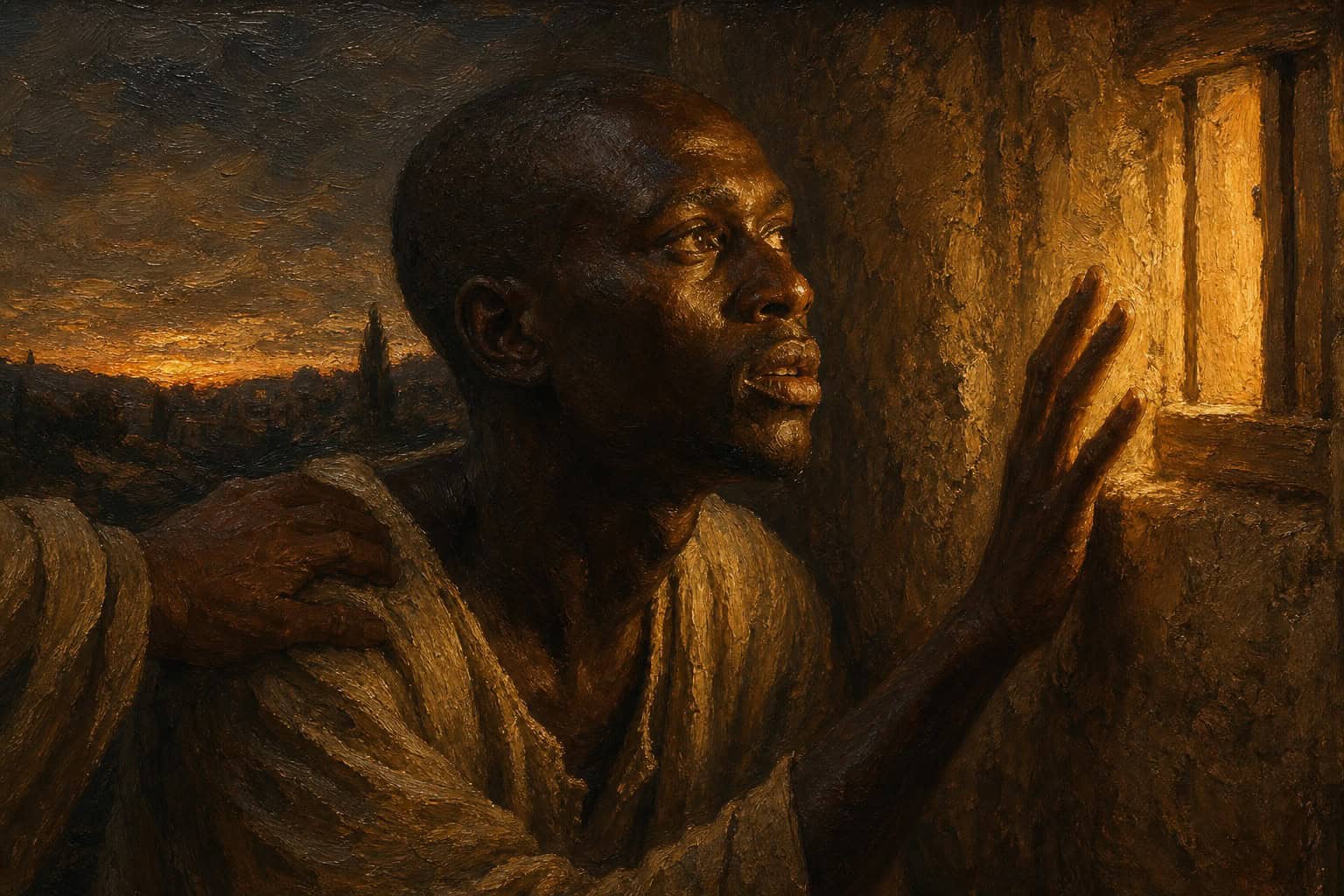
What is the surrender God asks of a young man’s desire? A frustrating divine intervention that spared his heart by denying his body.
The Opportunities That Never Arrived
What do you do with a mercy that felt, at the time, like a theft? That is the question the older narrator of Confessions to the Empty Chair carries back into his youth, turning it over the way a man turns a coin he cannot spend. Look at the plain facts. A young man, blood hot, imagination already lit, stands at the edge of encounters that never came. Not because he refused them. Because they were never offered. He wanted them. He believed they were his to take, as if the world owed his hunger a reply. And the openings he expected simply stayed empty. No hand reached back for his. No voice answered the one already sounding in his chest. Years later he names the emptiness as God’s doing. A frustrating intervention, he calls it, one that spared him a deeper fall while feeding a disappointment that stung for a long time after. The particulars are not grand. There is no thunderclap in this scene, no vision, no burning sign. There is only the ordinary ache of a boy who counted on something and found the count wrong, the flat surprise of a door he was sure would open holding still. The moment is not about what happened. It is about what did not, and that is harder to sit with, because an absence leaves no mark you can point to. It leaves only a suspicion that you were being handled, moved, kept, without your consent and without explanation. He wanted the reciprocated burning, the small proofs that his desire had power in the world, the confirmation that a look could summon an answer. He wanted to be met. Instead he was passed over, again and again, and he did not know why, and the not-knowing outlasted any single hunger. The older man looking back does not pretend the young one was noble. The boy was not spared because he was good. He was spared, he now believes, because his heart was weaker than he understood, and God read the weakness before the boy could feel it. That is the first hard thing this passage lays down: mercy that does not feel like mercy. Protection wearing the exact face of loss. A grip on the shoulder that reads, to a body straining forward, as nothing but restraint. The disappointment was real. He says so plainly, without softening it into a lesson. It was not a stage prop for a later moral. It was a boy’s genuine grief over pleasures he never tasted and could not stop imagining. What kind of love denies a man the very thing he begs for, then dares to call the denial a gift?
The Eyes That Feed the Fire
The reflection does not stay in the boy’s frustration. It reaches back further, into old kings and older hungers, to name what the intervention was guarding against, and here the ache begins to make a different kind of sense. Desire, in a man, starts in the eyes. Soft flesh seen from a distance, a body caught during a casual walk, someone who does not know she is watched. The sight enters, and the imagination takes it and builds a private theater that the man alone directs. In that theater she yields, she answers, she communicates her pleasure straight into his ear, and his own sense of potency swells in the telling. None of it has happened. All of it is felt, vivid, insistent, as real to the blood as any touch. The scene is honest that the danger is not the act but the manufacture that comes before it, the way a single glance becomes a hall of quiet worship the man returns to alone. This is where the strategic and the tender have to be held in one hand without crushing either. Yes, something in a man’s looking reaches for conquest, wants the answer of another body as evidence of his own worth, hunts for a reply that would settle the question he carries about himself. And yes, the woman in his theater is not the woman at all. She is a projection, a surface polished to throw back only what he wishes to see, stripped of everything in her that would resist or complicate his story. The real woman has her own inner life, her own reasons, her own choosing that owes his imagination nothing and never agreed to a single scene. He does not see her. He sees the mirror he made of her. The passage understands this as the truer betrayal, quieter than any sin of the body. What a man lets his eyes feast on becomes, in time, what he serves. The imagination is not idle. It builds altars, and it builds them fast. The young narrator, had the encounters come, would have built them gladly and called the building love. He would have mistaken the mirror for communion, the reflection for a meeting, his own hunger for a bond. The older man sees now what the boy could not: that the encounters denied were not pleasures withheld but altars left unbuilt, a whole quiet apostasy that never got its ground floor. And there is tenderness under this hard reading. The boy, beneath the appetite, wanted to be met by a real person, wanted an answer from a life not his own. The tragedy is that his hunger, unchecked, would have made that meeting impossible, converting each woman into an instrument of his own exaltation. God saw the mirror before the boy did, and broke it before he could kneel to it.
The Fire Dries Before It Warms
Here is the turn. The intervention was not deliverance from the battle. It was conscription into it. The young narrator wanted out. He wanted the thing that would end the tension by satisfying it, the pleasure that would quiet the strain at last. God gave him neither the satisfaction nor the exit. God gave him the fight, and held him inside it, and this holding is the whole strange center of the scene. It looks nothing like love from the inside of the wanting. A boy leans toward what he is sure will fill him, and the hand that could hand it over instead keeps it out of reach, not to spare him struggle but to make certain he struggles against the right enemy at the right hour. The graver temptation, the one that would have taken his heart and not only his body, was pushed off, delayed, denied a foothold. But nothing was made gentle in the process. The scene refuses the comfort of a rescue. There is no lifting-out, no clean deliverance, only a slow work that arrives first as drought. Before the fire can warm, it dries the ground. Before love kindles, it burns away everything the soul was gripping. The young man felt only the drying. He could not feel the love hidden inside it, because at the start of such a purging the soul cannot yet perceive what is being done to it. He felt abandoned in his desire, held back from his pleasure, disappointed by a God who seemed to move only to frustrate. That is the raw thing this book will not cheapen.
God did not rescue me from the fight; He held me inside it, and called that mercy.
And calling it mercy did not make it feel like mercy, not then, not for years afterward. This is the rare exception that breaks the pattern of ordinary silence: a direct intervention that still arrives without a shred of comfort. The holy breaks in from beyond the boy toward him, but it breaks in sideways, through disappointment, through the encounters denied, through a hunger left standing and unfed. The young man wanted the divine to answer the longing he could name. The divine answered a longing he did not yet know he carried, the one underneath the flesh, the one for a heart kept whole enough to one day love without building an idol out of it. He could not have thanked God for this. He resented it, and the resentment was not a failing to be scolded. It was the only honest reply the boy had to give to a gift that felt exactly like a wound. The older narrator, telling it, will not pretend otherwise.
God did not rescue me from the fight; He held me inside it, and called that mercy.
What the Body Knew Before He Did
The fallout of such a mercy is not clean, and the narrator does not tidy it. He carries the disappointment forward like a stone in a pocket. He admits that the denied opportunities lodged in him as grievance long after he could name them as grace, that the two names sat in him at once and would not reconcile. This is the honest cost. When God intervenes by subtraction, He leaves you with an ache and no receipt, no proof that the loss was for you and not simply against you. The young man had to live inside that ambiguity, and the living took years. Time did the work that no argument could finish. What persisted was not the pleasures he had, since he had none of these; it was the pleasures he was denied, and their absence pressed on each new day like a bruise he kept pressing to see if it still hurt. Here the meditation opens, held with humility, toward how men and women actually move through desire and choice. A man’s longing runs ahead of him, impatient, wanting the answer now, wanting a body to confirm what the ego only suspects about itself. He mistakes getting for union. He hears his own want and thinks it is a conversation. A woman, in this passage’s own frame, is glimpsed from afar, unaware, made into the occasion of a story she never agreed to tell. The counter-reading matters just as much and has to rest in the same hand: she is not an occasion. She is a whole consciousness lived from the inside, with her own hungers and her own guardings, her own reasons for yes and no that have nothing to do with any man’s private theater. The narrator, older now, must reckon with how easily his young self erased that inner life, how his desire, left to run, would have swallowed her personhood into his own need to feel exalted. What did he refuse to see? That the women he pictured were never his to script. That his hunger, ungoverned, would have made real intimacy impossible, because a man cannot commune with a mirror, only admire himself in it. His body, in those denied years, may have known something the mind kept resisting: that the encounters withheld were also encounters spared, spared the women the burden of his projection, spared him the hollow discovery that the projection had no one behind it. The self-questioning here is not comfortable and does not resolve. He does not get to decide he was wronged, nor that he was simply saved. He sits between the two, which is where honest men sit when they look squarely at their own appetites. The bruise stays. The gratitude comes late and only in part. And the God who did the subtracting stays quiet, offering no answer, only the plain fact of what did not happen and a heart that somehow outlasted it.
The Late Arithmetic of a Sparing
Where does it settle? Not into resolution, because this book does not deal in resolutions. It settles into a man doing late accounting on his own life, adding up losses he once mourned and finding, to his unease, that they may have been gains the whole time. He cannot prove it. He believes it. There is a difference, and he honors the difference rather than papering over it. The scene ends not in certainty but in a chastened wonder: that the God who kept back the pleasures of his youth may have been, in the very keeping, nearer than in any granting. This is the register the whole memoir lives in, close to the bone of grief, where the divine is felt far more as a companion walking beside than as a hand that fixes. God did not lift the young man off the field of his desire. He walked it with him, through the drought, through the disappointment, through the hunger that never found its answer. And the older narrator, telling it, understands that this walking-with was the mercy all along, hidden behind the face of denial. He does not celebrate it lightly. The cost was real. The years of grievance were real. The heart that longed to be met and was passed over, that was real too, and none of it dissolves in the telling. But he can now trace the shape of the sparing, and the tracing becomes its own quiet form of praise, closer to a bowed head than a hymn. The reader is left holding what the narrator holds: a longing that never got its answer in the way it demanded, and a God who answered a deeper longing instead, silently, patiently, at the price of the boy’s short happiness. That tension does not close. It opens outward into the whole of the memoir, into a life spent learning to read God’s absences as forms of presence and His frustrations as forms of care. Anyone who has begged for a rescue and received only company in the dark will know this ground under their feet. Anyone who has fought a battle they never chose, and wondered why God would not simply carry them off the field, will find their own question already waiting here, not answered but honored. The book makes no promise that the ache will lift. It promises something harder and more trustworthy: that inside the ache, seen with older eyes, you may discover you were never once left alone. What was denied you may turn out to be the very thing that saved the part of you worth saving.