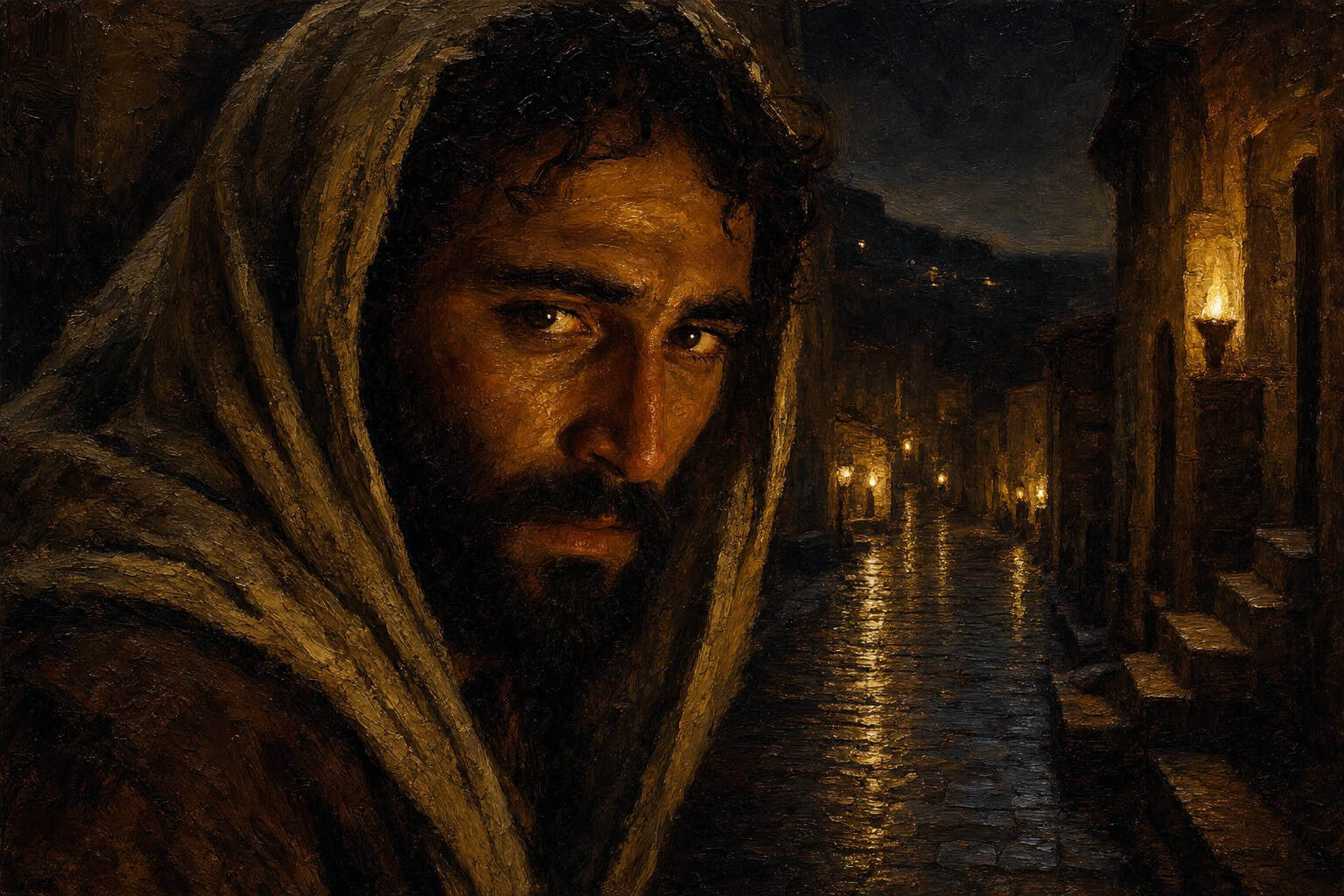
How to show intimacy when part of you loves and part only wants the body—a raw, honest look at desire, presence, and the divided heart.
Two Strangers Who Learn the Steps in One Night
You want to know how to show intimacy, and here is the honest place to begin: with two people who met as strangers and, within a handful of hours, called themselves lovers. In Fractions of the Soul, the young man tells it plainly—first strangers, then acquaintances, then dance partners, then something more, the whole distance crossed in a single evening under one long stretch of loud music. He builds a small theology out of it, a private rule about how bodies meet. Casual closeness can sit beside real friendship, he decides, and it is women, not men, who hold the gate that lets the escalation happen. Watch the words he chooses. Acquaintances. Complements. Culmination. They sound clean, orderly, almost tidy, as if intimacy were a sequence you could learn like footwork on a crowded floor. But underneath the neat language there is a body that wants and a heart already broken somewhere else. The nightlife of late-nineties downtown thrums around him—the insistent beat, the river of people on the sidewalk, the leather and vinyl and dark makeup that promise a woman unashamed of her own hunger. Girls marked with tattoos and piercings draw him most, girls who wear their desire in the open with no embarrassment under the eyes of strangers. He is pulled toward that lack of shame. It looks like honesty to him after the buttoned-up outfits and constructed disguises he has known. The contrast is the whole appeal: here, he thinks, is desire with nothing hidden, want that admits itself out loud. So we start here, in the noise and the press of bodies, with a man convinced he has cracked the code of closeness. He thinks intimacy is a thing you produce by moving through the steps in the right order, that if the sequence goes cleanly the meeting will follow. He is about to learn that showing intimacy and having it are two different acts, and that the floor does not care which one you perform. The other person always knows. And so, quietly, does the older man remembering it all, who turns the lens back on his younger self and asks what he was really reaching for when he reached for a hand across a small table. Was it her? Or was it proof that someone still wanted him after someone else had stopped? That question is the real subject of this whole reflection, and it will not let itself be answered cheaply. Keep it with you as you read. It is the difference between the dance and the meeting the dance was supposed to serve, and the young man cannot yet feel the gap.
The Body Offered, the Soul Held Back
Here the tension gathers, because showing intimacy is easy and giving it is not. Anyone can offer the body. You can learn the choreography of closeness—the leaning-in, the shared cigarette passed back and forth, the practiced ease that mimics trust. What is hard is refusing to hide. The young man draws lines around the act—rules, boundaries, comfort, friendship—and those lines are not cruelty; they are protection. He has been hurt. A woman he loved has turned him away, and now his chest is a room with two occupants who will not speak: one grieving, still bleeding from the loss, and one delighting in his new power to make women want him. He passes between them freely and calls this freedom. But notice what the rules actually accomplish. They let him hand over his body while keeping the wounded part locked away where no new woman can reach it. That is not intimacy. That is intimacy’s clever forgery. Real closeness asks the whole person—the mind clear, the wanting mutual, a love steady enough to carry the other’s weight as its own. It cannot be produced by technique, no matter how smooth the footwork. And the strategic reading offers one honest layer worth holding: he is not wrong that closeness escalates by permission, that the woman across from him is doing her own reading of him, deciding in her own body whether she will or will not. She is not a lock his moves can pick. She is another mind, choosing, weighing, wanting things he cannot see and may never guess. To flatten her into a rule about how women work is to miss her entirely—and he half-knows this, which is why the memory still unsettles him decades on. The deeper trouble is that he is not really choosing her at all. He is choosing an escape from the grief that waits in the other half of him. Each new body becomes a kind of medicine against being left. And medicine taken this way does not heal; it numbs, and it always wears off, and the dose has to grow. So the ache builds through the whole bright night. You can show intimacy for hours and walk home in the gray dawn more alone than when you started. The forgery is convincing until the lights come up and the floor empties and the music stops. Then you feel the exact shape of what you withheld, and you understand that the thing you performed all evening was the very thing you were most afraid to actually do. To be seen. To be known without the leather and the practiced ease. To let one person past the rules and risk that she, too, might decide to leave.
The Streets Remember What the Man Forgets
Then comes the turn, and it arrives not in a bed but on a sidewalk. Years later he walks the same nighttime streets he once haunted, and the city knows him. That is his own strange, exact phrasing—the city remembered him when he tried to forget himself. This is the revelation the whole scene has been circling. The places where we tried to dissolve into pure flesh do not dissolve with us. They keep the record. His feet still know where they stumbled, where they paused to light a cigarette in a doorway, where they turned toward a bar whose name he can no longer recall. The pavement holds the grooves worn by a self he would rather disown, and his body slips back into the old slouch before his mind can stop it. Here is what it teaches him about intimacy that no lover taught him in the moment: the body cannot lie about who it has been. You may draw all the boundaries you like around an act, you may insist the body was offered and the soul withheld, but the soul was there anyway, keeping score, and so was the street.
Intimacy is not the offering of the body but the refusal to withhold the soul that hides behind it.
He learns this backward, in memory, standing on a corner that testifies against his old denials. What he called freedom—moving between grief and pleasure at will—was really a man who could not bear to sit still in either. What he called honesty—the unashamed women, the raw embrace of lust—was partly true and partly a story he told himself to make the escape feel like courage. And God is here, though not as rescue. This is the hard grace of it: the Lord does not lift him out of the nightlife, does not erase the memory or scrub the streets clean of him. He simply walks them alongside him. He is present in the very grooves of the transgression, quiet, near, letting the city say aloud the truth the man spent years avoiding. The revelation is not that he was wrong to want. Wanting is holy; the body’s longing for union is written into us by the One who made two sexes to image His own tenderness and His own generosity. The revelation is narrower and sharper than that. He wanted the wrong thing from the right hunger—wanted proof instead of presence, relief instead of union, the performance of being close instead of the terror of actually being met by another person who might stay.
Intimacy is not the offering of the body but the refusal to withhold the soul that hides behind it.
Walking Home Through the Grooves He Carved
After a turn like that, you do not get comfort. You get clarity, which is heavier. The fallout of this scene is a man who can no longer pretend the rules protected anyone. He offered less than he was worth and took crumbs in return, and the streets keep the exchange rate posted like old prices he is ashamed to check. But the reflecting self does something braver than shame. He refuses to call the divided heart hypocrisy. He names it what it is: the authentic shape of a wounded soul that still loves God and still burns with what feels like its opposite. Both occupants of that split chest are real. The grieving man is not a liar for wanting pleasure, and the pleasure-seeker is not a fraud for still aching toward the sacred. This is the terrible wholeness of being human after innocence breaks—the same heart that kneels to pray can harbor impulses it fears are demonic, and the two do not cancel each other out. They coexist, uneasy neighbors, and living with them is the daily work. So what does this teach anyone asking how to show intimacy? It teaches that the question is aimed slightly wrong. Intimacy is not something you show. It is something you allow, by not hiding the parts of you that could be hurt. The young man showed intimacy expertly and gave almost none, because giving would have meant carrying his grief into the room instead of leaving it outside with everything else he refused to feel. And here the older narrator turns the lens hardest on himself. Did he ever truly see the women he moved through those nights? Or were they occasions—mirrors in which he checked whether he was still desirable, still wanted, still real? He does not let himself off the hook. He suspects the answer wounds him and them both. Yet even here he holds the counter-truth in tension, and this is the mark of his honesty: some of those women were braver than he was, more truthful about their own desire, more willing to be present in their bodies than he was willing to be present in his soul. Their openness was not a weakness for him to move through. It was a courage he could not yet match. He cannot reduce them to lessons in his own long education. They were persons lived from the inside, choosing, wanting, deciding for themselves whether he was worth the yes they gave. He owes them the dignity of not turning them into symbols of anything, and he knows it. That debt, unpaid, is part of what the streets remember too, and part of what walks home beside him in the cold.
The Corner Where Longing Deforms Into Gesture
Where does this settle? Not in a lesson you can pocket and apply tomorrow, but in a truer picture of what closeness actually costs. Every familiar corner in that city marks a place where reaching toward union collapsed into reaching for mere proximity—where the pause for genuine meeting gave way to the quick gesture that only looked like meeting from a distance. That is the gallery the streets have become for him, a long row of small surrenders. And it is a gallery many people carry folded inside their own bodies: the memory of nights they settled for the shape of intimacy because the real thing asked more nakedness than they believed they could survive. If you came here wanting a method for showing intimacy, the honest answer is that there is no method, only a decision made again and again not to withhold. To let the other person see the grief as well as the desire. To carry their weight as your own. To want them, and not merely want to be wanted by them. This is what the young man could not yet do, and what the older man spends a whole book learning the true price of. Confessions to the Empty Chair lives inside exactly this ache—the caregiver playing a role to escape the terror of a desire not returned, the sharp intellect raised like glass against real self-giving, the body warm in the bed while the soul stays somewhere else entirely, leaving only a lingering scent behind as its trace. It is a book about the many convincing forgeries of closeness and the rare, costly moments when a forgery cracks and something real gets through the gap. The despair in it is not tidied away. The wanting is not shamed into silence. Desire stays what it always was—a good hunger, planted by God, meant for union and generosity and the free giving of one whole self to another. What gets examined, without mercy and without contempt, is what a frightened person does with that hunger when he has been left and cannot bear to be left again. The book hands you no clean resolution. It walks you into the divided heart and lets you feel both occupants breathing at once, and it suggests, very quietly, that God is found not by escaping that division but by being accompanied through it—tear by tear, corner by corner—until the pavement stops accusing the man who walks it and begins, somehow, against all his expectation, to hold him up.