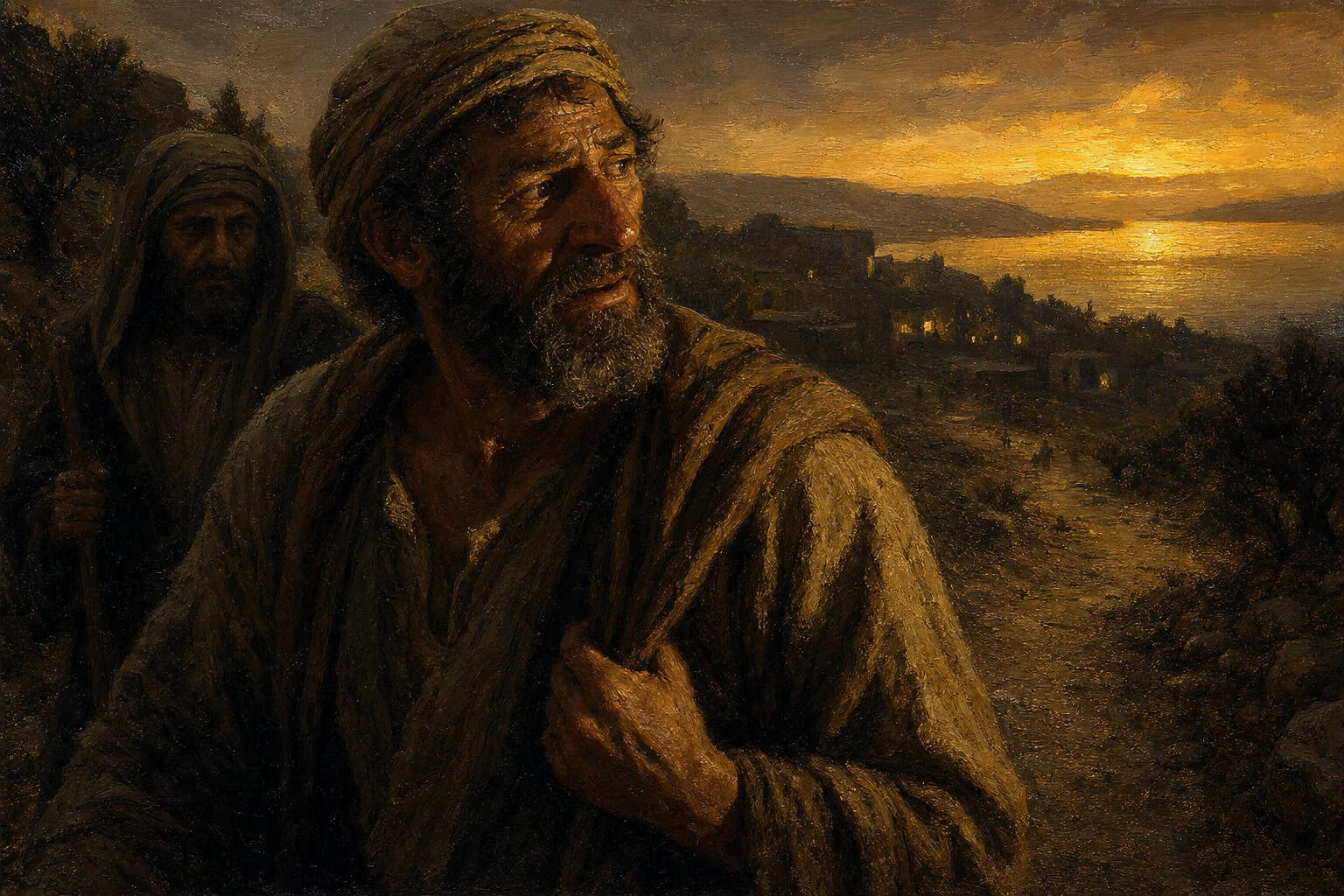
If you surrender to the win, what happens to your soul? A confessional reading of desire, the eyes, and the altars we build without knowing.
The Walk You Told Yourself Was Casual
You remember the afternoon light, don’t you. You were younger then, and you told yourself the walk was nothing—an ordinary stroll, a small freedom, warm ground under your feet, the hour easy and unowned. You did not go out hunting. That is what you would say later, again and again, as if the sentence could scrub the record clean. But something crossed your path, and your eyes did what eyes do: they lingered a half second too long. A shape, a softness, a promise of welcome your mind supplied before you had permission to ask for it. Your pulse changed before your thoughts did. And here is the first thing I want to tell you, gently, because I love you and I cannot spare you the truth: the win you already wanted was not the person in front of you. It was the picture forming behind your eyes, the little theater where she reached for you, where her breath said yes, where your own strength stood crowned in the middle of the scene. You called that longing. You called it romance. You even called it, on your holier days, a kind of tenderness. I know how the disappointment sat in your chest afterward—not the guilt yet, only the ache of a chance that never came, an opening you were sure had been shut on purpose to spite you. You resented that your life seemed arranged so the encounters stayed few, that the opportunities you counted stayed unspent. You read mercy as denial. You read a fence as a cage, and you nursed the grievance like a warm coal. Let me sit inside that with you rather than fix it, because fixing it too fast would be its own small lie. You wanted to be chosen, and you wanted the choosing to feel like a victory earned by your charm, your patience, your particular depth. The wound underneath was older than any face you passed on any road. It was the plain hunger to be worth wanting, to be looked at the way you were looking out. You did not yet see that the reaching was not really toward her at all. It was toward a wholeness you could name but never hold, and you kept mistaking a body for the horizon. You mistook the frustration for injustice. You mistook the ache for love denied. That is where all of this begins, in the ordinary light of an ordinary afternoon, and I will not let you leave it as innocent as you needed it to be.
A Thirst That Howls at the Locked Gate
Then the picture began to feed itself. You know this stretch of the road well, though you hated to admit how well you knew it. One glance became a memory. The memory became a scene you could summon at will. The scene became a craving that returned unbidden while you tried to pray, tried to sleep, tried to be good and quiet and clean. The desires in you woke up wounded and unfed, and they did not go still. They circled a gate that would not open and groaned like starved animals in the dark, thirsty for a fire they could not reach and would not stop reaching for. I watched you feed them anyway—small offerings, a thought held one beat too long, a scene replayed until it wore smooth—because you had convinced yourself the burning proved you were alive, that a man without this hunger was somehow less. And underneath the appetite, something sadder was working its slow machinery. You wanted rank. You wanted to stand a little above the ordinary run of people who, you assumed, fumbled at love while you alone understood its real depths. That secret pride was a compensation, and I can name what it was compensating for, though you never would have said it out loud to anyone. You had been small somewhere. Unseen somewhere. Passed over in some room that still stung. And the imagined submission of another soul restored a throne you had lost in the real world where no one crowned you. Do you see the trade you were making? You were not seeking her. You were seeking a mirror that would tell you your worth was real, that your potency was true, that you mattered because someone burned for you. The frustration you aimed upward—why so little, why held here, why kept from what I deserve—was itself an accusation dressed in the clothes of prayer. You believed the intervention in your life was cruelty, a jailer’s hand keeping you from what was yours by right. I want to tell you what I could not have told you then, because you would not have believed me: the fence was not the cage you thought it was. It was the shape of a love that refused to let you drown in a shallow win. You were being kept from encounters that would have finished you before you had strength to stand in them, and you named that keeping abandonment. The hardest part is that both things were true at once. You were genuinely spared, and you genuinely suffered the sparing. Grace here was not rescue from the thirst. It was a nearness inside the thirst, a step behind you in the dark while you pounded the gate and howled. You never once turned to see who was keeping pace with you.
The Eyes Were Always Building an Altar
Now the turn I owe you, the thing that took me years to bear and longer to say without flinching. It was never only about a body, and it was never only about lust. Look again at the old story you knew by heart: a king idle above his city, a woman glimpsed at a distance, water and skin and a single unguarded look that lasted a moment too long. That look put a plan in motion. The plan ended with a man dead so the king could keep what his eyes had already claimed as his. His eyes led to murder—not in one leap, but by a series of small orchestrations, each one reasonable to him in the moment. Then his son, born of that very hunger, gathered wives and concubines past counting. And here is the strange thing the text refuses to say: the anger did not fall simply because he wanted many. It fell somewhere deeper. His desire built temples. His hands raised altars to rival gods to please the flesh he loved, and the heart that had once belonged wholly to the Lord slowly turned its face away. God was not jealous of the number of bodies. He was jealous of the rival altars that desire had erected inside the soul. That is the secret your own eyes were keeping from you all along. Every time you let a glance become a theater, you were not merely failing at purity. You were choosing what you would serve. The eyes do not simply look; they choose an altar, and whatever you feast on is already the god you serve. Your imagination was the first temple, and you were laying its stones every day without ever seeing yourself as a builder. That vain, restless hunger you carried—dressed up as knowing love, as understanding women, as depth other men lacked—was the oldest turning-away wearing a soft and reasonable face. You wanted to reach into the secret of another soul and possess it, to hold what should have stayed free, and the far edge of that wanting, the part you would have denied with real fury, curved slowly toward mastery. Toward holding her freedom shut inside your fist. That is the terror I have to name for you plainly. The longing that felt like pure tenderness had a shadow in it that reached toward domination. Not because you were a monster. Because unfed desire always tips that way when the object it wanted refuses to become the god it demanded. You were reaching for wholeness through a person who could never be a horizon, and when she stayed a person and not a horizon, the open reach began to curl into a grip you did not recognize as yours.
The eyes do not simply look; they choose an altar, and whatever you feast on is already the god you serve.
What the Locked Gate Was Really Guarding
So sit with me in the wreckage now, because this is where you actually lived for a long stretch of years. Once you saw that the altar was the real sin, the old disappointment changed its color entirely. It was no longer only an ache for chances denied you. It became the slow, sickening recognition that the chances you had mourned would have been altars you built with your own two hands. The intervention you resented, the one you called a jailer, had been guarding you from a self you could not yet even imagine—a man who kills in whatever quiet way killing happens when we turn a living person into an instrument for our own crowning. You had wanted the win so badly that you never once stopped to ask what winning would have made of you. I cannot pretend this recognition brought you peace when it came. It did not. It brought a colder kind of grief. The fasting you tried later was not born of hatred for your body or contempt for desire itself; it was because you finally understood that a shallow hunger has to be starved before a deeper one can wake—the hunger for righteousness your appetite kept drowning under its noise. But even that was slow, and thick with relapse, and marked by nights when the howling returned to the gate and you fed it again out of pure exhaustion. Grace did not lift you out of the war. It did not carry you off the battlefield you never chose to enlist on. Every morning you were conscripted again, tired before your feet touched the floor, drafted into a fight whose end you could not see. What changed was not the difficulty of it. What changed was the company you kept in it. The presence you had mistaken for absence, the One you had cursed as jailer, had been walking the whole desolate length of the road beside you—present in the very sin, quiet in every tear you shed, not applauding what you did and not walking off from it either. He did not fix the thirst. He was near inside it, and the nearness was so quiet you took it for empty air where a companion should have stood. You wanted the miracle. The clean deliverance. The sudden bright freedom that would let you skip the walk. He gave you the walk instead, a long slow bleeding pilgrimage beside a companion you could not see and would not turn to find. And the stubborn mercy of it is that survival never once came from your own strength, which was already spent to the last coin, but from His refusal to leave the very man who kept building altars to his own worth.
The Face You Could Not Master and the One You Could Not Escape
Here is where it settles, though settle is far too neat a word for what is only a resting place on a road that keeps going. You spent your youth trying to be seen the way you were looking out—to be wanted, chosen, crowned inside another’s gaze until you finally felt real. That reach was never wrong at its root. It was the shape of the longing every soul carries in it, the reach toward a love large enough to hold you whole and not let you fall through. What was wrong was the altar you kept building for it. The way you demanded a single person carry the whole weight of a horizon no person can bear. The shadow of mastery that woke and stirred when she would not become what you had made of her in the dark. I would put the hard question to you now, the one you dodged for years by staying busy: who were these women to you, really? Faces, mostly. Screens for your hunger. Mirrors angled to give back your worth. You almost never looked long enough to see the soul behind the softness, because you were too occupied being seen, too hungry for the reciprocated burning that would tell you what you needed to hear. And the deeper question beneath that one: what were you serving the whole time? Not them. Not even the pleasure. You were serving the god of your own potency, and you named it love and thought yourself devout. I do not say this to break you. I say it because the only way out was always straight through the truth of it. The gaze you begged from creatures was a beggar’s copy of the gaze you were actually starving for—the eyes of the One who saw you clearly in the dark and did not once turn away, who watched you lay every stone of every altar and kept His pace beside you anyway. That is what these pages circle and circle, this long reckoning with a desire that outruns its object, the reach toward a wholeness you can name in a single breath and never hold in your fist. Confessions to the Empty Chair hands you no tidy freedom at the end. It hands you a companion in the desolation, a nearness stubborn enough to outlast your worst wanting. If you surrender to the win, you lose the very self the winning was meant to prove. But if you let the gate stay shut a little longer, and turn at last to see who has kept walking behind you the whole time, you might finally be seen by the one gaze that does not consume what it looks upon. That is not the end of the war. It is the first hour of not fighting it alone.