Living a double life psychology: why keeping two selves apart feels like control and slowly costs you the one thing you can’t fake.
Two Coats You Hang By the Same Door
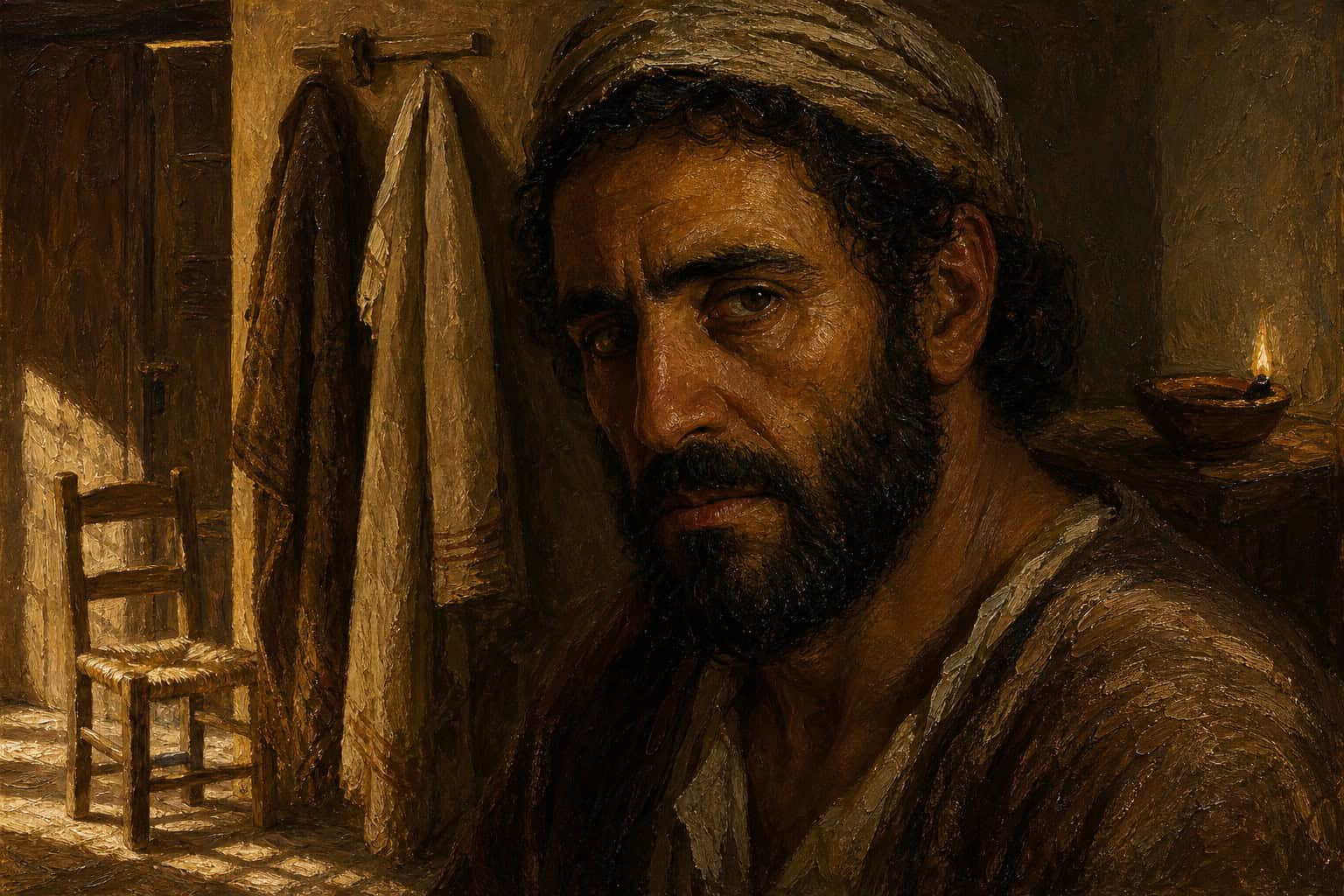
You remember the first time you told a small lie that felt necessary. Maybe it was the way you softened your voice on the phone with one person and let it go rough with another in the same hour. Maybe you kept two calendars, or one calendar with careful blanks in it, whole afternoons that belonged to no one you could name out loud. It starts that ordinary. You are not a criminal; you are just a person who learned that different rooms want different faces, and you got good at the switching. Your hands know it before your mind admits it. You put on one warmth in the kitchen at breakfast and another kind of attention later, in a car, in a coffee shop, in a text you delete the second it is read. There are two coats hanging by the same door, and you have trained yourself to grab the right one without looking. It feels efficient. It even feels like kindness at first, as though you are protecting people from the parts of you that would only confuse or wound them. You tell yourself you are keeping the peace. You tell yourself everyone does this, that a private self is not the same as a secret self. And there is a thin truth in that, enough truth to build the whole thing on. You take yourself apart, piece by piece, and hand each piece its own weather. But underneath the arithmetic of who-knows-what, something in your chest keeps a separate ledger you did not agree to keep. You feel it when the phone rings at the wrong moment and your whole body goes still, breath held above the ribs like a swimmer under a wave. You feel it when two worlds nearly touch in a doorway and you steer them apart with a laugh that costs more than it sounds. The double life does not announce itself as a crisis. It announces itself as skill. You become fluent in it the way you become fluent in anything you practice daily, until the fluency itself is the problem, because a person who can slip between selves that smoothly has stopped being able to find the seam. You cannot mend what you can no longer locate. And the strange part, the part no one warns you about, is how tired it makes you to be so capable at something you never wanted to be good at. The talent sits in you like a coin you cannot spend and cannot throw away.
The Ledger You Keep in the Dark
The exhaustion comes slowly, then all at once. At first the two lives cost you nothing you can measure; you are young in the deception, quick, and the details cover themselves. But the mind that manages two stories has to run twice, always, and no rest breaks the doubling. You catch yourself rehearsing before you enter a room. You do a silent inventory at the threshold: what does this person know, what did I say last time, which version of the week am I living in here. That rehearsal is a low fever you carry everywhere, and it never fully breaks. You notice it in your body first, because the body keeps the account the mind refuses to read. Your jaw tightens when a certain name comes up in someone else’s mouth. Your stomach drops at an unexpected knock. You sleep badly, or you sleep too well and wake with dread pressing on your sternum, because sleep is the one place you cannot discipline the story, and the buried self surfaces without permission. Here is the truth about the hidden life: it does not lie dormant while the visible one performs. It grows. It wants attention the way any living thing wants attention, and the more you starve it in daylight the louder it gets at three in the morning, tapping at the inside of your skull like something asking to be let in. You tell yourself you are in control, that you are the one holding both threads taut between your fingers. But control is precisely what you are losing, one small forgetting at a time. You mix up which lie you told to whom. You feel a flicker of the wrong emotion in the wrong room and have to swallow it before it shows on your face. You want, for one wild second, to just say the true thing out loud and watch everything fall — not out of courage but out of fatigue, because being whole even in ruin sounds like sleep. That temptation frightens you more than getting caught. It means the split is no longer serving you; it is eating you from the middle out. The reason we build a double life is almost never simple greed. It is that we do not believe any single room could hold the whole of what we are — our hunger and our decency, our appetite and our tenderness, the pull of the body toward one warmth and the spirit’s ache toward another. So we parcel ourselves out. We give the flesh to one place and the spirit to another, and we imagine we are being clever about a division we cannot bear to face inside ourselves. The two lives are not really about two people. They are about one soul that has refused to sit down in one chair and be counted.
The Morning You Cannot Answer Both Names
Then comes the ordinary morning that undoes the whole machine. It does not have to be dramatic. No one has to burst in with proof. Sometimes it is only that you are standing at your own sink, water running warm over your hands, and you cannot remember which self you are supposed to be today, and the not-remembering does not feel like forgetfulness. It feels like grief. The water keeps running while you stand there emptied of your own script. Because in that pause you understand, finally and without argument, that you have not been protecting anyone. You have been hiding from the labor of becoming one person. You wanted a mate, a witness, a home that would take both the animal in you and the ache toward meaning in you and not flinch — and rather than build that costly unity inside your own chest, you split it across two lives and asked each to carry half. You wanted one place for desire and another for reverence, and you told yourself this was maturity. It was avoidance wearing maturity’s coat. The turn is not that you get exposed to the world. The turn is that you can no longer stand your own competence at hiding, the very skill you were proud of. Something in you that you had shouted down for years finally speaks in a voice too plain to argue with, and it says: you already know. You have always known. You reach to steady yourself on the cold edge of the basin and your hand is the hand of both selves at once, and you cannot tell them apart anymore.
The self you hide does not sleep while the other one performs; it grows louder in the dark, waiting for the day you can no longer answer both names.
What the Two Coats Cost You to Keep
And here is the mercy hidden inside that terrible morning, the thing you did not expect and did not earn. You are not struck down. You are met. In the very middle of the deception, before you have fixed a single thing, before you deserve any comfort at all, something quiet stands with you at the sink and does not leave. It does not hand you a clean life. It does not lift the two coats off the hook and burn them. It simply refuses to treat you as only the sum of your lies. That is the strangeness of grace — it arrives inside the ruin, not after it, walking with you in the very split you made. You are not scrubbed clean and then loved. You are loved down there, in the dark ledger, with the wrong name still wet on your lips. But grace being present does not mean the mess dissolves. You still wake the next day with two lives and no clean way through. Now you begin to count what it took, and the numbers are worse than you let yourself see while you were still running. You lost time — whole years spent managing instead of living, the way a person can spend an entire evening arranging a room and never once sit down in it. You lost a kind of rest you may never have known you were owed, the rest of being the same person all the way down, in every room, with every name. You lost the ability to be surprised by love, because you had made yourself the one who sets the terms, and control and surprise cannot share a bed. And you lost something in the people you split apart from your true self, because a person who is only given half of you can only ever love half of you back, and you knew it, and you chose it, and that knowing sits in you now like a stone you swallowed. There is no unswallowing it quickly. The temptation here is to rush toward a tidy repentance, to make one grand gesture and call the wound healed. But the honest work is slower and less flattering. It is the daily undramatic labor of telling one true thing at a time. It is refusing, this once, to reach for the coat that would smooth the moment over. It is letting the silence sit where a lie used to leap in and rescue you. You will feel clumsy at wholeness, the way anyone is clumsy at a skill they neglected while they perfected its opposite. Your body will keep flinching at knocks and names for a while, out of old habit, and you will have to teach it, slowly, that it no longer has two stories to defend. This was never freedom. It was a debt taken out against your own future capacity to be known, and the paying-back is not punishment. It is the slow return of a self you loaned out in pieces and half-believed you would never see whole again.
Sitting Down in One Chair at Last
Where it settles is quieter than you feared and harder than you hoped. You do not become instantly transparent, a person with no privacy and no interior. That was never the point; a private inner life is not a double life, and the difference matters more than the confession-minded ever admit. What settles is that the seam between your selves stops being a place you hide and becomes a place you tend, the way you would tend a scar rather than pretend the skin was never cut. You stop parceling out your hunger to one address and your reverence to another. You begin the long apprenticeship of being one person in every room — someone whose desire and whose devotion finally answer to the same name when it is called across a crowded space. It is not comfortable. Wholeness asks more of you than division ever did, because a whole person cannot hide behind logistics; they have to actually be present, actually be seen, actually risk that the one true self they finally offer might still be refused. And it might. That is the raw part no comfort erases; the honest life is not a life with the danger removed. But you learn something the double life could never teach you, precisely because the double life existed to keep you from learning it: that you were never going to be made whole by finding the perfect other who could hold both your flesh and your spirit at once. No mate can carry that weight. The union you kept outsourcing to another body, or to a secret, was a union you were being asked to make within your own soul, in the presence of the One who was already standing there in the dark while you kept your ledger by the sink. This is the ground Anthony Adoré walks in Fractions of the Soul — not a clean escape from the split, but the astonishing nearness of mercy inside it, meeting you before you have earned a single thing. You close the book and feel the hook by the door empty for the first time in years. Not because someone forced the coats from your hands. Because at last you would rather be one person, cold and clear and finally answerable, than two who never once got warm all the way through.