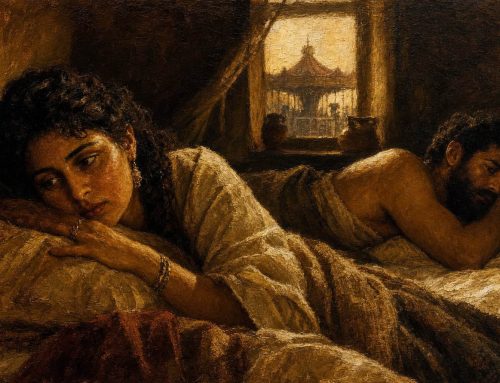
An orange bottle clicks open on a cold counter and does not care what anyone believes; the body carries a sorrow older than every doctrine ever sent to answer it.
Two Throats, One Bitter Swallow
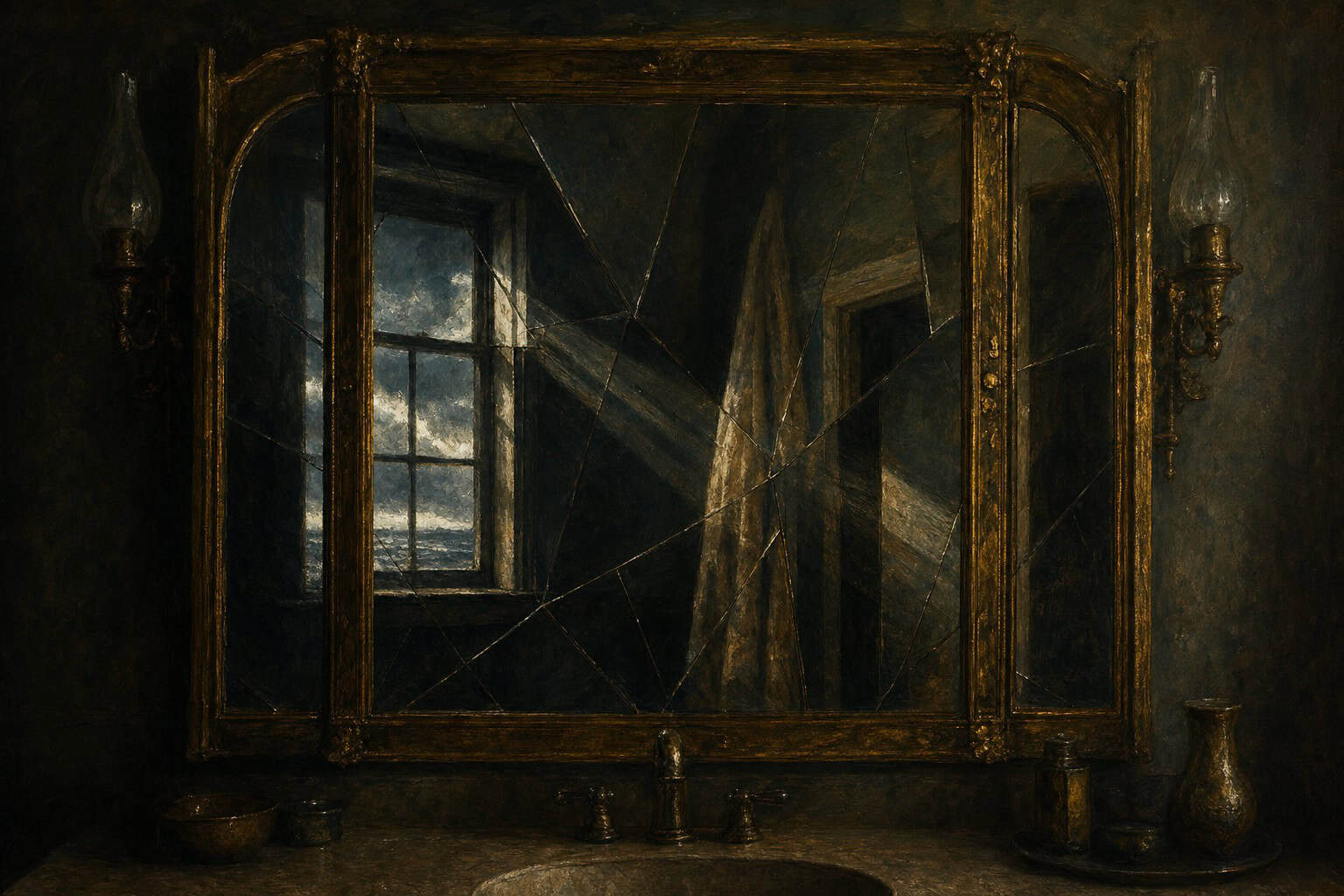
An orange bottle clicks open on a cold bathroom counter, and that sound does not care what you believe. One hand belongs to a man who prays before he swallows, another to a woman who trusts only what can be measured, yet both tip the same white tablets into their mouths. The water from the tap is lukewarm, vaguely metallic, washing down the chalky edge that clings to the tongue. For a brief, exposed second, their bodies move in perfect agreement: tilt the head back, let gravity do its work, hope the ache loosens its grip. This is the one liturgy they share without argument, the daily rite of managing a nervous system that has turned against them. Labels sit heavy on the plastic—dosage, side effects, warnings—but the deeper inscription is written inside muscle and marrow, where pain keeps its own record.
Bodies That Refuse to Be Equations
In this passage, the bottle in the hand becomes more than a medical tool; it becomes a question with edges. If the same compound calms the racing heart of the skeptic and the believer, then hurt clearly obeys chemistry, yet something in us stiffens at the thought that grief is only serotonin gone astray. The scene holds that tension without smoothing it. The body sets the terms: neurons misfire, joints burn, sleep fractures into useless shards. Still, within those strict boundaries, the heart insists on reading its own story—humiliation, betrayal, loneliness, all poured into the same circuits that light up on a scan. Here the narration presses hard against the temptation to flatten everything into data or, on the other side, to despise the pill as a lack of faith. The medicine is neither enemy nor savior; it is a sign that flesh is real and already in crisis.
When Pain Redraws the Map
The passage does not stay with the swallow; it follows the pill down into the deeper rearranging it signals. Once illness or injury settles in, the world itself starts to tilt. A flight of stairs turns into a calculation, an invitation to dinner becomes a threat of exhaustion, even a ringing phone can feel like an assault on nerves stretched too thin. The text names this shift: the flesh is not a neutral box carrying a floating mind, it is the lens through which every hallway, every face, every possibility comes into focus—or fails to. When that lens scratches, meaning itself starts to blur. The believer may find prayer tightening into complaint; the unbeliever may feel their clean certainty smudged by a desperation they cannot explain away. No one escapes this redrawing. Even the smallest task begins to ask for more of the person than the person knows how to give.
When both the atheist and the believer reach for the same bottle in the dark, the body confesses a sorrow no doctrine has ever been able to touch.
Choosing With a Hand Already Shaking
From inside this bodily siege, the chapter turns to the matter of choice, and the air thickens. You are still responsible—this is not a cheap absolution—but the passage insists that responsibility now unfolds in a landscape already scarred. The pill in your palm is one decision among thousands, yet every decision is taken in a world where damage has arrived ahead of you: genetics, family patterns, the slow fallout of other people’s sins. Even your will, that proud inner judge, limps. The text names this honestly as a kind of pre-wounded freedom. You can refuse the medication and collapse, you can take it and face new side effects, but you cannot step outside the contamination and choose from a clean slate. This is where the ordinary reader lives most days: standing at the sink, heart divided, trying to honor God or simple decency with a nervous system that will not cooperate, and no untouched ground underfoot.
The Heart That Will Not Be Dissolved
Yet the scene never lets the orange bottle have the last word. Between the swallow and the hoped-for easing, there is a gap no scan can chart: a mind interpreting its hurt, a conscience still judging itself, a will either turning toward God or away, even if only by a millimeter. The chemistry runs its course, but it runs through a person who argues, bargains, resents, gives thanks, or simply endures. That interior storm is not an illusion; it is the place where grace can still arrive or be refused, where sorrow can be offered or hoarded. The narrator lets the question hang: if pain shapes how the world appears, and if sin has already bent the field of every choice, how can the shattered parts of this interior life ever come to speak with one clear voice again? The chapter does not answer here. It leaves us with a throat still tasting bitter, listening for the next move of a heart that refuses to be reduced to its pills.