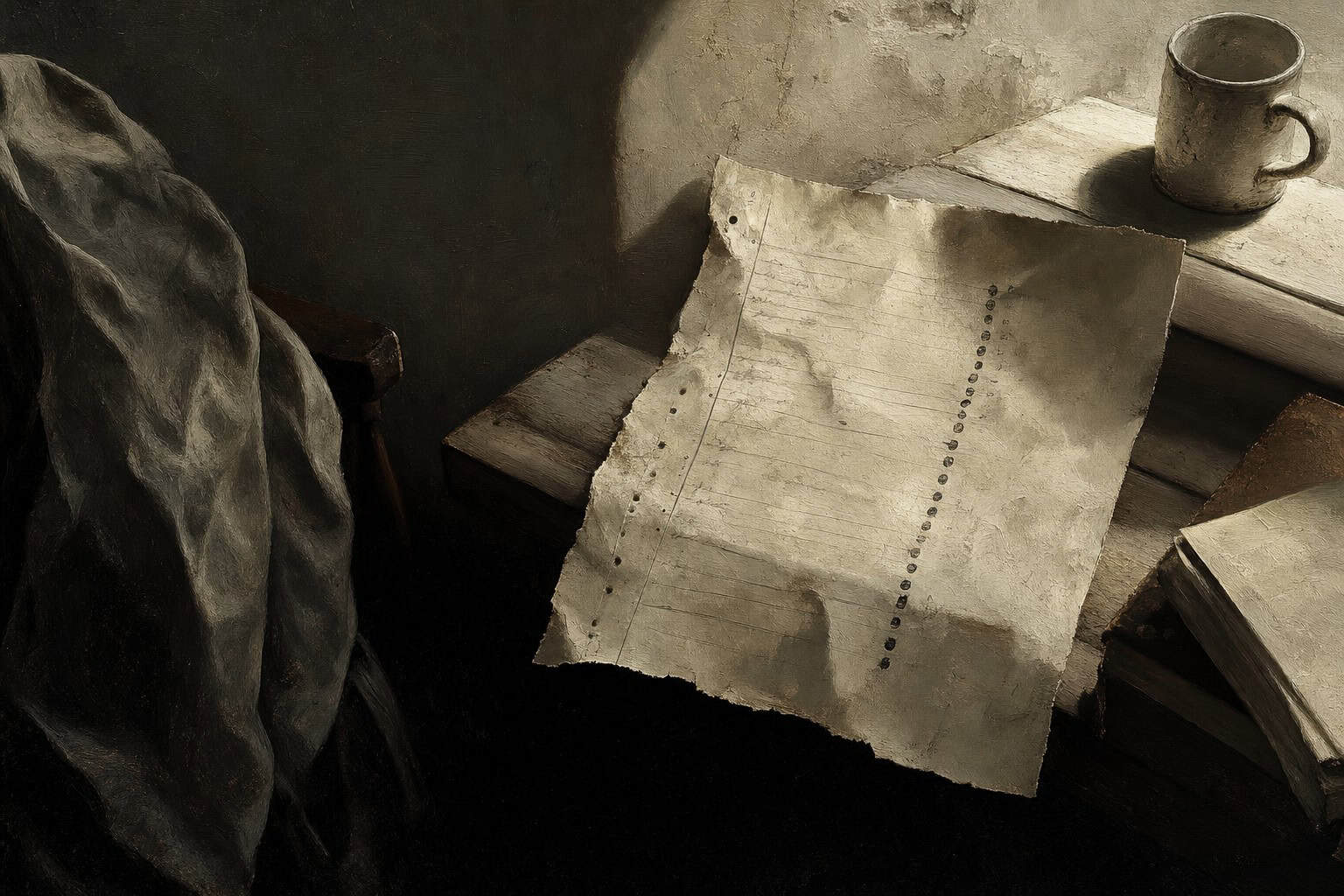
He files each track by year and mix and tempo, building a case against the night, as if precision could stand in for absolution.
BPMs Scribbled Like Case Numbers
Track by track, the playlist rolls out with almost frightening clarity. Not just titles, but which mix, which year, which release—like a police file thick with dates and subheadings. A particular remix is named, the one that rattled a cheap basement sound system while his younger body learned how to keep moving long after it should have dropped. Beats per minute are recalled the way some men remember Scripture verses, each number tied to a night when the bass convinced his legs to go on without him. His fingers now, older and steadier, type these details with the calm of a clerk entering evidence. Each entry is a small scene: sweat on the back of his neck, light strobing off damp brick, lungs burning in the syrup of the crowd. The page becomes a ledger of survival measured not in words, but in the exact tempos that once held his flesh together when his mind had already gone elsewhere.
Release Dates Stacked Like Old Court Summons
The more he lists, the stranger the care becomes. Original release dates, label names, which version spun in which city—he lays them out with the cool neatness of someone arranging paperwork for an audit. But this is an audit of nights he nearly did not make it through. The precision exposes a double truth: he did not drift through those years; he tracked every weapon and every shield even while pretending not to care. Each date carries the taste of a particular darkness: this single for the week sleep stopped coming, that extended mix for the month his chest felt like it might never loosen. He is not just remembering songs; he is testifying under oath about the tools he chose to blur himself. The catalog refuses to flatter him. It stands there like a stack of stamped envelopes, each one a summons back to a dance floor where he paid for numbness in sweat and hearing.
Basslines Thinning as the Night Gets Heavy
Laid out in order, the playlist shows a clear slope. Early tracks hit hard and fast, all jagged synths and punishing drums, built for the first jolt out of ordinary feeling. Then, almost imperceptibly, the sound softens into long, tidal phrases, melodies that repeat until they erase their own edges. He charts this descent with unblinking calm: the hour when the kicks had to be brutal, the hour when the crowd needed a smoother, gliding rhythm to sink into. Each song is a rung down the ladder away from clear thought, a step deeper into a necessary blur. By the time a certain trance anthem arrives near the end, you can feel bones gone heavy, shirts stuck to spines, minds gratefully slipping behind the curtain of pattern and pulse. Yet the tension never loosens: the very songs that kept him safe from his own thoughts are the same ones he now records with such cold, almost prosecuting clarity.
We catalogue the songs that once helped us disappear like evidence at a trial, each track a small proof that we survived the night.
Old Club Flyers Folded Inside a Missal
Anyone who has kept an ancient playlist buried in their phone, or a shoebox of ticket stubs, will feel the pull of this inventory. You might know exactly which track carried you through a night you could not otherwise face, the way a certain drop lined up with the hour you stopped caring if morning ever came. Those artifacts sometimes live alongside holy things now—wristbands tucked into prayer books, burnt-out CDs sliding under family photos—because we do not know where else to put them. They are proof and accusation at once. This passage names that confusion without cleaning it up: the strange loyalty we feel to the very sounds that almost undid us, the secret pride in knowing the catalog by heart. It presses a quiet question on the body that remembers: how does one learn to open to a love that will not use anesthesia, while still honoring the crooked rhythms that once kept a fragile heart beating till dawn?
A Cursor Blinking at the End of the Set
When the last track on the page lands, nothing explodes, nothing resolves. There is just the pale light of a screen, the silent space after the final listed BPM, and an older man staring at names that still buzz faintly in his ribcage. He has done something costly: he has refused to fuzz those nights into a single blur, choosing instead to remember how each song stitched one more hour onto his life. The care is almost liturgical, but no homily follows, only the raw fact that he once needed this machinery of sound to stay inside his own skin. Somewhere behind the catalog stands the God he cannot yet name in these beats, the God who watched a boy use volume as armor. The chapter does not answer whether these tracks will ever feel clean. It leaves us with that waiting screen, the small hum in his ears, and the sense that another song is hovering in memory, not yet called by its name.