He walks through his own memory like a ledger of skin, each body a mark scored into his flesh, adding and adding toward a sum that only ever proves the emptiness.
Marks on Skin Like Tally Lines
He moves through this passage like a man walking down a ledger, each body another mark scored into his own flesh. There are numbers in his memory, not faces—counts that rise, attempts stacked on attempts, as if quantity might finally smother the single, burning absence that started it all. The dominant image here is not romance but bookkeeping: nights remembered the way a gambler recalls debts, fast and without tenderness. His body, once the site of a single wound, becomes crowded ground, as though more footprints might blur the trace of the first one who walked away. Yet every new encounter ends with the same quiet sum. The arithmetic refuses to change. Beneath the sweat and breath and practiced motion, an old subtraction holds its ground, untouched by all this frantic addition.
Trying to Outrun One Name with Many
This is where the reckoning sharpens: he is not chasing pleasure, he is chasing erasure. One name, one face, one refusal has lodged in his sense of self like a shard of glass, and he tries to grind it down with the friction of other bodies. The logic seems so clean in his own mind—if one person made him feel discardable, then their power might shrink if he proves, over and over, that others will take what they refused. But the more he gives himself in this narrow way, the more that first absence rules the frame. Every new body becomes a mirror that throws him back to the original rejection, like an echo that grows louder instead of fading. What he hoped would be dilution becomes concentration. The wound, meant to be blurred by the crowd, stands out with harsher edges and a darker hue.
The Body as Shield and Scalpel
The pressure in this passage lies in the double use of his own flesh. He treats his body as a shield, something he can throw between his heart and the memory that stalks him. If he stays busy—mouths, hands, the mechanical rhythm of rehearsed desire—maybe the ache will have no room to speak. Yet each act cuts in the opposite direction. In turning sex into a tool against feeling, he slices deeper into the very place he is trying to protect. The body that should be capable of real union is drafted into a private war, and he is both soldier and casualty. There is no release here, only a tightening spiral: more effort, less relief; more contact, less connection. The shield he builds from flesh keeps failing, and every failure draws more blood.
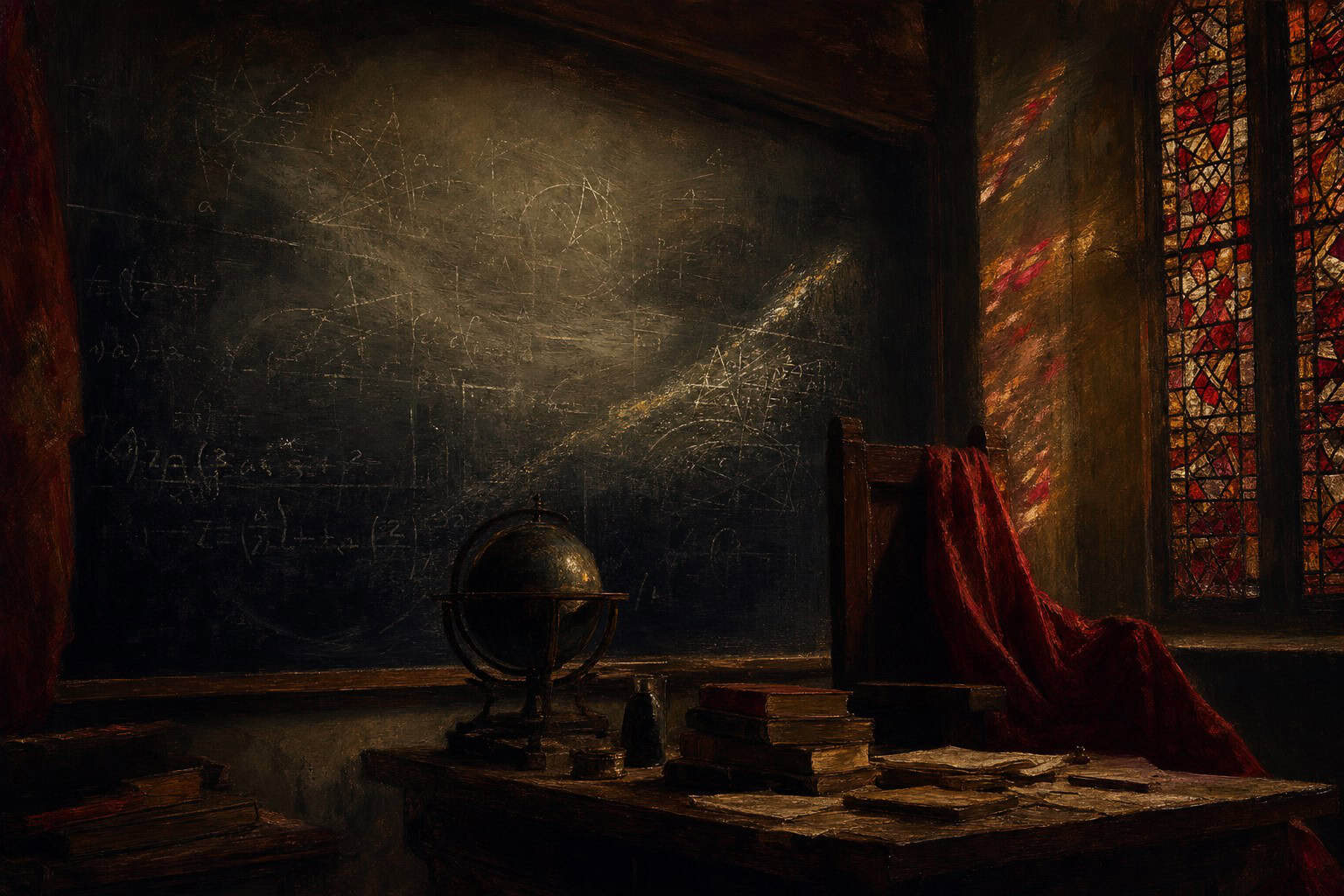
You cannot solve the equation of rejection by multiplying bodies; each new one only proves again the theorem of your emptiness.
When Our Own Ledgers Condemn Us
Anyone who has tried to forget one person in the arms of another will recognize this math. We keep our own quiet tallies—names we no longer remember, moments we barely lived through, all pressed into the service of proving we are wanted, or at least not alone. On paper it should work: more yeses to outweigh that single, punishing no. But the soul does not read spreadsheets. It remembers tone, flinch, the sudden cold of being dismissed. We may use our bodies the way he does here, as evidence in a case we are arguing against ourselves, only to discover that every new entry underlines the original verdict: unworthy, replaceable, unsafe. The harder we work to win the case, the more fixed the sentence feels. Our own ledger, meant to vindicate us, can become the document that accuses us most fiercely.
Two Calculators Staring at the Same Sum
When Jane steps into this arithmetic, she does not arrive as comfort but as a second calculator humming beside his own. She, too, measures, weighs, coolly appraises. Her presence does not dissolve his math; it exposes its limits. In her sharpness he sees a mind that can follow every step of his inner logic and still not be taken in by it. She is dangerous precisely because she can stand inside his system without being ruled by it, a kind of living proof that the numbers he has trusted cannot reach what they most pretend to answer. The chapter leaves them there, two precise minds facing the same unyielding sum. The equations run on in the background, bright and relentless, while something uncounted waits just beyond the edge of his carefully numbered page.