Neon stains the cheap cup in his hand, and somewhere in the crowded dark he has begun to treat wanting like a laboratory, where people thin into data and consent into calculation.
Neon Light on a Plastic Cup
Neon hums above his head, staining the clear plastic cup in his hand with cheap color as he lingers in yet another crowded venue. The bar counter is sticky, the music too loud, and he is no longer just another anonymous body in the crush. He has started to notice the patterns: how a held gaze across the room pulls a stranger closer, how a half-smile near the drink line invites an opening line in return. Every laugh he elicits lands like a tally mark in an invisible notebook he carries in his muscles, not on paper. These public spaces—cafés, clubs, campus walkways—have become one extended experiment where he tests whether this strange pull he feels is real. When a woman shifts her stance toward him, when a shoulder brushes his on the way to the restroom, he notes the angle, the timing, the script he used. The scene looks like an ordinary night out, but inside his skin it has hardened into research, with living people reduced to measurable reactions under neon light.
Consent as a Checkbox on the Clipboard
In this passage, consent does not arrive as a holy ground to be approached barefoot; it shows up more like a box to be ticked so the experiment can proceed. The younger self is careful to stay within the bounds of what counts as mutual, spoken yes. He listens for it, asks for it, but mainly so he can reassure himself that nothing sacred is being violated. If she smiles, if she agrees, if she leans in first, he files the scene under “ethical” in his internal filing cabinet. Underneath that tidy label lives a quieter reality: he is not asking whether he loves this person, or whether his own heart is offering itself in truth. He is asking whether the procedure can go forward without guilt attaching to his name. The checkbox gets marked, the clipboard metaphorically snapped shut, and he moves to the next step, never pausing to question that consent can be present while the encounter still functions as calculated use.
A Pulse Monitor No One Sees
Somewhere beneath his skin, it feels as if wires have been attached, as if he is watching numbers on a hidden screen only he can see. Each successful flirtation, each yielded boundary, makes the unseen line spike upward: proof that the power is real, that the magnet in him works. At the same time, another reading on that imagined monitor stays flat—his ability to receive care, to let himself be wanted beyond what his body can provide. The tension in this passage lives right there, in that split screen he refuses to name. He can track the rise and fall of others’ arousal almost by instinct, but he cannot feel his own vulnerability without wanting to shut the machine off. Divine love is present somewhere in the room, not scolding, not seizing the wires away, simply sitting beside this self-made apparatus. Instead of ripping out the cords, God seems to watch the same trembling lines, waiting while he continues to collect data he does not know how to read.
Once you learn you can seduce, the danger is treating desire like a laboratory, where consent becomes calculation and people become data.
When Your Charm Turns into Lab Equipment
Anyone who has ever learned they can bend a room with a smile knows the temptation described here. Maybe it is beauty, or humor, or a sharp mind that dazzles; in his case, it is a body that draws eyes and a story of hurt that makes people lean in closer. The discovery itself is not evil. The rot begins when that gift stops being received as something to offer and starts being handled like equipment, something to adjust and calibrate for maximum result. You notice which jokes lower defenses, which touches on the arm open deeper disclosures, which stories of your pain pull sympathy that can be steered toward your own hunger. Before long, you are not meeting a person; you are running a trial. The other’s desire becomes proof that your power is intact, your old shame not the whole truth about you. This passage presses a hard question: what happens to your own soul when every tender response around you is treated like a reading on a gauge rather than the approach of another heart?
A Table Covered in Notes No One Can Decipher
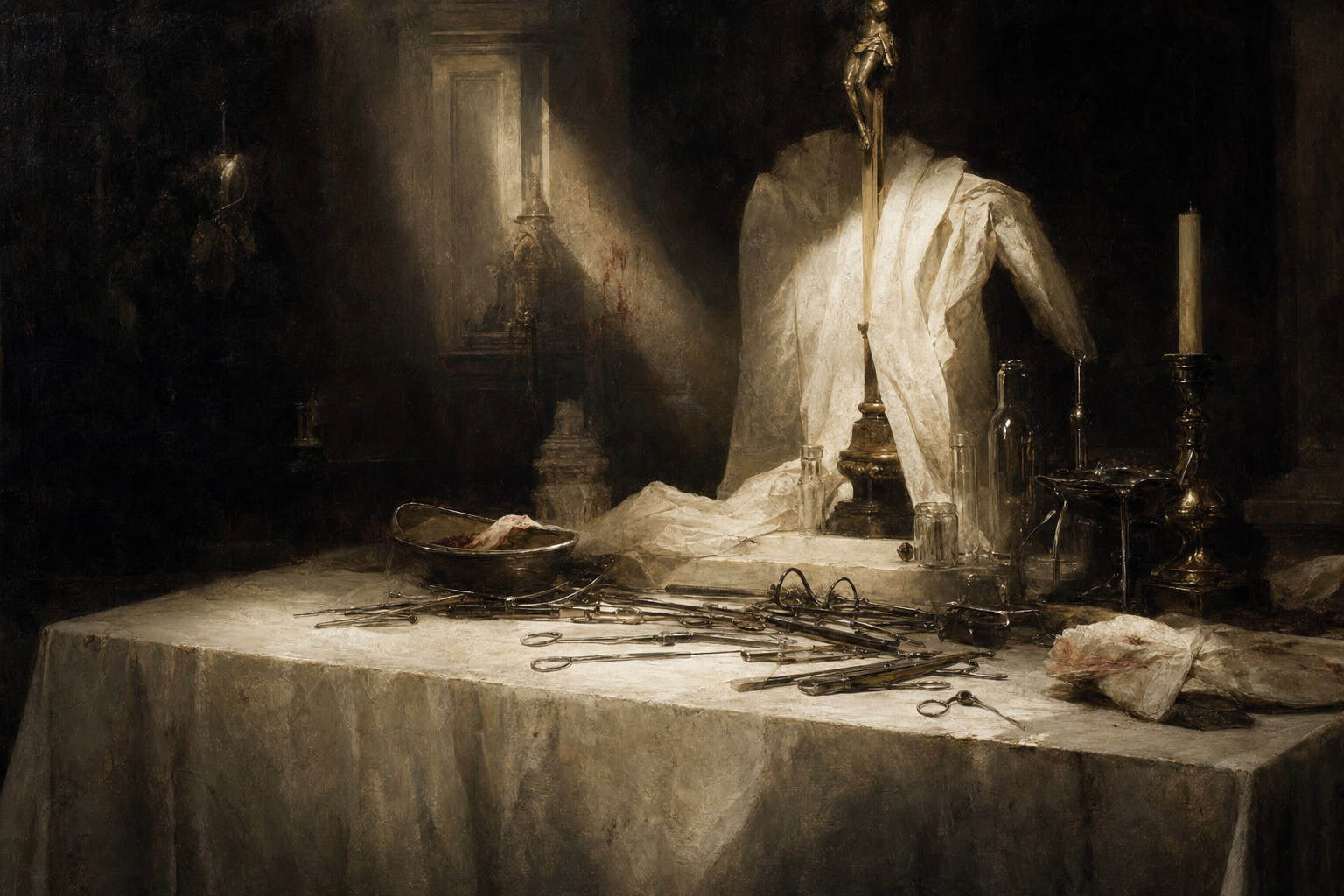
By the end of this slice of his life, his inner desk is crowded. Scribbled mental notes from bars and hallways, scriptural arguments stacked like index cards, half-remembered touches—all of it lies scattered in a heap only he can see. He believes he is closing in on something: a way to keep his darkness and still claim himself devoted, a way to practice seduction without naming it as idolatry of his own power. Yet the more data he gathers, the less he understands his own hunger. Why the experiments feel both thrilling and strangely vacant. Why God does not simply burn the notebook or flip the table. The chapter does not hand over a clean diagram or a sudden solution. It leaves us with a cluttered surface, a young man bent over his own mess of evidence, still convinced that one more encounter, one more clever verse, might finally decode the ache that keeps his pen moving.