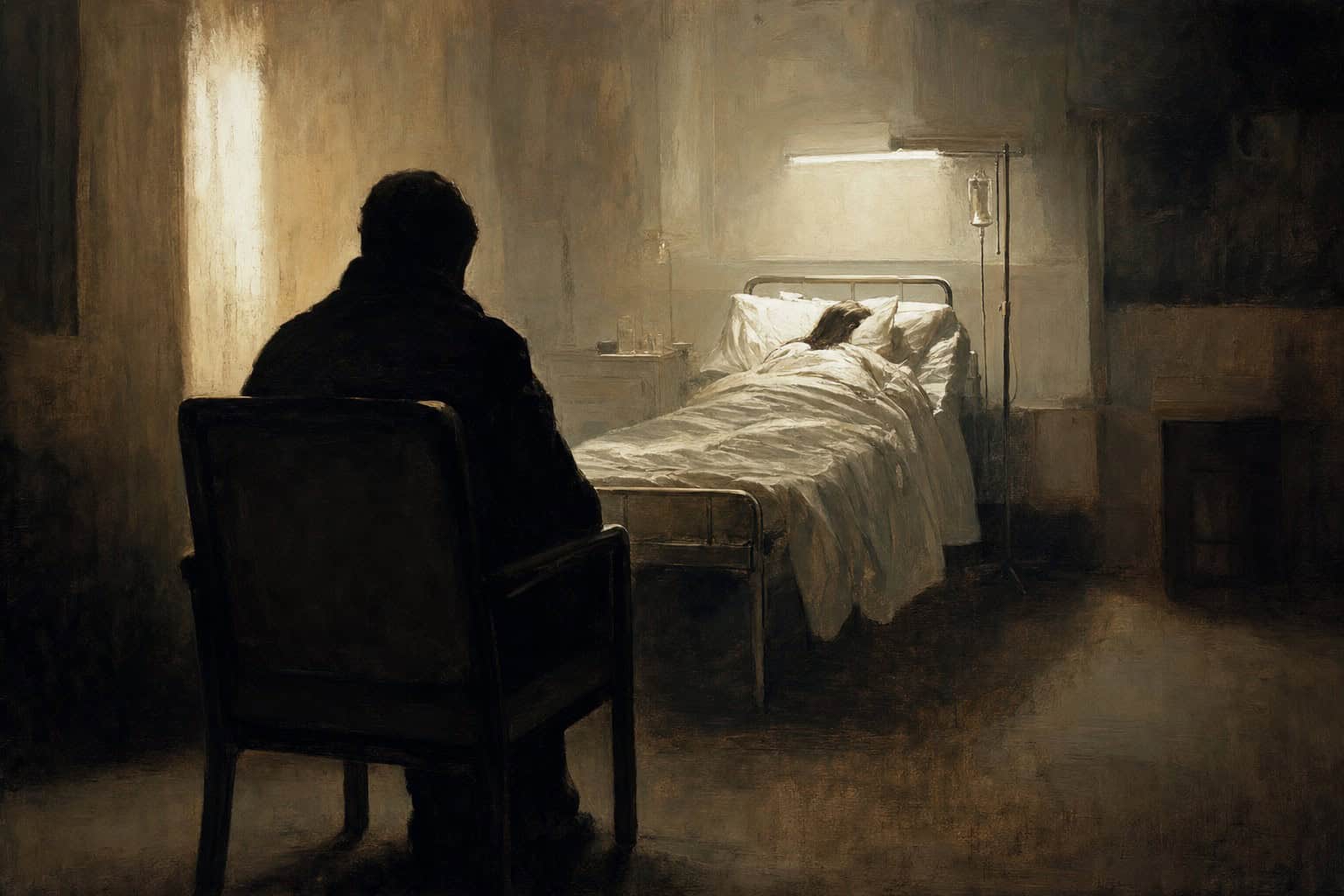
A chest lifts in short uncertain breaths like a bellows almost done with its work, and already he feels the cowardice grief invents — the pull to press some warm body against the silence her leaving will open.
The Smirk Fixed Above the Fading Chest
A chest rises and falls in short, uncertain lifts, like a bellows that has almost forgotten its work. Machines whisper and click, but the loudest thing in the space is the sound he refuses to make. He stands close enough to smell the sourness of dying skin and the faint trace of lotion someone has tried to smooth into her hands. Her eyes search up toward his, cloudy yet unmistakably focused, and that is where he breaks. Instead of bending down, instead of letting his own gaze meet whatever lives in hers, he lets his mouth harden into a crooked smirk. It is not joy and not mockery, but something worse: a shield made out of his own face. The muscles around his eyes stay tight, denying any softness. Love asks for nakedness and he offers performance. In that small square of air between her failing lungs and his guarded expression, something that might have been exchanged simply never crosses.
When the Air Itself Says She Is Gone
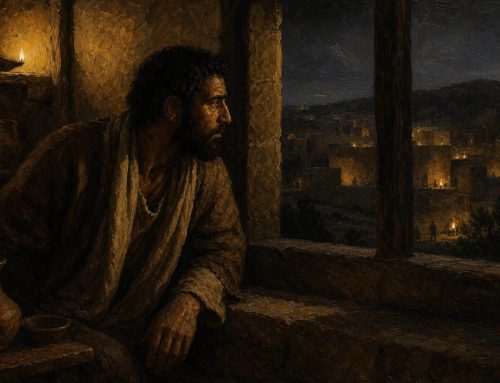
Later, before any word travels through wires or mouths, the air thickens. It is as if the room he occupies in another place has been subtly tilted, pressure nudging against his skin, breath catching for no clear reason. No one around him knows anything has happened. Yet his body recognizes a shift the way a barometer registers a storm long before the first drop of rain. There is an unearned certainty: she has crossed. No vision, no voice, only a strange stillness that hums under his ribs and tells him the world has been quietly rearranged. The moment does not ask for belief; it simply arrives, blunt and undeniable. His mind scrambles to label it, to file it under coincidence or imagination, but the conviction stands. Death has communicated itself not through ritual or announcement, but through weather in his own flesh.
Skin Piled Like Sandbags Against the Grave
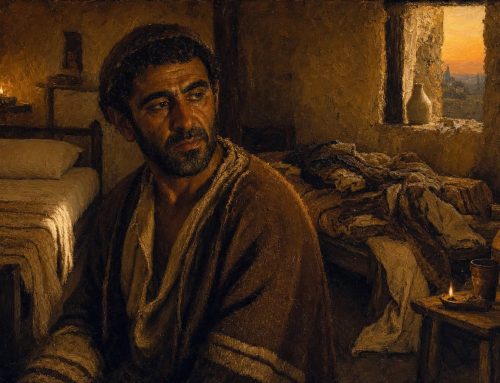
In the wake of that knowledge, he goes to war in the only way he knows how: with bodies. The dominant image here is simple and brutal—skin as sandbag, heaped against an unseen flood. One woman’s warmth is not enough to deaden the echo of soil hitting wood, so he gathers another, and another, arranging nights like a barrier wall. Sheets tangle, sweat dries, perfume clings to his chest in thin, artificial sweetness. He tells himself this is power, strategy, even theology: a knot of limbs as a cord not easily broken, a bedroom turned into commentary on sacred texts. Yet underneath the practiced movements lives a frantic arithmetic—if he can stack enough flesh between himself and the grave, maybe the silence will stay on the other side. The more he reaches, the clearer the lie becomes, but he still keeps laying down his body as if it were mortar against the rising dark.
Grief makes us inventive in our cowardice; we will use another’s body as a shield against the silence death leaves behind.
When Performance Touches Only Performance
Pressed against each woman, he starts to notice the choreography. Moans land on cue, hands trace rehearsed paths, desire presents itself like a polished script. The revelation cuts deeper than any accusation of infidelity: the passion he has treated as raw material is itself a crafted gesture, tuned to expectation, angles, advantage. He is not facing another naked spirit but another strategist. His own calculated hunger meets hers in midair, and nothing truly vulnerable crosses between them. This is the desecration that haunts him more than broken promises—the sense that even in the most exposed act, two people can remain sealed off, trading curated signals instead of selves. For an ordinary life, this is not an abstract puzzle. It names the sick feeling when you realize someone’s tenderness was costume, when you suspect your own defenses have drawn you toward those who cannot or will not drop theirs. The grave stays quiet, but the bed begins to sound like an empty stage.
A Soul Wrapped Tight Around Its Own Spark
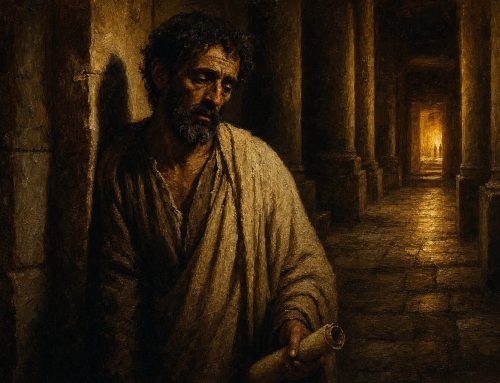
Threaded through these bodies and this death is a stranger fear: the sense that his own inner life is too charged, too volatile, to let anyone touch. He moves through ordinary conversations and casual flirtations with the constant effort of one carrying a live wire under his shirt. Part of him believes God has placed something dangerous in his chest, some intensity that could scorch the simpler worlds of the people around him. So he keeps the core redacted, offering wit, intellect, clever cruelty, but never the unedited current. The grandmother’s departure rips away one of the few who might have seen that hidden center without flinching. Now the question sharpens—how does a man shaped by this much darkness and guardedness ever consent to a love that touches the live wire itself? The passage does not answer. It leaves him standing, muscles locked, smirk half-remembered, listening to his own heartbeat like a foreign drum in his ribs.