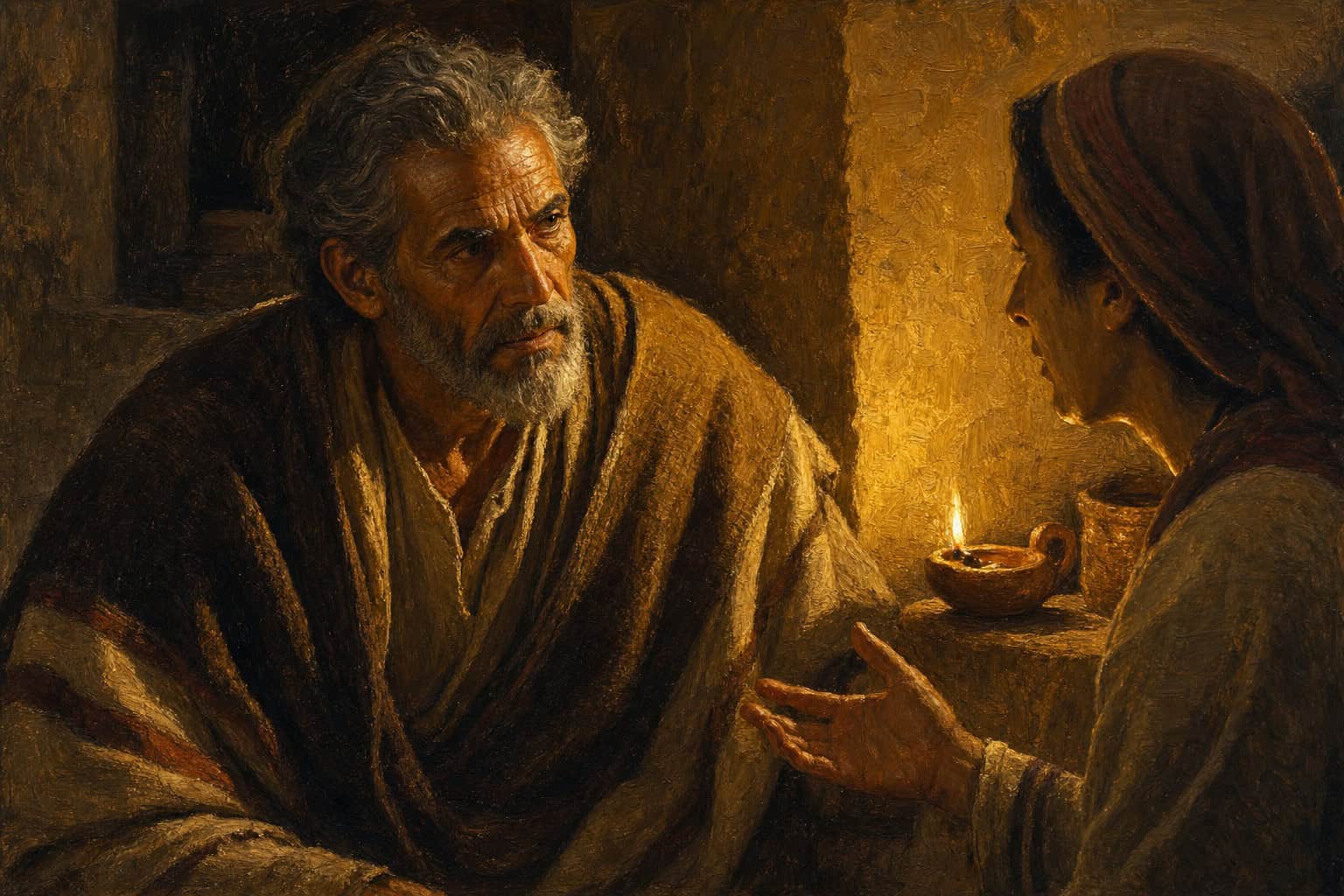
You want to know who lives a double life. A chapter from Confessions to the Empty Chair shows the man whose cold armor cracks when a discarded lover suffers.
A Man Who Scrubbed His Own Room With Bleach
You want to know who lives a double life, so let me show you one from the inside. In Confessions to the Empty Chair, the twelfth chapter, the narrator keeps two selves in two separate rooms and moves between them like a man with two sets of keys. In one room stands the young man of the mind, the boy starved of books who arrived at the university hungry and finally tasted the higher-order thinking his childhood denied him. In the other stands the seducer, the man who has trained himself to keep his mouth shut, to practice discretion, to carry the darkness within like a cold stone he can hold without shivering. These two men share one body, and the body is the tell. Earlier he scrubbed a shared dorm room with bleach, scouring away another person’s humid presence, wanting a clean and sterile air because real human contact terrified him. That smell of bleach hangs under this whole chapter. It is the smell of a man trying to make a place where nothing living can leave a mark on him. A man who lives a double life is not a spy or a criminal with a false name; he is a soul that closes one eye so the world loses its depth and stops asking anything of him. When you close one eye you cannot judge distance. The far wall and the near hand fold into one flat plane. He wanted that flatness. He wanted a life he could measure without being measured back. So he learned to seduce the mindless as a simple act, a thing done with the hands and not the heart, and he saved his real hunger for something rarer and higher. The scene sits him between two women, Jane and Angela, and the space between them is exactly where the double life is exposed. This is not the thriller’s double life of hidden phones and secret apartments. It is the quieter, more common kind, the sort many carry to work each morning without a name for it. One self performs warmth at the door. The other keeps a cold ledger in the back room, counting what it takes and what it owes. The dorm he lives in has been kept clean by force, by will, by chemicals when will was not enough, and that cleanliness is not peace. It is a barricade thrown up against the ordinary danger of being touched. And a man this determined to feel nothing is standing very close, whether he knows it or not, to the edge of something vast he has spent years pretending he cannot see, the way you can stand in a dark field and feel the size of the sky before you look up.
Climbing the Ivory Tower to Take What He Lacked
The tension gathers around Jane, and around what she truly is to him, which is not simple and not clean. He describes her with a collector’s precision, the way a man appraises something he means to own: a curated grunge look, a sharp wit, an aggressive spirit, a deep spirituality, and an unapologetic carnality, all held in a small frame. He notes her white skin, her freckles, the constellation of moles scattered across her, and he lingers on that constellation as if he were reading a map of stars he wanted to claim. He calls her Irish. He is cataloguing a living person the way a starving man reads a menu, and he half knows it, and the half-knowing makes it worse. But the deeper pull is not her body, and not even, at first, her soul. Jane is the eldest daughter of two medieval philosophy professors. She grew up breathing the exact air he was starved of, translating her parents’ academic discipline into a power all her own. To him she is the apex of everything his impoverished youth lacked, the living legacy of the intellectuals he idealized as surrogate fathers, the cohort of the mind he has ached to belong to and never could. So he asks himself, cold and clear, how many chances a man gets in one lifetime to date the daughter of not one but two doctorates. That calculation is the double life speaking out loud, unashamed, in his own head. He does not want to love her; he wants to absorb her, to drink down the legacy she carries and become what he fears he can never become on his own. He wants to climb her ivory tower and take her in her own bedchamber, and he tells himself the stronger the opponent, the sweeter the surrender. Read this honestly and it turns the stomach a little, which is the point; he does not spare himself, and he will not let you spare him either. The deepest attractions often hide a hunger to consume what we fear we can never grow into alone. He reaches for the beautiful because he feels himself as a lack, a hole in the shape of two professors’ bookshelves, and he tries to fill that hole by possession. Yet the scene will not let him stay purely cold. He admits that a budding element of emotional love was already there, tangled in with the envy, contaminating the clean design he built. He opened his spirit to her in the act itself. He felt her soul without yet knowing its depths, and he found himself yearning toward it, drawn like a man leaning over a well. That yearning is the enemy of the double life. A man who has trained himself to feel nothing cannot afford to be caught yearning. The two rooms he kept so carefully apart are beginning to share a wall, and the wall is thin, and through it he can hear his own unguarded heart making a sound he did not authorize.
The Sourness of That Night Will Not Rinse Away
Then the crack. He notes it almost in passing, the way a man mentions a small pain that turns out to be the whole illness: the new hope with Jane sharpened his regret over Angela, and that regret is the quiet climax of the chapter. Angela is the discarded lover, the one he already used and set aside, filed away in the cold ledger as a finished transaction. Her pain does something his system did not account for. His slow evolution into cold disassociation, the armor he was so proud of forging piece by piece, turns out to be incomplete. Her suffering reaches him. It gets through the plating. He calls that night a contamination, a sourness he cannot rinse out no matter how much bleach he pours over the memory, a flaw in his new design. Notice the word design. He thought he was engineering a self, sterile and controlled like a scrubbed room, and Angela’s tears prove the engineering failed at the seam. He cannot be a machine, because a machine does not grieve what it throws away. He has spent years teaching himself that people are opponents to be won and then shelved, and here is one who will not stay shelved, whose ache pushes back into him from across the distance he thought he had closed for good. The used woman is not a closed account. She is a wound with a face. He wanted to feel her surrender and then feel nothing more, and instead the nothing has failed him, and the failure exposes what he really is under the cold plating. The man who lives a double life has just discovered the terrible fact about the arrangement: the second life leaks into the first, and there is no seal that holds. He built the wall to keep the two selves from touching, and Angela’s pain has just walked straight through it, uninvited, carrying his own buried grief in her hands like something she means to hand back to him whether he wants it or not.
The armor a man builds against feeling is itself a confession that the wound still bleeds beneath it.
I Need to Tell You Something, Jane
Here is the thing he refused to see, and it stands over him now like a presence in the room: the very care he took to build the armor was proof the wound was still open. You do not armor a place that does not hurt. You do not scrub and scrub a floor that is already clean. His coldness was never strength; it was theater staged over a bleeding spot he could not stop pressing. And this is where the vastness he avoided finally leans in close. God is not here to rescue him from the darkness or to tidy his mess into a neat lesson with a moral stapled to the end. God is here as nearness, present in the very sin, walking beside a man in the exact room where he plotted a conquest and cannot stop mourning the woman he threw away. The awe is not comfort. It is the stranger thing of being seen all the way through and not struck down, of learning that the flat closed-eye world he built was never as empty as he needed it to be. Someone was standing in it with him the whole time, filling the space the way light fills a room without asking permission, and he only notices now, when his hands are shaking. The depth he surrendered by closing one eye comes back uninvited, carried in on Angela’s pain. He wanted to be the surgeon and never the patient. He learns, in this chapter, that he is both at once. The scalpel he aimed at others has turned in his grip, and the hand that holds it is trembling for the first time in a long while, and he does not yet know whether that trembling is his ruin or his beginning. Then the fallout arrives as a sentence he hates to speak. He turns to Jane and says he needs to tell her something, and he confesses to us in the same breath that he despises conversations that open this way, because nothing good has ever followed the words. Her playful spark goes out like a candle pinched between two fingers. A focused calm takes its place on her face. She meets his eyes and asks, simply, what. And there the chapter holds him, caught mid-confession, the truth half out of his mouth and her steady face waiting for the rest. This is the other side of the double life: the moment it is dragged into the light by the one person you cannot bear to lose. He has to be surgeon and patient together now, cutting into his own record of failure while watching her expression for the smallest flicker of rejection or of grace. The most frightening nakedness is not the body’s; it is the deliberate laying-out of your moral rot before someone whose judgment could unmake you where you stand. He built the whole armor precisely to avoid this hour, and now he walks into it on his own two feet, because the new hope in his heart demands honesty as its price.
The Barricade That Was Really a Bandage
So who lives a double life? Not the exotic stranger you pictured when you typed the question. It is the ordinary soul who splits itself in two to survive a wound, who performs one face at the door and keeps another in the private dark, who calls his fear discretion and his numbness strength. This chapter of Confessions to the Empty Chair holds that person up to the light without contempt and without excuse, and it makes you sit close enough to feel his pulse. It shows you plainly that the elaborate defenses we build against feeling are themselves confessions we did not mean to sign. The barricade is a bandage. You only wall off a place that is still bleeding. Angela’s pain did not create his wound; it revealed the one already there, weeping under the cold plate he mistook for a healed man. Honesty means admitting the sourness of that night, the used and discarded woman, the design that never held its shape. The double life cannot survive a real confession, because to confess is to collapse the two rooms into one and stand in the single true space with nowhere left to hide. And the strangest gift in all of it is nearness. The man who closed one eye to flatten the world, who wanted a sterile room and a controlled life he could measure, discovers that he was never alone in the flatness after all. Something vast had filled the space he tried so hard to empty, penetrating it the way sunlight penetrates the air of a shut room, present in the sin and in the tears and in the trembling half-spoken confession he did not want to give. That is the awe the chapter reaches toward, quiet and enormous in the same breath: not a rescue out of the dark, but a companion who chose to stand inside it. If you came hunting for the anatomy of a double life, you will find it whole in these pages, and you will find something harder and better than a mere exposure of a liar. You will find the exact moment the two selves are forced to meet, and the man who has to hold them together in one body while another human face waits, calm and unblinking, for the truth. The book does not hand you the outcome cheaply, and neither will I. It sets you down in the narrow span between his eyes and hers and makes you feel how much a single honest sentence can cost a man who has spent years avoiding one. What he does next, and what she does, belongs to your own reading. But the crack in the armor is the thing worth carrying home tonight. It is the most hopeful thing in the whole cold system he built. The flaw in his design was the last unkilled part of him, the part that could still grieve and still yearn and still be reached by another’s pain. The double life was quietly breaking apart at the seam. Underneath it, barely, a whole one was fighting its way toward the light, and someone stood near in the dark to watch it draw its first breath.