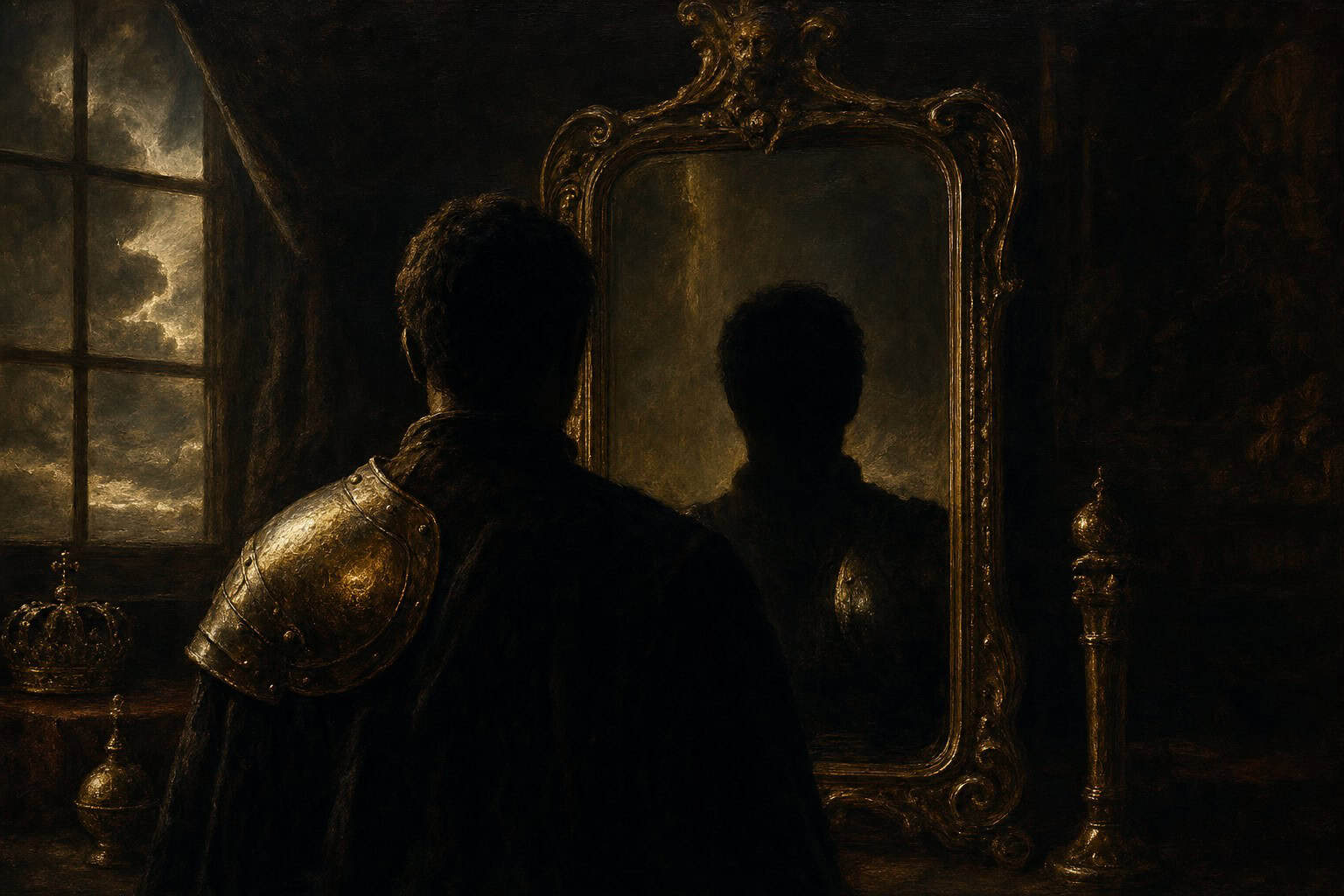
Cold plates stack like spent incense, and he grips the bar the way he once gripped a pew, building his body into a temple without asking which god he means to house there.
Iron Plates Counting the Days Since Her
The first image is not romance but metal: cold plates stacked on a bar, chalk dust hanging in the air like spent incense. His hands close around the knurled steel with the same grip he once reserved for a lover’s waist, only now the hold is punitive, not tender. Every forty-five he slides on is the exact weight of a day since her betrayal, a physical ledger of stupidity paid back with sweat. The mirrors do not flatter; they testify. They show a torso hardening out of spite, shoulders thickening where trust once lived soft and open. He is not chasing health. He is punishing the boy who believed words, forging a new outline from the wreckage of a name whispered to another man. Here, in the clank and breath and sting of lactic acid, heartbreak takes on a number of sets and reps, and the barbell becomes the only thing that still answers when he pulls.
Muscle Printed Like Money from Ruin
Inside this passage, the gym is no hobby; it is a mint. Emotional collapse is melted down and poured into the mold of his chest, his arms, his back, until pain hardens into a negotiable form. He discovers a brutal arithmetic: women who once overlooked him now pause when his shirt clings tight across his shoulders. Their eyes land first on what iron has written, and only then—maybe—drift toward his face, his voice, his story. Attention arrives not as gift but as wage, paid for in hours of grinding repetition. The body becomes a kind of currency, each new vein and cut increasing his buying power in the silent market where glances are traded. Underneath lies the darker catechism: if visible strength earns a hearing, then devotion alone was always worthless. He is not simply getting fit; he is printing bills out of heartbreak, spending them one conversation at a time, never sure if he is investing or just burning through what little soul he has left.
The Barbell That Demands a Daily Sacrifice
As the physique sharpens, a different weight settles in—a fatigue that coffee and sleep cannot touch. Strength does not end the trial; it renews the terms. Yesterday’s one-rep max becomes today’s warm-up, and the body that finally draws female eyes must now be defended like a fragile throne. He counts macros, times rest periods, lives by the clock between sets, all to preserve a form that is already fading the moment it appears. Beneath the pump and the post-workout glow lies a simple terror: to slack is to vanish again into invisibility. The barbell becomes an altar that never dismisses its worshipper, demanding another offering of time, hunger, and pain. He moves through the world like a walking audition, flexing without meaning to, laughing louder than he feels, terrified that if he drops his shoulders for even a day the room will pass over him as it did before, and this hard-won presence will dissolve back into air.
Heartbreak will drive a man to build his body into a cathedral, but he should ask what god he is really worshipping in the temple of iron and mirrors.
A Quiet God on the Bench Beside the Sweat
Into this ritual of iron steps a Presence that does not knock the bar from his hands or snap the mirrors in rebuke. God arrives, if that’s the word, the way a spotter comes to the bench: close enough to catch, unwilling to lift the weight for him. The man begs for a clean amputation—cut out the lust, the craving for touch, the humiliating need to be chosen—but the divine answer does not cut. It stays. It occupies the same stale, rubber-scented air, asks nothing more heroic than one honest breath in the middle of the set. Holiness in this scene is not glow but nearness, a willingness to share the bench with a body being used as both shield and bait. The ache for skin does not lessen; the loneliness does not dissolve. What changes, barely, is that his groan under the bar is no longer unheard. The God who could reroute his desire instead keeps pace with it, step for step, from locker room to parking lot.
The Mirror That Shows the Man and the Boy Underneath
In the mirror’s flat glass, two timelines overlap. The first is visible: traps raised like armor, a chest casting new shadows, a face more angular from months of discipline. The second lives just beneath the skin: the boy who once believed a promise spoken in the dark would hold in daylight. Each new vein across his forearm feels like another shovelful of dirt thrown over that boy’s trusting face, yet he will not stay buried. A stray song in the gym, a familiar perfume on a stranger, and the soft, gullible self surges up, gasping under all that meat and resolve. The passage leaves him there, mid-rep, watching both versions flicker in the reflection—the man built to attract and the child who still breaks when attraction cheats. The bar waits on the rack, cold and patient, as if it knows he will be back tomorrow to ask it the same unanswerable question with his body again.