Daughters of controlling mothers learn to erase their own traces. A Catholic memoir reads the deleted photo, the secret phone, and the hunger underneath.
The Thumb That Moved Before You Meant It To
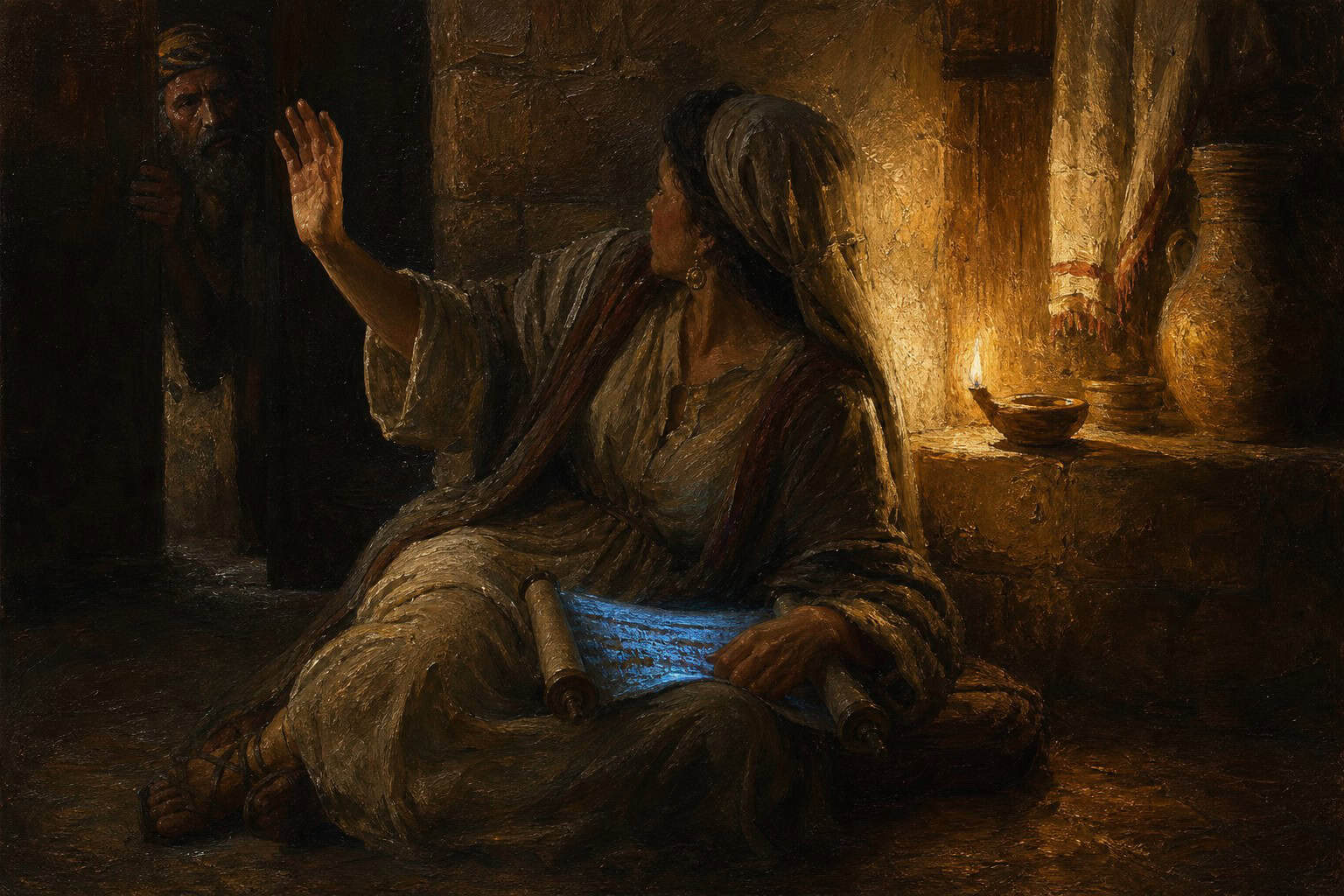
You deleted the photo before you understood why. That is where I want to begin, with the younger you sitting on the cold tile of a bathroom floor, the phone glowing faint blue in your lap, your thumb already sliding toward the little trash icon before your mind had finished making up its story. I have watched you do it a hundred times in memory, and each time the same thing strikes me: the speed. You did not pause. You did not weigh the sin or sit with the shame. The hand simply knew. That hand had been trained long before any lover ever entered the frame, trained by a mother who could walk into a room and read your face the way a bank clerk reads a ledger, who could find one small thing out of place and turn it into a whole afternoon of trial. So you learned to leave nothing out of place. You learned to be clean before anyone thought to inspect you. The passage I am reading beside you here, in the second chapter of Fractions of the Soul, watches a woman do exactly this. She takes the picture. She sends it. She erases it within seconds, so that any future inspector who opens her phone at random finds only a smooth, curated blankness, a life scrubbed of its evidence. I do not think the book condemns her. I think it grieves her, and I grieve you, because I know the room where the reflex was born. Long before there was a lover to hide, there was a mother to survive. The daughter of a controlling mother does not learn deceit as a vice, the way the catechism lists it. She learns it as a kind of breathing. She learns that the truth of her, laid out flat where it can be seen, will be taken up and corrected and used against her at some later hour she cannot predict. So she keeps the truth moving. She keeps it deleting. She keeps it a half-step ahead of the searching eye, always. You told yourself this was privacy, and privacy is a real and holy thing, and I will not pretend it isn’t. But this was closer to hiding your own body from your own mother, decades too late, in a stranger’s messages. The room where you did the deleting was small, and you had locked the door, and that was the whole point. You had spent your entire childhood searching the house for a door that locked, and the phone finally handed you one you could carry in your pocket everywhere you went.
The Face for the Neighbors and the Truth for the Kitchen
You were good in public. Everyone said so, and you fed on their saying it. In the passage the woman keeps up her demonstrations, her platonic performances in person and on the little glowing feeds, the easy friendship worn over the buried thing like a coat pulled tight against the cold. She keeps former lovers close as friends while the whole river of what they once were runs violently under every polite exchange. I recognized that river in you, and I recognized who taught you to build the dam that held it back. A controlling mother does not only forbid; she stages. She teaches her daughter that the family has one face for the neighbors and another truth for the kitchen, and that the two must never, under any circumstances, be allowed to touch. You grew up fluent in that split. You could sit at a supper table and radiate ease while your whole real self stood somewhere down the hall, deleted, waiting, holding its breath. So when adulthood put real love and real appetite into your hands, you did the only thing your body knew how to do. You made a public version of yourself and a private one, and you spent your strength keeping them from ever meeting in the same room. The tension in this scene is not the secret itself. The secret is almost boring. The tension is the labor of the split, the daily exhausting management of two lives so that neither one can ever be held against you. The book names it a kind of self-multiplication, a way of never being accountable to a single story of who you are. Let me put it plainer than the book can afford to. You were terrified that if there was only one of you, and she were seen whole, she would be judged the way you were judged as a girl, the day your mother found the diary, or read the folded note, or slid open the drawer you thought was yours. So you refused to be one. You scattered yourself on purpose. And here is the part that still catches in my throat when I look back at you glowing under the covers at midnight. The scattering worked. Nobody ever caught the whole of you. Your partner scrolled a clean phone and found nothing. Your friends saw the composed face and admired it. But something in you was quietly starving inside that success, because a self that can never be found whole can never be loved whole either. You bought your safety with your own visibility. You paid for the locked door with the loss of ever once being known. I watched you win that game night after night, and I saw exactly what the winning was costing you.
Killing the Only Witness to Your Courage
Here is the turn I could not see then and can barely stand to look at now. Every deletion was a small killing of yourself. When you typed the message, in those few seconds before your thumb found the trash, you were free. Some brave, unmanaged, unmothered part of you had reached across the dark toward another human being and said out loud, or nearly out loud, what she actually wanted. Then you erased it, and with it you erased the single moment in your whole evening when you had been real. You destroyed the evidence of your own depth in order to make yourself pure surface, a clean pane of glass a mother could not fault. You did not only hide from your partner sleeping in the next room. You hid from your own future self, the woman who might one day have wanted to remember that she had, once, dared to reach. The book sees this and does not flinch from it: each erasure a curated absence, a self made unknowable even to itself. That is the cruelty your mother planted in the soil of you, and that you grew up and finished planting on your own. She taught you to fear the inspector. You became the inspector. You stood over your own life with a rag, wiping it down, checking the corners, and you called that peace. And now I need to say to you the hardest thing I have carried all this way back across the years to press into your hands on that cold tile floor.
You were not protecting a secret. You were killing the only witness to the fact that you were once brave enough to want to be seen.
Do you understand what you did, daughter? You took the training your mother gave your small body, the leave-no-trace, the be-spotless-or-be-guilty, and you performed it on your adult hunger as if hunger itself were a mess to be tidied away before company came. Clean up. Erase. Be found immaculate or be found damned. There was never a third door in the house you grew up in, so you built no third door into your marriage, your friendships, your own soul. And yet. I will not let you miss this even in the middle of the accounting. God was in that locked bathroom with you. Not to catch you. Not to add one more inspector to the crowd already pressing on your chest. He was there in the very second before you hit delete, inside the reaching, inside the courage that lived one full heartbeat and was gone. He read the message you sent. He also read the one you were too frightened to leave standing. He never needed the record. He was the record.
A hand that learns to erase before the heart decides has already confessed which parent it feared.
The Flat Gray Hour After Getting Away With It
When the deleting was done you lay in the dark with your partner breathing slow beside you and the screen going black in your hand, and you felt a thing you would not let yourself name for years. Not guilt, exactly. Emptiness. The specific, weightless emptiness of having gotten away with it clean. The book notes, almost in passing, how the older ways were slower and heavier, how people once wrote letters and mailed photographs and spoke on telephones bolted to the wall of an open hallway where anyone in the house could quietly lift the second receiver and listen in. There was a stubborn weight to all of that, a willingness to leave a mark that could someday be found and read and answered for. You had traded every ounce of that weight for speed. Impulse, gratification, erasure, repeat, and the covers pulled up over the fading light. The falling of your nights was always the same shape. The bright fever of the secret, then the swift practiced cleanup, then this flat gray hour where you lay wide awake and could not have told me, if I had crept in and asked, who you actually were. I want to describe that hour to you plainly, because the daughters searching for these words tonight will know it the second they read it. It is not dramatic. It is the exact opposite of dramatic. It is a grown woman lying dead still in a dark room, her body quietly remembering what her phone no longer holds, her marriage whole on paper and hollow underneath, her heart a plot of ground where the constant tending of her own deniability has crowded out whatever green thing was trying to root there. That is the fallout of a childhood where love always arrived with an inspection attached. You learned to farm your own life for evidence and then burn the harvest before the harvest could be used against you. You kept your attention scarce so it would seem worth something, rationed it, priced it, made the other person earn it fresh each time, and you mistook all this rationing for control. But the control was never yours. It was your mother’s voice still running the audit inside you, still deciding, hour by hour, what could be shown and what had to disappear. The dark room around you was not empty at all. It was crowded with everyone you had ever performed for, standing along the walls. The single absence in that whole crowded room was you.
Let One True Thing Survive the Delete
I am not going to tie this off with a neat bow for you. I have lived long enough to know that the daughter of a controlling mother does not mend in the space of one paragraph, and I would be lying to you if I said otherwise, and lying is the very wound we are standing in. But I can tell you honestly what I have found on the far side of all that erasing. The deleting was never really about the lover, or the partner, or the phone in your hand. It was about a child who came to believe she could only be loved if she stayed spotless, and who spent her whole adulthood proving, message by deleted message, that she could keep one clean step ahead of every searching eye that had ever hunted her. The tragedy is that she got exactly what she was after, and she starved on it. What I want to put into your hands is smaller and harder than any solution. It is only a suggestion. Leave one true thing standing. One word un-erased. One moment where you let yourself be found. Not caught. Found. There is a difference your mother never taught you, and it is the whole difference in the end. To be caught is to be seized and weighed by a love too small to hold you, a love that came with a ledger. To be found is to be seen all the way through by a love large enough to bear the whole of what you are and stay in the room anyway. You spent your life running from the first because you had never once believed the second was real. I am here to tell you it is. He was in the bathroom on the cold tile. He was under the covers in the gray hour. He was in the reaching hand and the erasing hand at once, grieving the second and cherishing the first, and He needed neither one to be clean. He is not the inspector. He is the one who has already read every single message you ever deleted and loved you the whole way through them, the cowardly ones and the brave. Fractions of the Soul will not promise you a rescue up and out of the dark, and I would not trust it for a moment if it did. What it holds out instead is stranger and truer: the slow discovery that you were never so hidden as you feared, and never once alone inside the hiding. Somewhere a woman is sitting on a bathroom floor right now, thumb hovering over the trash, doing again exactly what her mother taught her hands to do. If that is you, I am not asking you to be found tonight. I am asking you, just once, to let one true thing live past the delete, and to lie there in the dark and see who was waiting all along to read it.