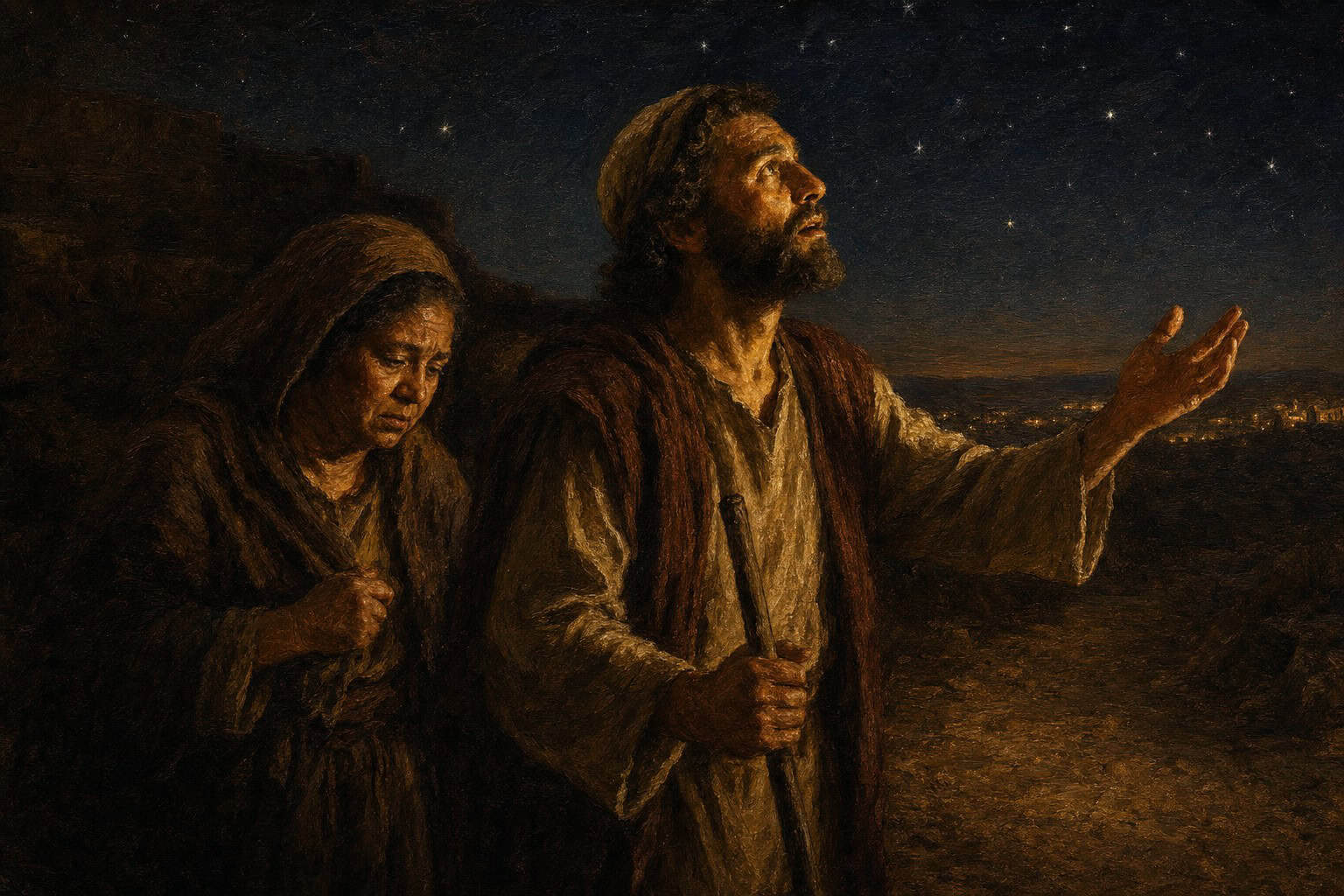
Walking late at night can feel like exile or homecoming. A reflection on desire, being seen, and the ache under the dark that no company quite answers.
The Miles Past the Last Streetlight
You know the feeling. It is late, and something in your chest will not sit still, so you get up and move. Maybe you circle the block twice. Maybe you drive past the last porch light until the houses thin and quit, and the sky opens overhead like a lid lifted off a jar. You tell yourself you want air. You tell yourself you need to clear your head. But under the excuse there is an older restlessness, the kind that daylight and errands and other people’s voices keep pressed flat all day, and only the dark gives it room to rise. In this scene from Confessions to the Empty Chair, a man does exactly this. After work he asks the woman he loves to eat first at a small familiar place, then to ride with him out past the edge of the city, and on the way he laughs with her about an old memory. Her mother once told her, half in jest, that she was on her own where her father was concerned. That old fear has worn soft. Now they can smile over it together, and the smiling is part of why he wants this drive tonight. It is deliberate. He is not wandering. He wants the miles, the empty shoulder of the road, the clear night with nothing between them and the sky. And here is what the late walk really carries, whether we do it alone or with one soul beside us. The dark takes away the audience. In the light we perform. We angle our faces, we pick our words, we manage what the other sees. But at night the managing loosens its grip. The body slows. The breath goes deep. The mind stops rehearsing and starts, sometimes against its will, to say what is actually there. That is why the late walk feels charged and tender at the same instant. It is not only the loneliness people assume it must be. It is the sudden nearness of a thing we hold at arm’s length all day long. Desire lives there, plainly, the longing of the body for another body and for a union no body alone can finally give. But so does a deeper homesickness, older than any woman’s name. The two travel side by side on the dark road, and the honest walker cannot always tell them apart. That confusion is not a flaw in the walking. It is the whole reason the walking is so hard to stop, so easy to keep doing one more night, one more mile, waiting for the road to say which hunger it was all along.
What the Body Wants When the Streets Go Quiet
Sit with what the man in this scene is doing with his own wanting. He does not stumble into the moment. He plans the meal, the route, the timing, the ring already warm in his pocket before they leave the apartment. There is a whole quiet architecture of intention under the seeming ease of it. This is worth slowing down for, because it says something true about how people, and men especially, tend to move toward the thing they most want. We build the setting before we dare the sentence. We arrange the stars, so to speak, so that a question we are terrified to ask can land inside a beauty large enough to hold it. Is that manipulation? He would ask himself so, and honestly, because he is a man who has learned to distrust his own maneuvering. Was the careful staging a way of loving her, or a way of shrinking the risk, of tilting the odds so a no became almost impossible? The line is real and it is thin, and he does not pretend it away. But there is a tenderer reading to hold beside the harder one. To prepare a place for love is itself a kind of reverence. The body that wants union does not want it the way appetite wants food. It wants to be received, and to receive, in a way that says plainly: I thought of you, I made room, I shaped the ordinary hours toward you. Desire in its truest form is not grabbing. It is offering. And a woman standing in the middle of such an offering is not a fool for being moved. She reads the labor behind it. She reads that she was held in someone’s mind while she was elsewhere, thought of across a whole plain working day. That is a real gift, and it would cheapen her to name her only susceptible, only carried by choreography. She sees. She weighs. She chooses from inside her own depths. Both things stay true at once, and the honest man holds them in tension rather than flattering himself with just the softer one. He wanted her body and her yes and her whole life set down next to his. He also wanted, under all of that, to be seen without shame by one who would not look away. The staging served both hungers, and he cannot fully separate them, and neither can she. Walking late at night, out where no one is watching, is the only place some of us can finally admit that the two hungers were never two, that the reach for a woman and the reach for something past her ran in the same current the whole while, pulling us out beyond the last lit window and holding us there.
The Stars That Once Heard Him Weep
Then comes the turn, and it is quiet, and it unmakes him more than any grand gesture could. He does not kneel. He tells her plainly that he kneels to God alone, and that single refusal reveals how hard his soul has fought to keep its order. But he steps behind her, and he tells her to look up, and he names the stars his friends. That is the piece that pierces. Those same stars had witnessed his private grief. In some earlier, unnamed night, in a season of real anguish, he had shown them his sorrow, spoken his pain up into that vast dark that seemed to answer nothing. They had watched him break. Now he brings the woman he loves before that same audience and asks them to hear something new. The witnesses of his worst hour become the witnesses of his best. This is the thing few of us understand about the dark and about being seen. We assume the places that watched us shatter are ruined, that we must never go back. He does the opposite. He returns to the exact witnesses of his ruin and dares to be seen there again, this time loving instead of grieving. That takes a courage most of us never spend. To be watched breaking is unbearable. To be watched again, in the same spot, choosing joy, is to risk that the two pictures will not hold together, that the joy will feel like a lie told over an old grave.
The dark is not where love goes to die; it is where love learns whether it can hold what daylight refused to see.
And she turns. Her two hands fly up to cover her mouth. In that instant something in him that had braced a whole lifetime against being fully known lets go by a fraction. He had already told her, before this night, the things others could not bear to hear. She had not recoiled. Now, under the same sky that heard him weep, he asks the question, and the asking is itself the miracle, rarer and quieter than any thunderclap: that a man who used to see the end at the beginning of every love could stand out here in the dark and, for once, not see it. He does not narrate a rescue. He narrates a nearness. God is not lifting him out of the old grief on the roadside; God is standing in it with him, letting the grief and the joy occupy the same square of ground under the same stars, refusing to make him choose which one was real.
The dark is not where love goes to die; it is where love learns whether it can hold what daylight refused to see.
The Demon’s Notes Woven Into the Song
What follows the yes is not the erasure people expect from a happy ending. Here the book refuses the easy comfort, and here it becomes true. He describes two musics that have played inside him his whole life, one loud and dark, one solemn and sorrowful, and he confesses that with her they did not stop. The dark notes did not vanish. He does not think they ever will. What happens instead is stranger and harder and far more real: the mournful melody of God begins to weave the dark music’s most triumphant notes into its own pattern. Not deletion. Integration. The demon’s best notes become threads in a larger composition, and he is entrusted, his own word, with the ongoing result. This is the theology under the whole scene, and it is not tidy. Grace here is not a hand that lifts him out of his darkness and sets him clean on dry ground. Grace is the quiet weaving that happens inside the darkness, God walking with him within the very thing he cannot fix. Consider what this means for how we love and are loved. Most of us wait to be worthy before we let ourselves be seen. We chain the worst of ourselves in a back room and show only the presentable ones. He had done this his whole life, seeing the end at the beginning, holding back, sure that if the true darkness surfaced, love would bolt for the door. And here is a woman who felt what he kept chained and did not run. This is what the late-night walker is really aching for out past the streetlights. Not someone who will complete a flattering portrait. Someone before whom the portrait can drop entirely, frame and all. Someone who gathers up what others abandoned. There is a colder story that would say we simply seek a mate who signals loyalty under stress, and there is a grain of truth in it, a low true note in the chord. But it does not reach the thing itself. The thing itself is the terror and the sweetness of being known all the way to the floor and not condemned. A person is never only a mechanism sorting for fitness. A person is another whole world, choosing from inside her own hidden depths to stand in the presence of your mixed waters without flinching, and to keep standing there after. That she alone did this, out of the many he had met, across half a world of travel, is the fallout he cannot stop turning over. It humbles him more than the yes did.
Where the Sword Finds Its Sheath
So where does walking late at night finally settle? Not in a tidy peace. He says the older he grows, the more of the song he hears and the clearer it becomes, which means the hearing is ongoing, unfinished, given to him one night at a time and never handed over whole. His life had been a run of fractures, each heartbreak a splinter lodged in him. He went as far as Rome chasing a solace he never found there. He met many women, of many kinds, and moved through rooms with all his careful thinking and arranging, deciding the outcome before he ever stepped inside. And the answer, when it finally came, was not exotic and not earned by any of his miles. She came from the same small West Texas town he came from. This is the quiet joke God seems to enjoy, that we cross the whole world for what was waiting a few streets over from where we started. But do not let that melt into a greeting-card ending, because the man himself will not allow it. He is plain that the dark music plays on. He is plain that he does not expect it ever to fully quiet. What changed is not the noise inside him. What changed is that he stopped standing in front of it alone, and that a sword which had never once known rest finally slid into its sheath. That is the image to carry out of this scene. The dark road, the late walk, the restless movement past the last light, all of it was a sword looking for its sheath, a desire looking not for satisfaction but for a place to be received and held without cutting anyone it touched. Walking late at night is what the soul does when it cannot yet name what it wants. Some of us walk for years. Some of us bring one other person into the dark with us and dare, at last, to be seen there and stay. The ache under the walking is real, and it is double, body and soul at the same time, longing for a person and longing for the One before whom every word can be spoken without strategy. Confessions to the Empty Chair does not promise the dark will lift. It promises something braver and less comforting: that you can be found inside it, your worst notes woven into a song you are still learning to hear. Go read what it costs him to believe that, and what it costs her to make it true.