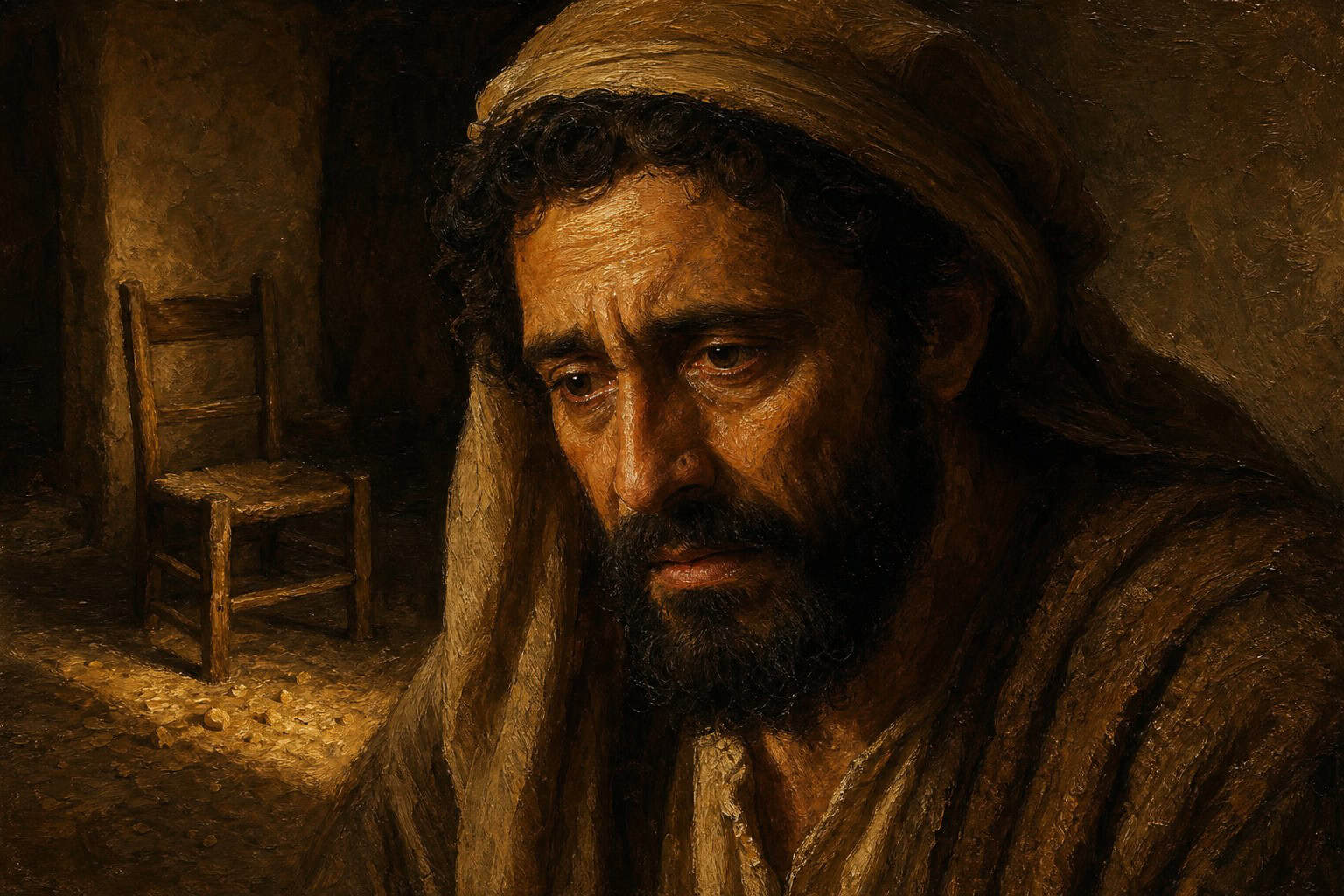
Feeling trapped in a relationship that repeats but never changes? A hard, honest look at why the familiar cage feels like home, and where the door really is.
The Chair You Keep Sitting Back Down In
You know the feeling before you can name it. You are in a room with someone, and the walls have not moved, but the air has changed. Something in your chest tightens the way a hand closes around a coin it does not want to lose. You have been here before. You have said the same words, felt the same small hope rise and then flatten, and still you sit back down in the same chair. That is the strange part. Nobody locked anything. There are no chains on your wrists, no guard in the hall. And yet your legs will not carry you out. The trap is not made of iron. It is made of habit, of hope, of the warm lie that this time will be different because you want it to be. You tell yourself you are staying out of love, or duty, or patience, and each of those words is polished and respectable. Underneath them sits something less clean. You stay because leaving would mean admitting how much of your life you have already spent here, and that admission costs more than one more evening in the chair. The manuscript this reflection grows from, Fractions of the Soul, sits with a man who thinks he is the one measuring, the one testing, the one steering every exchange. He believes he reads people better than they read themselves. He believes his patience is a method and his method is a kindness. But a reader watching him closely sees the truer thing. The man who thinks he holds the knife is often the one held. Control and captivity look identical from the inside, and neither can feel the other’s grip. You know this in your own body when a name lights up on your phone and your stomach drops and lifts at once. You do not want it. You cannot put it down. Your thumb hovers, and the hovering itself is the whole story. The room you cannot leave was not built of stone. It was built of every small choice you made to stay one more hour, one more day, one more chance you swore was the last. The walls got thick without your noticing, one thin layer at a time, the way frost climbs a window overnight. By morning the space where you live has shrunk to the exact size of your fear. You are not trapped by force. You are trapped by familiarity, and familiarity is the softest cage there is, because it does not feel like a cage. It feels like belonging. It feels, most days, like home.
Breadcrumbs on the Kitchen Floor
Watch how the cage gets built, and you will see it is built with crumbs. A little warmth, offered and then pulled back. A word of praise, then a cool silence you cannot explain. You lean toward the warmth and it is gone, and you spend the next hour going over everything you said, hunting for the wrong word that turned the weather. This is the pattern of every trap that wears the face of love. In the pages behind this post, the narrator describes people dropping small tokens of affection and then studying how the other reacts, keeping a clean way out ready in case they need to swear it meant nothing at all. He calls it a test. He is not entirely wrong; something in it is a test. But he speaks of it as though he stands above the whole business, calm and reading, when in truth he is inside it too, scattering his own crumbs and measuring the response, both of them feeding on scraps and calling it a meal. You know this hunger from the inside. You know how you can live for days on one kind sentence, how you replay it lying down, how you build a whole future on a single soft look across a table. That is what makes the trap hold. It gives you just enough. Never enough to heal you, never so little that you finally rise and go. Here is the cruelest turn of the closed circuit two wounded people make. The broken reach for the broken because recognition feels like rescue. You look at someone and think, they understand my hurt, they have the same scar, and you mistake that flicker of being seen for being made whole. It is not the same thing, and the difference will cost you years if you let it. Being recognized in your wound is a comfort. Being changed is a labor, and it costs far more than comfort can ever pay. So you settle for the recognition and call it enough. You tell the old story, the one about the parent who left or the friends who turned their backs, and the other nods and tells theirs, and this exchange of ancient pains feels like closeness. It is not closeness. It is two people holding each other’s bandages and calling it surgery. The lie is warm, which is why it works. The trap tightens right here, in the comfort of being understood by someone who cannot help you, and whom you cannot help. You feed each other crumbs off the same bare floor and neither of you names the hunger, because to name it would be to admit that this thing you built together was never going to feed you. And the honest question you dread is the plainest one of all. How long have you known, and stayed anyway.
The Lock Was Always on the Inside
Here is the turn, and it will not comfort you. The trap you are in is one you helped build. This is the hardest thing to say and the only thing worth saying, so say it slowly. You have spent so long searching for who caged you that you never once checked your own hand for the key. The narrator of these pages believes he shapes the people he draws close, that he grinds them like a stone against a blade, sharpening them for their own good and calling the pain a favor. He speaks of their vulnerability laid bare before him, unembarrassed, as though he has earned that nakedness, as though the whole arrangement serves them and not him. But turn the lens where he does not want it turned, and you see a man who cannot bear to be truly known himself, who needs the other person cracked open so that he never has to be. His control is a hiding place with good lighting. And yours might be too. The reason you cannot leave is not only that the room holds you. It is that the room lets you avoid something worse. As long as you are trapped, you do not have to face the empty space that leaving would open in the middle of your days. You do not have to sit alone and ask what you actually want, what you have actually done, who you have actually become in all this staying and returning. The cage guards you from that reckoning. That is why the lock is on the inside.
A cage you keep choosing stops looking like a cage and starts looking like a life.
And that is the moment the whole floor shifts under you. Because if you built it, you are not powerless, and powerlessness would almost be easier to hold. If someone else had trapped you, you could wait to be freed and blame them until your last breath. But you cannot blame your way out of a room you walked into with open eyes and stayed in with eyes half closed. The honest accounting is brutal and clean at the same moment. You did this. Not all of it, not the first wound that made you this hungry, not the hand that struck when you were small. But the staying is yours. The returning is yours. The crumbs you accepted and the crumbs you scattered are both yours to name. And owning it is the first real thing you have felt in a long time. It hurts the way a hand hurts when it has been asleep and the blood comes rushing back, sharp and stinging and alive. But a hand that hurts can still open. A hand that hurts can still reach the key it has been resting on the whole time.
A cage you keep choosing stops looking like a cage and starts looking like a life.
What the Empty Space Will Cost You
Nobody warns you that freedom feels, at first, exactly like loss. You imagine that the day you finally stand up from the chair, light will pour in and your chest will unclench and the birds will practically sing. It does not happen that way. You stand, and the room you hated goes quiet, and the quiet is worse than the noise ever was. This is the fallout no one prepares you for. The trap gave your life a shape. Cruel as it was, it filled your hours, your thoughts, your half-formed prayers at two in the morning. It told you who you were: the one who waits, the one who forgives, the one who tries one more time. Take that away and you are left holding a self you do not recognize, in a silence you have no idea how to fill. The narrator of these pages, for all his talk of sharpening others, would be lost without someone to sharpen against. Strip the method away and what remains is a man frightened of the hollow inside his own chest. You may find the very same fear when you look honestly at your own. This is where the plain fact of your own finitude walks into the room and sits down beside you. You do not have endless time to keep learning this lesson. Every year spent in a familiar cage is a year that does not come back, that no repentance recovers. You are not young forever, and the mirror is already saying so. The chances to build a life that actually feeds you are not infinite, and the clock keeps its own counsel and does not slow for your fear. That thought should frighten you a little. It should also loosen your grip. Because when you feel how near the end already is, the small comforts of the trap lose their pull. Who cares about the crumbs when you can nearly count the days. And here, in the emptiness that leaving finally opens, something else waits that the trap never once let you feel. Not a rescue. God rarely comes as a rescue, hauling you out clean and dry and finished. He comes quieter than that, and slower. He is in the silence you dreaded, sitting with you in it, not filling it with easy comfort or a bright lesson, but simply refusing to leave the chair beside yours. You are not as alone in the emptied room as you feared. The presence that was crowded out by all your testing and hoping and feeding can finally be felt now that you have cleared the floor. It does not fix you. It stays with you. And staying, it turns out, is what you were begging for the whole time, only you were asking it of hands that could not give it.
Sharper Than the Grinding That Made You
So this is where it leaves you, standing in the quiet with the way out behind you unlatched. Not healed. Not triumphant. Just honest, which is more than you carried in. The feeling of being trapped does not vanish the moment you name your part in it. But it loosens its jaw. It becomes something you can work with instead of something that works you like a beast at a mill. The old cage taught you a false lesson, that to be close to someone meant to be measured, tested, ground down, and then told the grinding was a gift. There is a real truth buried inside that lie, and it is worth the digging. Change does cost something. To be remade, you have to let yourself be worked on, and that is not the same as letting yourself be used, though from the outside they can look alike. The difference is everything, and you feel it in your gut long before you can argue it. Being used sharpens the one who holds you and leaves you thinner. Being remade sharpens you, and leaves you sharper long after the hand that helped is gone. You can tell the two apart the way your body tells nourishment from mere fullness. One leaves you able to stand and walk out into the weather. The other leaves you slumped and needing the next crumb before the last one is swallowed. The narrator of Fractions of the Soul cannot see this about himself, and watching him miss it, over and over, is exactly what teaches the reader to catch it in the mirror. That is the strange gift a book like this hands you. You watch a man mistake control for love, hunger for intimacy, testing for closeness, and somewhere in the watching you catch your own face in the dark glass and flinch. This reflection has not told you how his story ends, and it will not. But it has put into your hands the question he could never ask himself, and now the question is yours to carry. What have you called love that was only the fear of an empty evening. What crumbs have you accepted, and which ones have you scattered on someone else’s floor. What room have you refused to leave because leaving meant meeting the man or woman you have become. Sit with those. Do not rush to answer them clean. The account is not settled in an afternoon, and anyone who says otherwise is selling you a cheaper thing. But the feeling of being trapped, the one you typed into the dark hoping a stranger might understand it, is not the last word on your life. It is the hour the lock went soft under your fingers. What you do with the next hour is the only part that was ever wholly, terribly yours.