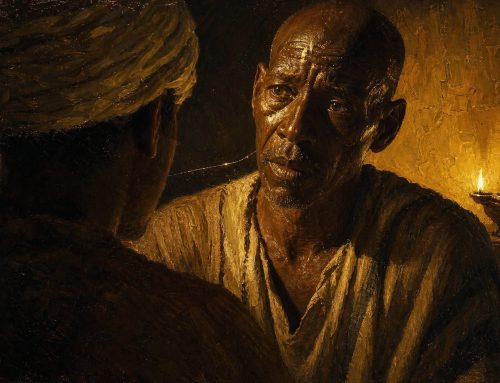
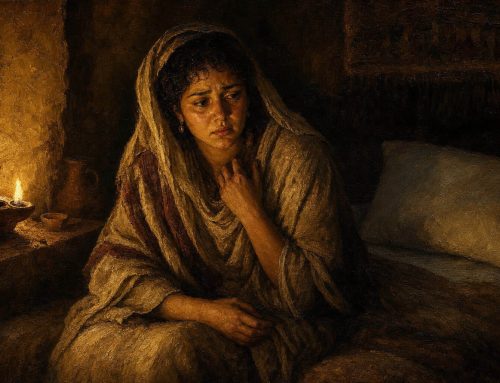
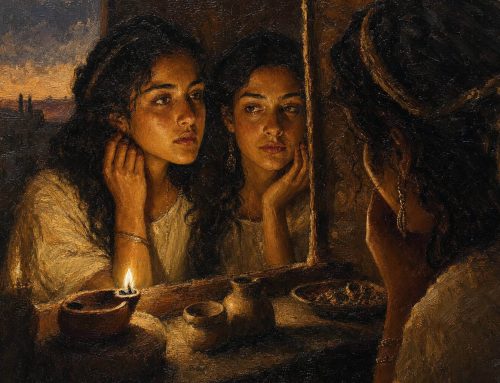
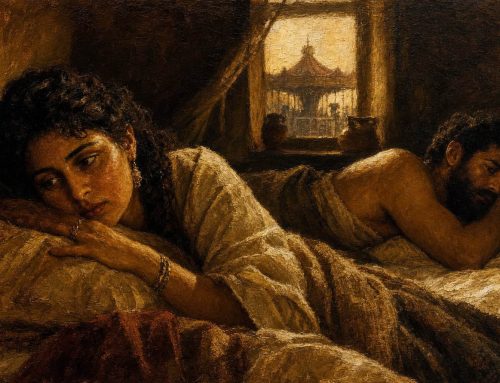
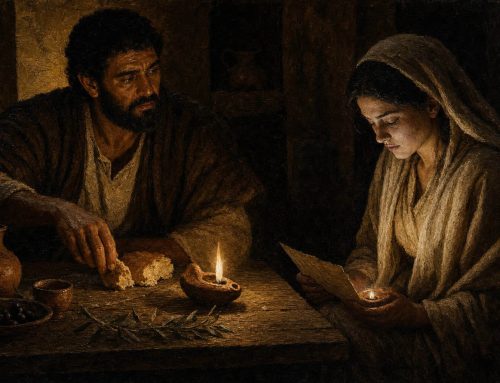
Everyone must leave something behind. A scene from Fractions of the Soul reads the woman who deletes every trace so nothing of her can be judged.
The Corded Phone in the Hallway
There was a time when a private word cost you something. I keep going back to it, to the world before the one I later fell into, the corded telephone bolted to the kitchen wall, its cord stretched thin around the doorframe so a body could half-hide in the hall. If someone else was home, they could lift the other receiver and hear every syllable. That risk shaped how people spoke to each other. You chose your words with care, because you could not unsay them. You wrote letters in ink that would not lift back off the page. You mailed photographs that would outlive the mood that took them, that would sit in a stranger’s drawer for years. There was a slowness to all of it, a deliberate weight, a knowing that whatever you sent had left your hands for good and could be held against you later. This is where the second chapter of Fractions of the Soul pauses before it turns fully to the woman I could not stop watching, the woman who keeps a former lover half-alive by breathing into his mouth in secret. She learned a newer grammar, faster and lighter than the old one. Her phone goes into the bathroom, where privacy is guaranteed by a locked door and running water, and there she photographs herself and sends the picture and deletes it within the same minute. She lies under the covers at night, after her partner has fallen asleep and gone slack beside her, and texts about what could be in the eerie glow that lights only her face. Then she scrubs the record clean. I wanted to say the old world was simply better, but that is too easy, and the searching voice in me will not let it stand. The old world only made leaving traces unavoidable. What people carried, they carried because they could not put it down. Now the trace itself has become optional, and something in the soul has bent to meet that option. I sat with this scene a long time before I understood it was not really about her at all. It was about what any of us does with the evidence of having loved and wanted and reached across the dark toward someone. It was about the small deaths we perform so no one can hold us to who we were the moment before we thought better of it. Everyone leaves something behind. The only question is whether you leave it by choosing or by force, and whether you can bear, at the end, to be known by the little pile of what you left.
Fingers Faster Than Guilt
Watch her hands. That is what the passage asks of me without ever saying so plainly. The picture is taken, sent, and then her thumb slides to delete before her mind has even finished deciding what story the deletion is meant to serve. Her fingers know the motion by heart. They have done it so many times that the doing no longer needs her. This is the detail that unsettles me most in the whole scene, because it means the erasing has sunk beneath thought, down into the muscle, the way a habit hardens into a reflex and a reflex hardens into a second nature you can no longer feel yourself performing. She is not sitting there in anguish over each choice, weighing it, suffering it. She is carrying out a practiced ritual of disappearance with the calm of someone brushing her teeth. I tell myself I would never live like that, and then I remember every version of myself I have kept ready for different rooms, every way I have arranged my own life for whoever might come to inspect it. The chapter names this cleanly and without mercy: she manufactures separate selves, replicants, so that no single one of them has to carry the whole account of her. The self at work, the self with family, the self under the covers at midnight — none of them ever has to sit at one table and look the others in the eye. This is not the old dissociation of a frightened child who splits without knowing it. This is deliberate. This is engineering. She shapes what any inspector will conclude by carefully shaping what remains for him to find. If her partner reaches for her phone at random, he will find nothing that places her in a bad light, because she has already authored his verdict before he ever thought to look. And here, underneath all the strategy, is the ache I did not expect. The one who deletes so fast is still, somewhere, trying to be perfectly clean, still half-believing that love comes only to those who leave no mess on the floor. It is the frantic tidiness of a person who was taught early that only the spotless get kept, that a smudge on the record is a reason to be sent away. I feel tenderness toward her here, more than I am comfortable admitting. She is not a monster in this scene. She is someone who learned, before she had words for it, that traces get you punished, that being caught reaching for another is dangerous, and she built an entire architecture of erasure on that one buried lesson. The unbearable part is that the architecture works. The deletions succeed. The illusion holds. Nobody catches her, ever. And that success is its own slow poison, because a love that survives only by leaving no evidence has already quietly confessed that it does not expect to survive being seen. Everyone leaves something behind. She has decided that what she leaves will be a shape cut cleanly from empty air.
The Little Suicide of the Cleaner Screen
Here is the turn I could not talk myself out of, no matter how long I circled it. Each deletion is a small death, and not only the death of a record. It is the death of the very self who was free enough to send those words in the first place. In the second she pressed send, she was a woman fully reaching, wanting, alive in her own hunger, willing to let one other person see her want. Then, a breath later, she killed the trace of that woman. She replaced her with a blank, a screen wiped smooth, a person who can pass any inspection precisely because there is no longer anyone there to be inspected. This is the thing I refused to see for years, about the people I loved and just as much about myself. We told ourselves we were hiding sin. We were actually destroying the self who had dared to want at all. The messages sent under the covers were the truest thing she did all day, more honest than every public demonstration she performed with her partner on her arm, more real than the careful platonic friendship she staged with the man she was still feeding in secret. And that truest thing was the very first thing she erased. She kept the performance and killed the confession. She kept the illusion whole and murdered the small moment of courage inside it. Because it was courage, in its bent and hidden way — the courage of reaching toward another across the dark of a shared bed while someone she was supposed to love breathed on beside her. She could not let it stand. She could not let it leave a single mark. What frightens me is how reasonable the whole thing is, how it makes a kind of dreadful, airtight sense from the inside.
When you erase every trace of who you were, you do not become innocent; you become no one at all.
I keep circling my own part in it. Did I not do exactly the same in my own way, edit myself down to a smooth surface, make myself unknowable so I could never be caught, and then call it privacy, call it discretion, call it protecting the ones I loved from what I was? The scene holds up a mirror I never asked it to hold. She wanted to keep the future open, to keep the possibility of a rendezvous warm and alive, and to do that she had to keep killing the present as fast as it happened. Every erased picture bought her a tomorrow at the price of that day. And I understand, God help me, exactly why she made the trade, because I made it too, more times than I can bring myself to count.
When you erase every trace of who you were, you do not become innocent; you become no one at all.
What the Deleted Cannot Take Back
But the phone was never the only witness in that dark room. This is where the chapter breaks something open in my chest. She can delete the picture. She cannot delete the body that stood in the cold bathroom to take it. The flesh remembers everything the screen forgets. Her thumb remembers the motion of erasing. Her bare feet remember the chill of the tile at midnight. And the man she keeps half-alive — his body carries the entire history of what they once were to each other, so that every casual public exchange between them is a thin performance laid over a river running violently beneath the floorboards. The chapter is honest about how cruel this arrangement is. To keep a former lover on as a friend, to hold him suspended in a false present tense while both bodies know the whole truth, is a quiet torture dressed up as maturity. Nobody bleeds where anyone can see it. Nobody raises a voice. It simply goes on, this daily denial of both closure and renewal, this keeping in touch that is really a form of keeping possession, a hand that will neither hold nor let go. And here I have to say the hard thing about the theology of it, because this is a Catholic book and I cannot pretend the question away. The deletion is an inverted sacrament. A true sacrament makes an invisible grace visible, leaves a real mark on the soul, a trace that no one can scrub off. Hers does the exact reverse. She destroys the lower record so that no one, not even she herself, can hold the higher reality to any accounting. She confesses to no priest and to no empty chair. She confesses to the void and then wipes the void clean behind her. The falling of this scene is not a catastrophe you could point to. It is worse than catastrophe. It is a life that works. The partner suspects nothing at all. The friendship endures, warm and smiling. The possibility of the future rendezvous stays alive. Everything she built keeps standing, and standing, and no one ever finds the way in. That is the loneliness the whole game never mentions. She has made her attention scarce and therefore valuable, priced herself high by leaving no cheap traces lying around for free, and won a kind of victory in the long seduction the chapter calls a chessboard. But the one who wins that game sits alone at the board when the pieces are put away. There is no one left who knows the true count of who she is, because she has made herself unreadable to every inspector alive, including the one keeping watch inside her own ribs. I wanted to be angry at her, and I could not manage it. I found I could only grieve for her, and for the man she holds suspended, and for the version of myself I recognized too clearly in both of them.
A Grave With No Name
So what does the searcher’s question mean to me now — everyone must leave something behind? The old world left things because it simply could not help it. The letter went into the mail slot and was gone. The photograph yellowed in a drawer somewhere. You could not take back what you had already put into another’s hands, and that plain helplessness was, I have come to believe, a mercy in disguise. It meant a life accumulated as you lived it. It meant that when you had loved someone, some evidence survived the loving, waiting to be reckoned with, mourned over, forgiven, or kept close. What the second chapter of this book shows me is a soul that has found the way to leave nothing at all, and the quiet horror of learning that leaving nothing is not the freedom it promised to be. It is a grave with no name cut into the stone. We are all dying, every one of us. That is the plain fact lying under every scene in this chapter. We do not get forever, and the days are shorter than we pretend. What we leave behind — the letters, the marks pressed into other people, the traces of having reached and wanted and failed and reached again — that is very nearly the only proof we were ever here to begin with. She is spending her few mortal days manufacturing her own absence, erasing the exact evidence that would tell the world, and tell her, that she once dared to be a self who loved badly and needed too much and reached anyway into the dark. I do not have a tidy word to close on, and I will not invent one. I refuse to pretend grace swept in and rescued her from the darkness, because the scene shows no such thing, and I would be lying to you and to myself. But I have slowly come to believe that God is not present only in the confession that gets recorded and kept. He is in the deleted message too. He is present in the trace she destroyed, near her in the reaching itself, walking beside her through the very compartments she built to keep Him locked out. He sees what the inspector never will. He keeps the record she erased, in His own hand, unerasable. That is not comfort, exactly. It is something harder than comfort and better than it. If you want to know what it truly costs to leave nothing behind — and what stubbornly, unbearably remains when you have tried — Fractions of the Soul holds the whole account open, and does not look away, and will not let you look away from it either.