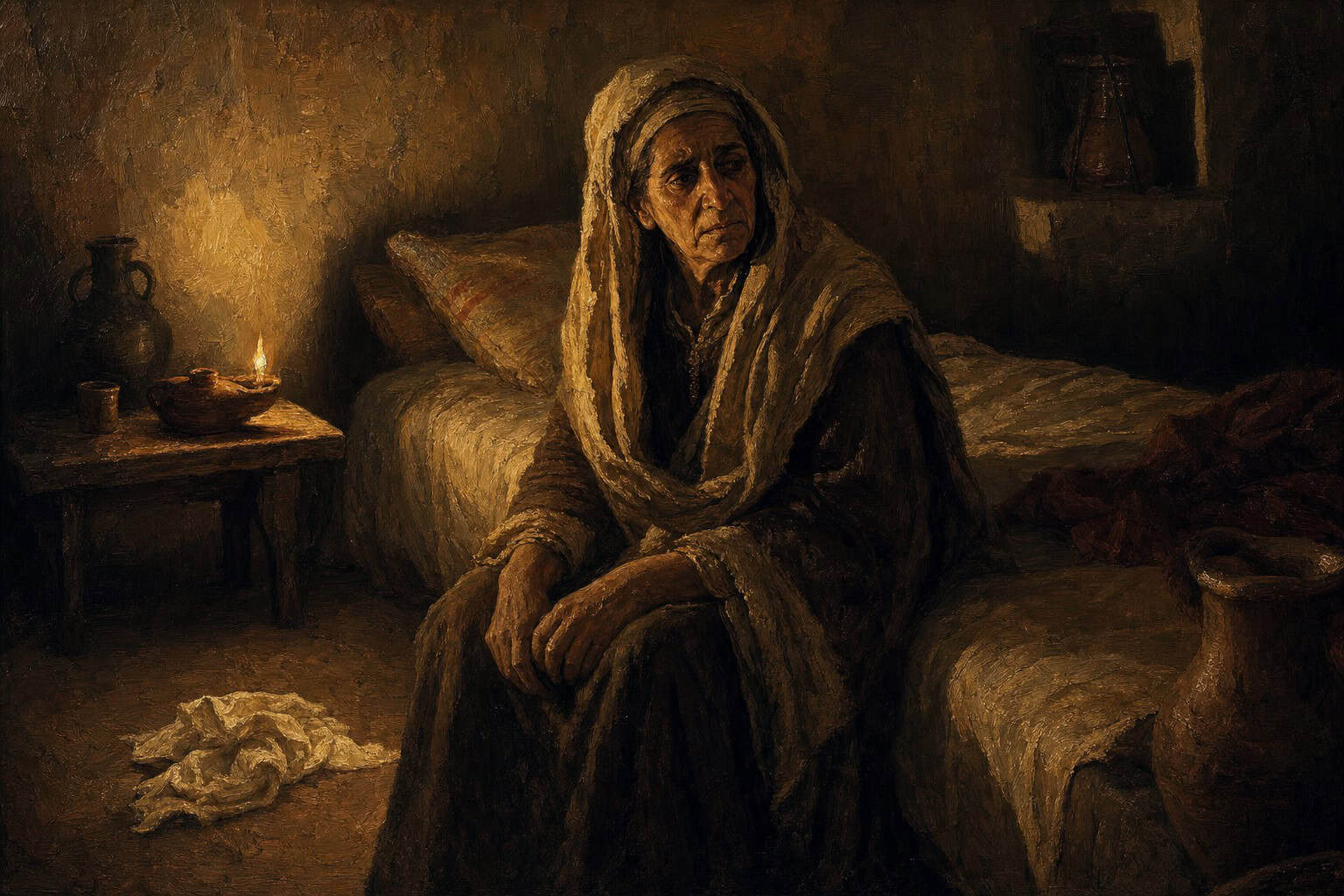
Were you silent or silenced? A raw reflection on a drunken confession that was never hers to make, and the man who was never you.
Beer on Her Breath in the Quiet Room
She comes back late again, and the smell of her arrives before her body does. Beer. It rides on her breath like weather rolling in off a field. The room had been quiet, and it was the good kind of quiet, the kind two people earn after skin and stillness, after the breathing slows and the sheets go warm. Then she slurs it out, plain as a plate slipping from a hand: she doesn’t think she’s pretty, doesn’t think she’s attractive as a woman. In Confessions to the Empty Chair, this is a moment in Chapter 13 where the whole room seems to stop breathing. I lie there in the half-dark and the sentence lands like something small and round rolled across the floorboards, set to go off. She has been in my bed. She has been held by me, wanted by me, told with my whole body and not just my words that I burned for her. And still this. Still the flat, drunk certainty that she is not desirable, spoken into the one place where she was, without question, desired. I ask myself the question before I ask her a single word: who put that there? Because I know the answer is not me. I did not say it. I did not think it. I had shown her the opposite with everything I had to give. Yet she carries the words like a stone she swallowed whole years ago, and now, loosened by the beer, she coughs it up in the dark where I was supposed to be the one man who kept her safe from exactly this. You typed a question into a search bar and it brought you here: were you silent, or were you silenced. Here is the first hard thing this scene teaches me. Sometimes silence is not something you choose. Sometimes it is planted in you. Someone else spoke into the deep, hidden floor of you, and now their voice climbs up and comes out of your own mouth, and you mistake it for your thought, your feeling, your truth. I watch her mouth move in that thin light and I feel a kind of vertigo, an awe that is closer to dread. This is a wound that is not even hers, wearing her voice like a coat that does not fit. She believes she is confessing herself to me. She is only playing back a recording made by another man. And I, the one lying beside her, am left holding a grief I did not cause and cannot mend, listening to a stranger speak through the woman I love. The quiet in that room was never really quiet at all. From the first minute, it was crowded. It was full of him, and I had not known enough to hear it.
The Handkerchief She Dropped for Someone Else
It took me years to see it clearly, and even setting it down now costs me something. She had dropped her handkerchief, the way a woman lets one fall when she is hoping a particular man will bend and lift it and hand it back with meaning. He did not bend. He left it lying on the ground, left her standing there with her hand still open, and she had to gather it back into her own fist and turn, disappointed, into my arms instead. That is the honest shape of the thing. Her low, drunk words about her own beauty were never self-reflection. They were residue. Another man had told her, in effect, that he was not drawn to her in that way, and his rejection sank down into her further than any tenderness of mine could ever reach. Slowly I begin to see the pattern, and the pattern frightens me, because it is not only hers. Jeannètte carried something like it before her. Jane carried it too. The women I loved kept living out lines from books they had read and men they still wanted, and I kept casting myself as the reader who could not stop turning their pages, hoping the next one would name me. What did I refuse to see, lying there? That her presence in my bed meant almost nothing about her desire and almost everything about her retreat. She rested against me because someone else would not hold her. I was the soft place after the hard fall, the ground that caught her when the man she chose let her drop. The awe in this is a terrible one. I am standing inside a story that was written before I ever walked in, and my name is nowhere in it. Her mood filled the whole room, a low blue ache that had nothing to do with me and everything to do with a shadow I could not see. I mistook her closeness for her choosing me. I mistook her drunk confession for intimacy between us. But the words carried his fingerprints, not mine, pressed into her long before we met. And so I have to put the sharpest question to myself: did I truly want to see this, or did I need the fiction more than I needed the truth? A man loved as a consolation can either face it or drown it, and for a long, cowardly time I chose to drown it. I told myself the bed meant the heart. I told myself that if I only stayed faithful enough, tender enough, present enough, her desire would migrate from him to me the way a bird moves from one tree to another when the weather changes. It never migrated. It never moved. The handkerchief, I finally understood, had never once been dropped for me to pick up.
The Second Man Who Was Never Chosen
This is the turn, and it undoes me even now, years later, writing it down. I was always the second man. Not second in time, not second into the room, but second in her soul, in that hidden place where a person quietly ranks the people who love them and never says the order out loud. She knew she was settling. She rested in my arms and not in his, and for exactly that she resented me, because my body was the daily proof of what she could not have. I was her consolation. She was my first and only. That imbalance is a kind of quiet violence done to a heart, and I did not have the courage to name it for years. To her I was not the man she wanted. I was the man she needed as a bridge to reach someone else, a stepping stone laid across a river I did not even know I was standing in up to my chest. I think of the child we might have made together, and my stomach drops through the floor. A child biologically mine, and she would have named it after him, or after a book he loved, or a line from a song the two of them had shared, a secret name planted to keep his memory alive across the entire length of her life. Mine in the flesh, his in the spirit. Counterpoint, I called it in these pages, two melodies running against each other in the same measure and never once resolving into a single chord. That word held me still with something like awe and something like sickness. Here is what your search has carried you toward, and I will not soften it. You can keep a woman’s bed warm for years and never once hold the seat that matters to her. Faithfulness does not manufacture desire; it only reveals, over time, whether the desire was ever yours to begin with. I had believed loyalty was a key that turned a lock, that if I was true enough the door would swing. It was not a key. I was a man standing outside a door someone else already held the key to, knocking with both fists, convinced that my patience was the same thing as being wanted. And the awe of it is not only bitter, though it is that. It is also vast, almost holy in its scale. There is a whole hidden architecture inside another person, rooms I was never once invited to enter, and I had spent my entire devotion carefully decorating a hallway. Was I silent? No. I spoke my desire for her plainly, over and over. And I was silenced anyway, because her deepest yes had already been spent on a man who never even bothered to claim it.
You can keep a woman’s bed warm for years and never once hold the seat that matters to her.
Counterpoint Running Under Everything I Gave
The fallout does not arrive as a scene, with a slammed door or a raised voice. It arrives as a slow, unbearable rearranging of everything I thought I understood. I go back through the nights and read them again from the far side of knowing, and the same acts mean entirely different things now. The moments I took as her choosing me were sometimes her only pretending. Time for another pill. Time for another beer. Time for me, so she could close her eyes and set another face over mine in the dark. Jane did this. Jeannètte did a version of it with Jane before her. The women changed and the counterpoint underneath stayed exactly the same, patient and cruel. And I have to turn the lens back on myself before I aim it at any of them, because that is the only honest direction left to me. What was I actually doing in those rooms? I have to admit, plainly, that I entered them already decided. I wanted a woman to confirm a version of me I had lost the ability to confirm on my own. I wanted to be the one who was finally chosen, and I dressed that raw hunger up in fine clothes and called it love, called it fidelity, called it devotion. My faithfulness was not pure. It was need wearing devotion’s clothes and hoping no one, least of all me, would notice. If she was using me to reach him, then I was using her to reach a self I had misplaced somewhere years back. That is the disagreeable truth I sat inside for a long time, and it will not let me stand one inch above her. We were both reaching past the warm body in the bed toward someone who was not in the room at all. And here the awe bends inward and turns quiet, almost gentle. Under all of it, under her ache and my ache both, ran a deeper homesickness I could not have named at the time. Not for her. Not even for the flattering self she might have handed back to me. It was the old, aching hunger to speak one true word to someone without strategy, without positioning, without keeping a seat warm or being kept warm in return. And in the dark of that room, with the beer on her breath and a wound in her mouth that had never belonged to her, I was not alone the way I felt alone. Something held the whole broken measure of it. Not to fix it. Not to lift me clean out of it. Only present, walking in the sin right beside me, near in every part of the failure I could not undo. I did not feel rescued. I felt accompanied, and that was stranger and far larger than any rescue. The counterpoint kept running under the night. But I was no longer the only one listening to it.
What Stays When the Recording Stops Playing
So were you silent, or were you silenced. After walking through all of it, I think the only honest answer is both, and the two are far harder to pull apart than we want them to be. I spoke. I told her plainly what she was to me, how I burned for her, how much I meant every word. That was not silence, not by any measure. But my true voice, the one buried under the performance, the one that might have said I am afraid I am only a stepping stone and I am staying anyway because I need you to want me more than I need my own dignity, that voice I kept locked in the dark. So I was silent exactly where it counted and loud everywhere it was safe. And she had been silenced long before she ever met me, silenced by a man who let her hopeful heart drop to the ground and walked off without a backward glance, whose rejection she then carried into every bed that came after his, mine included. Neither of us was ever fully free to speak. Both of us were being spoken through by people who were not in the room. That is the shape Confessions to the Empty Chair keeps circling back toward, and this chapter is one of its clearest and most naked pages. Here is where it settles for me, and there is no ribbon to tie on it, because the thing itself refuses a ribbon. You cannot earn a desire that was never yours to earn. You cannot become the first man by loving hard enough as the second. And you cannot heal another person’s wound by pouring your whole self into the crack it left, because the crack was cut by a different hand and shaped to a different size than yours. What you can do, what the book keeps quietly turning toward, is stop mistaking the echo for the voice, in her and in your own chest. Learn to hear whose words are truly coming out of your mouth. Learn to ask whether your fidelity is love or only need wearing borrowed clothes. And learn, if you can stand the weight of it, that even in the room where you were only ever the consolation, you were not abandoned by the One who does not rank you second, who does not keep a shadow ahead of you in line. That is the strange grace hidden in it. Not a rescue from the shame of being chosen last. A companionship that sits down inside the shame and stays. The recording finally stops. The room goes truly quiet, quiet all the way through for the first time. And in that real quiet, at last, you can say one word that is actually your own.