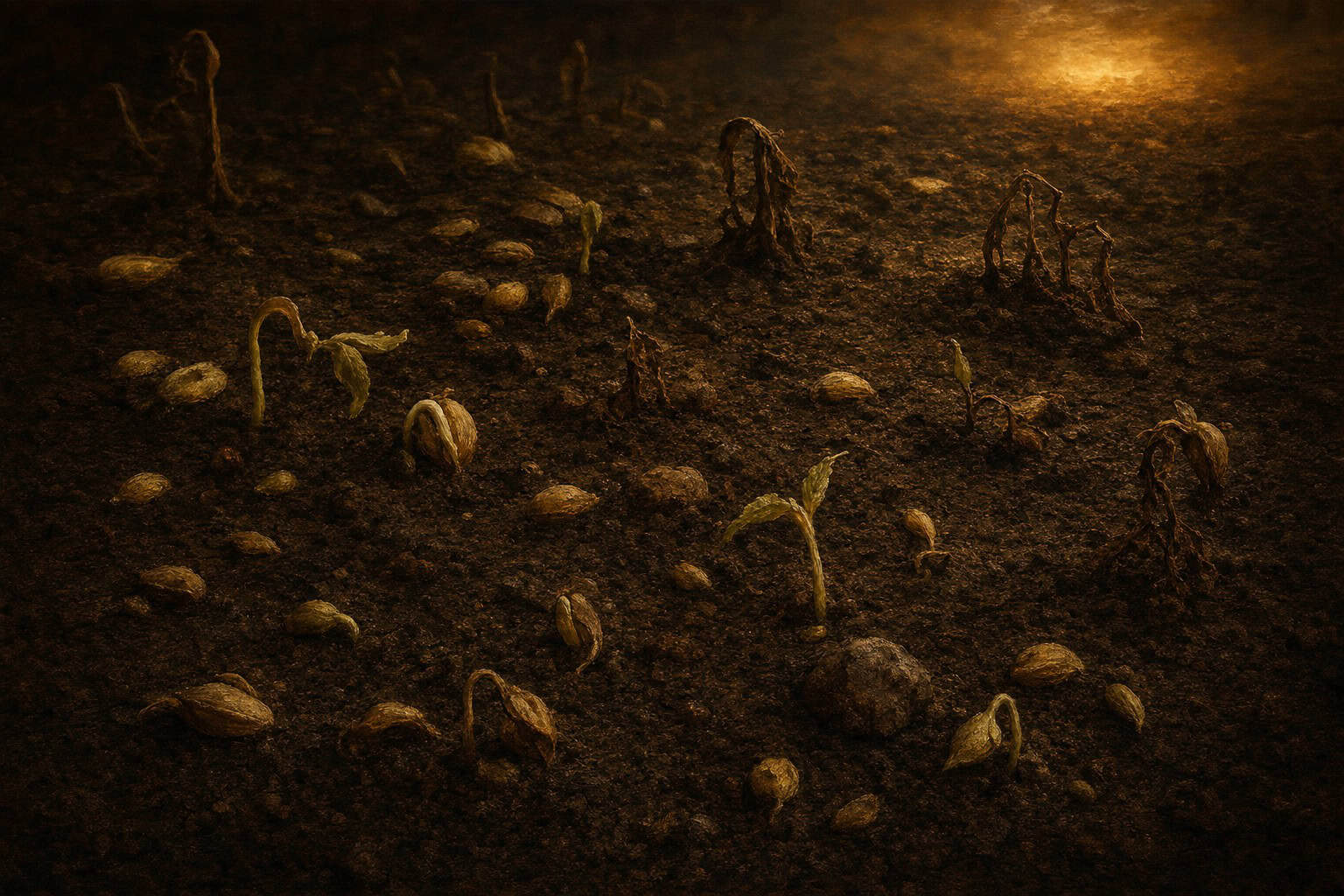
Instead of a safe outline the teacher reaches straight into the rough soil of his own story, because the same seed grows only as deep as the ground has let itself be broken.
Hands in the Dirt of the Teacher’s Own Life
Chairs creak, pens rest idle, and instead of starting with a safe outline, the teacher reaches straight into the rough soil of his own story. He does not hover above the class like clean air; he bends low, speaks from the mess, lets his failures and confusions sit there between the notebooks and open laptops. The body betrays the cost—tired shoulders, a tight jaw that loosens only when he names his shame, eyes that do not scan for admiration but keep dropping to the floor as if to some furrow only he can see. This is not a performance of brokenness but a steady, unadorned laying down of what the years have actually turned him into. No one is invited to applaud. Instead they are pulled, almost against their will, toward the question under his words: if this is what his soil has produced, what has mine been growing while I pretended to be fine?
Clumps, Stones, and the Bitter Taste of the Harvest
Once the teacher has set his own earth on the table, he turns the spade outward. He names the quiet law that runs under every pious speech and every polished brand: you do not know a soul by its slogans but by the flavor of what it feeds others day after day. A sarcastic jab that always has to land, a pattern of vanishing when someone needs help, the ease of gossip, the surprise of real gentleness—these are not accidents but crops. The class begins to feel it in their bodies; the stomach drops when they remember the last fight, the last secret search history, the last time they chose convenience over mercy. Some try to retreat into theory, but the metaphor holds them. Soil is not what it claims to be; it is what it yields. The reckoning this passage presses is blunt: if the sacred body is offered as seed, what sort of ground does it actually fall into when it touches your tongue?
When Flesh Becomes an Idol in the Field
From there the teacher moves, almost cruelly, to the place where many of them live: the bed, the screen, the secret chat thread. He describes how two people, meant to walk side by side toward God, can instead pitch a tent right in the middle of the field and start bowing to each other’s bodies as if no further road exists. The language stays bodily, almost uncomfortable—hands on skin, hours lost in messages, liturgies of compliments and need that feel holy while they quietly cut the root of prayer. The class can taste the sweetness he names, but also the mold that forms when sweetness never moves on. This is not hatred of desire; it is grief over desire turned in on itself until it rots. The pressure builds here: if love has become your whole sky, if someone else’s touch feels more real than God’s flesh on the altar, what happens to your soil when that weather suddenly changes?
The same seed falls on every soul, but what grows depends entirely on the ground we have let ourselves become.
The Kitchen Table as Testing Ground
The passage refuses to leave this drama in the classroom or the bedroom; it walks it straight into the reader’s kitchen. A mug on the counter, a phone buzzing, a child asking the same question for the fifth time—these small scenes become the field where all the lofty talk of unity and communion is either proved or exposed as fantasy. The text insists that the heart’s condition shows itself not in how moved you feel at liturgy but in whether you can stay present when your spouse brings up a hard truth, or when a roommate’s bad mood spills across the morning. Soil is revealed by what springs up under pressure: defensiveness or listening, contempt or patience, flight into a screen or a choice to remain. The stakes land hard: if every encounter is a sowing, then every shrug, every eye-roll, every half-truth is also a kind of planting. You may not like what is growing, but it is yours.
An Untilled Patch No One Can Step On for You
By the end of this passage, the classroom feels less like a safe lecture hall and more like a field everyone has been walking through in the dark, suddenly lit just enough to see the ruts and weeds underfoot. The teacher gathers his papers, but the real weight remains in the fact that no one else can kneel down into your earth and do the turning for you. Friends can point to the thistles, priests can name the idols, lovers can complain about the shade, but the spade has to enter the ground from your own hands. The text does not offer a quick technique or a clean resolve; it leaves the reader with a patch of inner land that now feels disturbingly specific—this resentment, this secret habit, this pattern of worshipping the nearest body. Somewhere beyond the page, the liturgy still sets bread and wine on the altar like seed. Whether anything living will take root waits, for now, in that untouched strip of earth just inside your ribs.