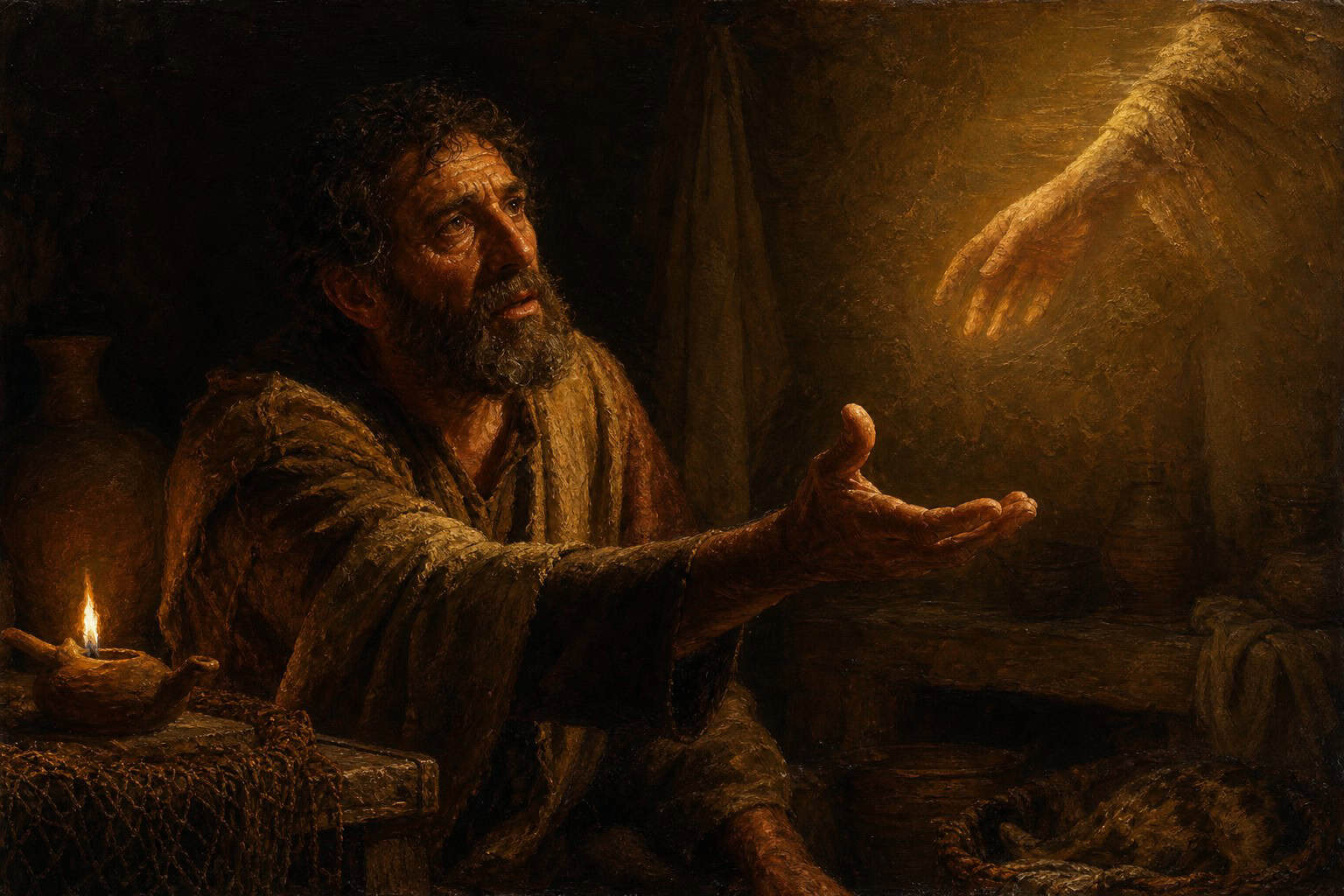
Why do mothers seem to favor sons? A memoir’s reflection on the male longing for a mother’s warmth, and the men who confuse it with love.
The Boy Who Kept Coming Back for the Warm Hand
You asked it plainly once, and I still feel the sting of the asking: why do mothers seem to love their sons more? You were small, and you meant the tilt you sensed at the supper table, the way a mother’s eyes found the boy first, the way her hand stayed longer on his hair while yours went cold on the wood. But under that little jealousy sat a bigger hunger, and I want to name it for you now, from the far side of years. What you were really asking was whether that first warmth would ever come back. Whether any woman alive would hold you the way you were held before you knew your own name, before you had to earn a single thing. That is the true question hiding inside the childish one, and I will not pretend otherwise. The mother-love you envied was never favoritism. It was the memory of a body that fed you and warmed you and asked nothing back, and your whole boyhood ached to prove that a love like that still waited somewhere out in the world of women. I watched you go looking for it. You did not know that was what you were doing. You thought you were falling in love. You thought you were brave. But the flesh remembers what the mind lets go, and your flesh was hunting for a warm hand on your skull, for the safety of being small and cared for and unafraid of the dark. There is a stretch in Fractions of the Soul that circles this exact hunger, the man who keeps offering his heart, taking its bite and its letdown for love’s sake, hoping to slip back into a childlike innocence he can barely name. That is you, boy. That is the whole of it. And I do not sneer at you for it. I know the cold room you were fleeing. I know how the quiet pressed on your chest at night when you were alone, how the pull toward any warmth felt like the pull toward staying alive. I remember the particular ache of it, the way your ribs seemed to close around nothing. So sit here with me a while. Let me tell you what that hunger cost, and what it hid, and where God stood in the middle of it while you kept mistaking the hand of a woman for the hand that made you. Let me tell you plainly, because no one told me, and I lost years I did not have to lose. You deserved the truth then. I am bringing it to you now, late, but bringing it.
Each New Love a Palm Held Out for the Slap
Here is what you did, though you would never have said it this way. You held your heart out flat, like a boy holding his open hand up to be inspected, and you waited to see if she would strike it. When she did, you told yourself you had loved wrongly, that the next one would be gentler with your palm. So you held it out again. And again. You called this persistence. You called it faithfulness. You even called it Christian, because you had learned somewhere that love suffers long and keeps no record of wrongs, and you were quietly proud of how long you could suffer. But listen to me, because this is the part you refused to see. You were not enduring for love. You were enduring for the reward you were sure came at the end of endurance, the warm quiet, the mother-peace, the acceptance that would finally tell you that you were good and safe and no longer had to be strong for anyone. Every letdown you swallowed was a coin dropped into a machine that never once paid out, and still you kept feeding it. The vulnerability you were so proud of, the truth and the honesty you laid bare on the table between you and each new woman, was not the courage of a grown man. It was the openness of a child who has not yet learned that some hands close into fists. Your body knew the difference long before your mind agreed to it. There was a tightening low in your gut when a woman’s voice shifted key, a small flinch you trained yourself to hide, a way your shoulders drew inward that you renamed patience. That flinch was the truth. That flinch was your own soul pulling your sleeve. But you had built a whole story to talk over it, one in which your capacity to be hurt was itself the proof of your love, so that the more it hurt, the more you believed you must be loving well. That is the lie I most want to pry out of your hands. Because here is the freedom you never wanted to face: you could have stopped. At any hour you could have drawn back the palm held out to be struck. No one pinned your wrist flat to that table. No one forced the offering. The dread in that, the swimming vertigo of it, was that the choosing was always yours, from the first girl to the last, and you spent long years dressing your own choice up as fate so you would not have to stand inside the terror of being free. It was easier to be a victim of love than the author of your own reaching. I know. I chose it too.
The Warm Room Was Never Coming Back
So let me say the hard thing, the thing that took me decades to let past my teeth. The warmth you were chasing does not return. It cannot. The mother-love that held you before you could speak was made for a creature who no longer exists, a helpless thing at the breast, and you are not that anymore and were never going to be again. Every woman you offered your heart to was being asked, without her knowing it, to mother a grown man, to take your weakness into her arms and cradle it and never once ask that you stand up. And no love raised on that ground can hold its own weight. It is a house built on wet sand, and the wave that takes it is not cruelty at all; it is only time, doing what time does. You will feel the floor go soft under you and blame her, and it will not be her. Feel where this lands in the body. It landed in mine like cold water poured slow down the spine, that first honest morning I could not look away from it. You never grew wiser through all that pain. You never got stronger under the feminine lash you told yourself you were bearing so nobly. You just kept walking through one hurt into the next until you stumbled onto a woman who happened not to strike your open hand, and you seized her wrist and called it wisdom, called it home, called it the reward at last for all that patient bleeding. But it was not wisdom you found. It was exhaustion wearing the clothes of arrival. You were not a man who had learned. You were a boy who had run out of places to be wounded and mistook the stopping for peace. And you should know how long the mistake could sit undetected, comfortable even, two tired people warming their hands at the same low fire, each grateful the other had stopped hurting them. That comfort is real. I will not lie and say it is nothing. But comfort borrowed against a debt you refuse to name always comes due, and the account it draws from is your own unfaced need to be validated by a woman’s soft yes. The bitter fruit of not looking tastes exactly like the sweet fruit of looking, right up until the hour it does not.
A man who keeps offering his heart until one woman fails to break it has not grown strong; he has only found a softer place to hide.
What the Silence Taught After the Warmth Was Gone
When I finally saw it whole, the fallout was worse than any single wound had been. Because now I could not un-know it. I could not crawl back into the belief that I had been noble all along. I had to sit with the plain fact that the love I handed out was so often a plea wearing love’s face, a hand reaching not to give but to be held, and that the women who could not fill that pit in me were not the villains of my story. They were simply not my mother, and they could never be, and it was cruel of me to ask it of them without ever saying the words aloud. Feel how that lands in the chest, boy. It landed in mine like the floor dropping. The dread of it came up through my feet. Because if the warmth was never coming back, then I was alone in a way I had spent my entire life arranging my affairs to avoid feeling. That was the groundless hour. That was standing at the lip of my own freedom with nothing under me at all, no mother, no woman, no soft acceptance waiting below to catch the fall. And here I have to tell you the strangest thing, the thing that keeps me at this page when I would rather close it. God did not take that dread away. He did not send a warm hand to swap in for the ones I had spent myself chasing. He did not lift me out of the cold room and set me somewhere sunlit. He came into it and sat down. He sat in the very silence I had feared since boyhood, the silence I once wept into and heard nothing come back. He was in the tears that fell the night I admitted I had loved like a beggar and not like a man. He was in the shame itself, not scolding it, not scrubbing it away, only near, breathing there beside me in the dark. That is not the comfort you wanted. You wanted rescue. You wanted the warmth restored and the ache lifted clean. But the nearness of God in the dark is a wholly different mercy, and it does not erase the loss; it walks the loss beside you. I have felt Him closest not when the pain finally eased but exactly when it would not ease, when I sat with the bare truth of my own weakness laid open and He did not get up and leave the room. The unconditional love you were built to want was real all along. You just kept holding your palm up to a human face that could never once carry it.
A Grown Man’s Empty Hands, Finally Open
So here is where it settles, and I will not tie it in a bow, because it does not close that cleanly, and you would smell the lie if I tried. The question you carried, the one about mothers and sons, was never really about mothers at all. It was about the terror of being separate, the fear of being one soul alone in the dark with no warm body pressed close to prove you are worth loving. Every man carries this thing. It is old, older than you, older than your father, handed down through the blood like a debt no one remembers taking on, the ancient reflex to trade the hard love of God for the soft nearness of a woman because being alone feels precisely like dying. And a mother’s tenderness toward her son is not favoritism after all; it is the first mercy any of us are ever shown, and it marks the skin of us, and we spend the rest of our days either grieving it rightly or chasing it wrongly down every hallway we can find. I chased it wrongly for a long, long time. What changed was not that I stopped needing love. God knows I never stopped. What changed was that I quit demanding that love do the work only God can do. I stopped asking a woman to unmake my separateness with her body and her acceptance. I stopped holding my open hand out to be struck as proof of my devotion. The strange freedom, once I stopped dreading its bare and groundless floor, was that my hands were at last empty and open instead of clenched and pleading. I could love a woman as a woman, and not as a rescuer sent to end my loneliness. I could love God not as a warmer, gentler mother, but as the One who made the cold room and chose to sit down in it beside me. The whole story of how I crawled here, the false starts and the shame and the slow turning, is written down in Fractions of the Soul, and I did not spare myself a single page of it. But even in this letter across the years, boy, I want you to hear the one thing I would have traded almost anything to hear at your age. The warmth you lost was real, and losing it was not your failure. It was the beginning of learning what love actually is. You do not have to keep laying your heart down to be broken to earn the right to be held. You were held once, freely, before you could ask. And you will be held again, though not the way you keep imagining, and not by the hands you keep reaching your worn palm toward across the dark.