Looking for true peace but you keep it all locked down? Why the discipline that protects you also starves you, and where rest actually begins.
The Ledger You Keep in the Dark
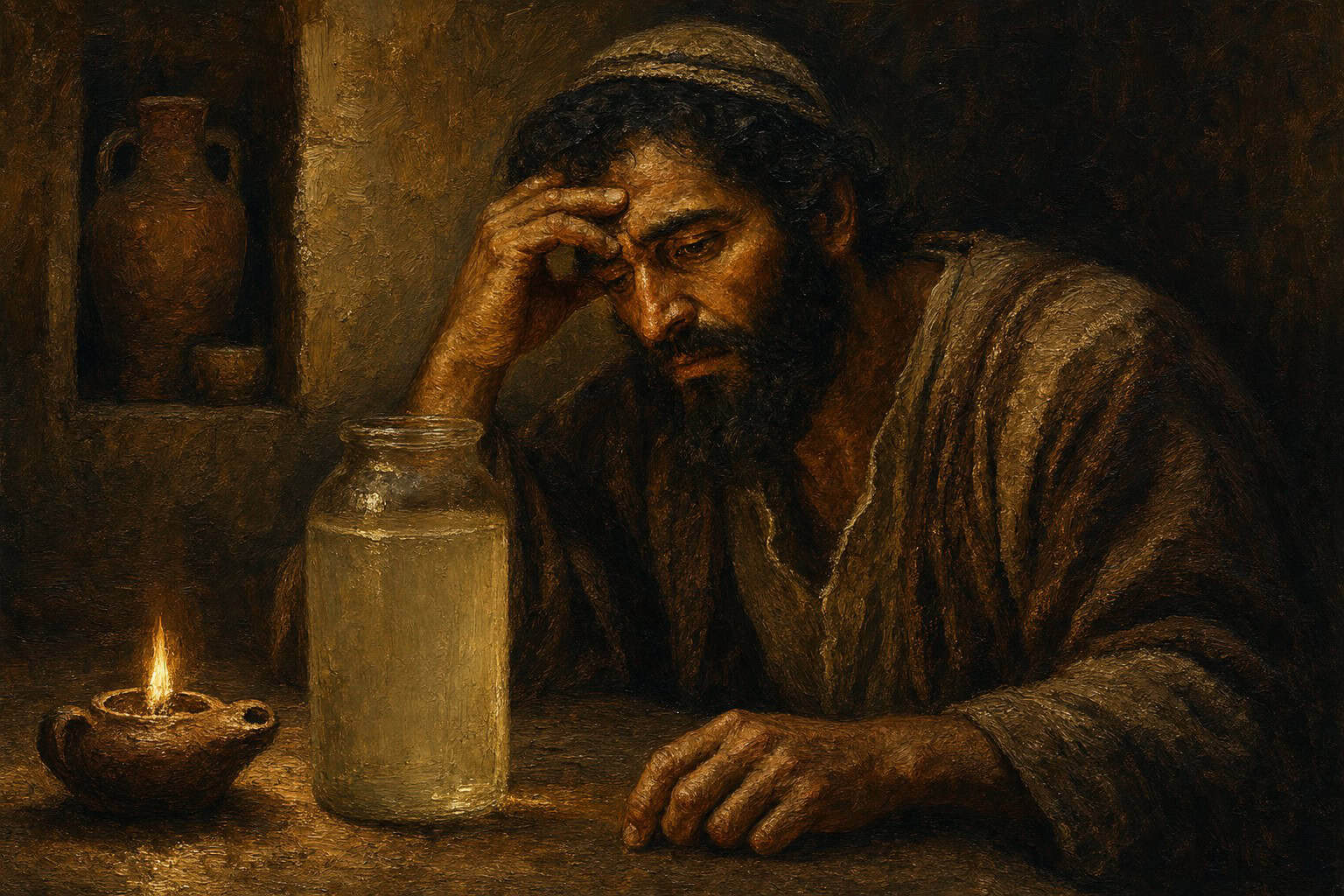
You want to know how to find true peace, and you have been quietly working at it for years. You keep a ledger no one sees. You track your moods the way a nurse tracks a fever, checking the numbers, watching for the spike. When something rises in you—grief, want, a sudden flare of anger—you press it back down before it reaches your face. You have learned to speak in even tones. You have learned to sound reasonable while your chest is on fire. This costs you more than anyone knows. There is a muscle you clench that does not show up on any chart, and you clench it in meetings, at dinner tables, in the two seconds before you answer a hard question. You call this stability. You call this maturity. You tell yourself that a person who can name every feeling and refuse to be ruled by it has grown up, has escaped the childishness of people who weep in the open and act on impulse. And there is truth in that. Feelings are inconsistent. They lie to you at three in the morning and lie again by noon, and no two of their reports ever quite agree. So you built a system. You built a logic, a set of rules that hold steady even when your heart does not. You reasoned your way to a kind of calm, and you were proud of it, and for a long while it worked. But calm and peace are not the same thing, and you have started to suspect it. Calm is the surface of a jar of water you refuse to shake. Peace is something else, something you cannot manufacture by discipline alone. You keep the jar still with enormous effort, and you have mistaken the stillness for rest. Notice how tired you are. Notice that the effort never ends—that the second you loosen your grip, the water clouds, the sediment lifts, the whole thing goes murky. You have not dissolved the sediment. You have only kept it from rising. Somewhere underneath the reasonable voice and the tidy logic there is a settled ache you have decided not to look at, because looking at it would shake the jar. You have made yourself a person nobody truly understands, and the reason is simple: the part of you that could be understood is the part you keep in the dark. You are not misunderstood by accident. You arranged it. You made yourself hard to read on purpose, and then grew lonely inside your own careful design. That is where you begin. Not as a broken person, but as a competent one—quietly, chronically exhausted by your own competence, running a ledger no one else can even find.
The Volcano Under the Filing Cabinet
Here is the thing you rarely admit, even to yourself: the harder you hold the door on your feelings, the more force is pressing against it. You do not build a fortress against something small. The discipline you are so proud of is the exact measure of how much you fear the thing inside. A person who feels nothing needs no system. You built the system precisely because you feel too much—and because once, when you let it show, it went badly. Maybe someone laughed. Maybe someone stored it away and used it against you later. Maybe the people whose whole job was to hold you when you shook instead looked away, or looked annoyed, or told you to stop being dramatic. So you learned. You learned that need is dangerous, that wanting to be held is a debt someone will one day call in, that good things arrive only to be snatched back. You learned to want less out loud, and then to want less at all, or so you told yourself. Under that learning, the want did not die. It went underground and grew in the dark, the way roots do. Right now, if someone rested a hand on the back of your neck without a word, you might come apart—and that possibility unnerves you far more than any argument ever could. The volcano is not gone. You filed it. You put it in a drawer marked immature and undisciplined so you would not have to feel it during the working day. But at night the drawer rattles. You catch it in strange, undefended places: a song in the aisle of a grocery store, a stranger holding a door and meaning it, the way a small child lifts both arms to be carried. Something in you lurches toward it, and out of long habit you slap it down. You tell yourself this is strength. But watch what it does to your body. Your jaw aches by evening. Your shoulders ride an inch too high. You sleep like a soldier who cannot quite believe the war is over. The intellect that was supposed to protect you has quietly become a warden, and you feed it constantly. You over-explain. You keep your reasoning airtight so no one can find the seam. You have made yourself so consistent, so even-handed, so faultlessly logical, that a clever person could steer you anywhere at all—just by appealing to your need to be reasonable. You would rather be manipulated into fairness than caught being human. This is the trap, and it is a fine one. The very defense that keeps you safe is the same thing keeping the peace out. You cannot bolt the door against pain and leave a window open for rest. The one latch holds both. And some part of you, tired now past pride, has begun to wonder what it would actually cost to lift it.
The Cost of Never Being Held
There comes a night when the system fails you and you cannot say why. Nothing dramatic has happened. The bills are paid, the logic holds, the drawer is locked, the surface of the jar is perfectly still. And yet you are sitting in a dim room and something in you is quietly falling—not crashing, just sinking, slow and sure. This is the turn, and it does not announce itself. You realize the peace you have been chasing through control is not peace at all. It is only the absence of shaking, and you bought that absence by never letting anything in. You kept out the chaos, yes. You also kept out the warmth. You cannot half-open a heart. The hand that could stroke your hair and the fist that could strike you come through the very same door, and long ago you bolted both, together, for good. You have been so busy guarding your tenderness that you have starved it down to almost nothing. And here, in the dark, comes the thing the discipline could never hand you. Not a solution. Not a clever reframing that finally makes the ache add up. Something closer than that, and stranger: the sense that you are not alone in the falling. That the God you tried to reason your way toward is not standing at the far end of a corridor, waiting for you to arrive composed and consistent, arms full of your own good behavior. He is sitting in the ruin with you, in the sediment, in the exact want you were most ashamed of. He does not ask you to stop shaking first. He does not require the ledger balanced before He comes. This is the mercy that undoes you, if you will let it: that you are met before you are fixed, held before you are worthy of holding, loved in the precise condition you spent your whole life hiding.
The fortress you built to keep the pain out keeps the peace out too.
And the astonishing thing is not that the darkness lifts—often it does not lift at all—but that Someone is in it with you, nearer than your own guarded breath. You do not have to construct Him with your reason. You do not have to earn Him with your discipline. He was already there, under the filing cabinet, in the drawer that rattles at night, in every tear you swallowed so no one would see it move down your throat. Peace, it turns out, was never the still jar you exhausted yourself keeping still. Peace was the presence that stays when the jar finally shakes—that stays through the clouding, through the murk, through the ugly rising of everything you sank.
The fortress you built to keep the pain out keeps the peace out too.
After the Latch Gives Way
So the latch gives, a little, and now you have to live with what comes through it. This is where it gets hard, because the old fear was not stupid. When you let something be felt, it is felt, fully, and it hurts, and it does not always resolve by morning the way you were promised. The old self wants to slam the drawer shut the instant the first wave hits. You will be tempted to call the opening a mistake, to set the jaw again, to return to the reasonable voice that kept you safe and empty for so long. Notice that temptation when it comes. Notice how fast the warden offers to take over again, how calm and sensible he sounds, how he promises you rest if you will only stop feeling this. The falling of a real change is not triumph. It is a strange, unhurried grief. You start to mourn the years you spent understood by no one, because you made yourself deliberately impossible to reach. You start to see the people you held at a careful intellectual distance—the ones who tried, the ones you quietly filed as too chaotic, too much, too likely to leave—and you wonder now what they actually were to you, and whether some of them, given the chance, would have stayed. You have to sit with your own part in the loneliness. It was not only done to you. You did a good deal of it yourself. You chose the fortress over the risk again and again, and you dressed the choice up as wisdom. That is a bitter thing to see clearly, and there is no angle from which it does not sting. But something is different now. You are not seeing it alone, and you are not seeing it in order to be condemned. The same nearness that met you in the falling stays with you through the mourning, unhurried, unembarrassed by the mess. Grace does not erase the years. It does not hand them back to you unspent, fresh, as if nothing had been wasted. What it does is stranger and far gentler: it walks beside you through the honest accounting, so that even the shame becomes a place where you are accompanied rather than a place where you are thrown out. You begin, slowly and badly, to let the smallest things in. A hand on the shoulder you do not immediately flinch away from. A moment of plain comfort you receive without instantly calculating its cost or its catch. You are clumsy at it. You have decades of hard practice at refusing. But you are practicing now at something else, and each small, stumbling yes is a loosening of a muscle you never knew you had been clenching your entire life.
Learning to Be Reached
Peace, you are finding, was never a state you could engineer. It is not the payout of a well-run system. It arrives, when it arrives at all, as a gift you did not manufacture and cannot govern—which is exactly why the controlling self could never lay a hand on it. You are mortal. You have a limited number of mornings left, a limited number of times someone will offer to hold you before you drift too far to feel it, and the fortress was quietly spending those mornings on nothing but its own upkeep. That is the finitude of it, the part that finally moves you off your careful ground: you do not have forever to learn to be reached. So you begin to let the sediment rise. You let the jar be shaken sometimes, and you do not die of it. You discover that the volcano, once it is allowed to move, does not level the world—it just weeps, and then it rests, spent and lighter, the way you have not been light in years, maybe not since you were small. The intellect is not the enemy in this. It was only a poor master, always overreaching its office. Now it can go back to being a servant, and a good one, holding the lamp steady while your heart does the actual walking. You will still crave the old control. On bad days you will bolt straight back to the drawer and lock it, and you will have to notice all over again, and open all over again, and be met all over again. This is not a cure, and it does not pretend to be. It is a way of living with the ache left open just enough for grace to touch it. You will not do it flawlessly, and that is precisely the point—flawlessness was the false peace, the still jar you wore yourself out keeping still. Real peace is messier and infinitely warmer: it is being known in the very part you hid, and being stayed with anyway. If any of this lives in you—the tiredness of a well-run heart, the ache buried under the logic, the buried longing to be reached—then you already carry the ground this reflection was drawn from. Anthony Adoré walks it far more nakedly than these pages can, in Fractions of the Soul, where a mind that trusted only its own systems learns, slowly, what it costs to be found. Go there when you are ready to stop keeping the ledger. Not because it will fix you—it will not. Because it will sit down with you in the dark, and turn your face, gently, toward the One already there.